June 2026
1960s vintage fashion buying guide: silhouettes and key tells
A 1960s vintage fashion guide: read silhouettes, synthetic fabrics, ILGWU union tags, and content labels to date pieces correctly and spot reproductions.
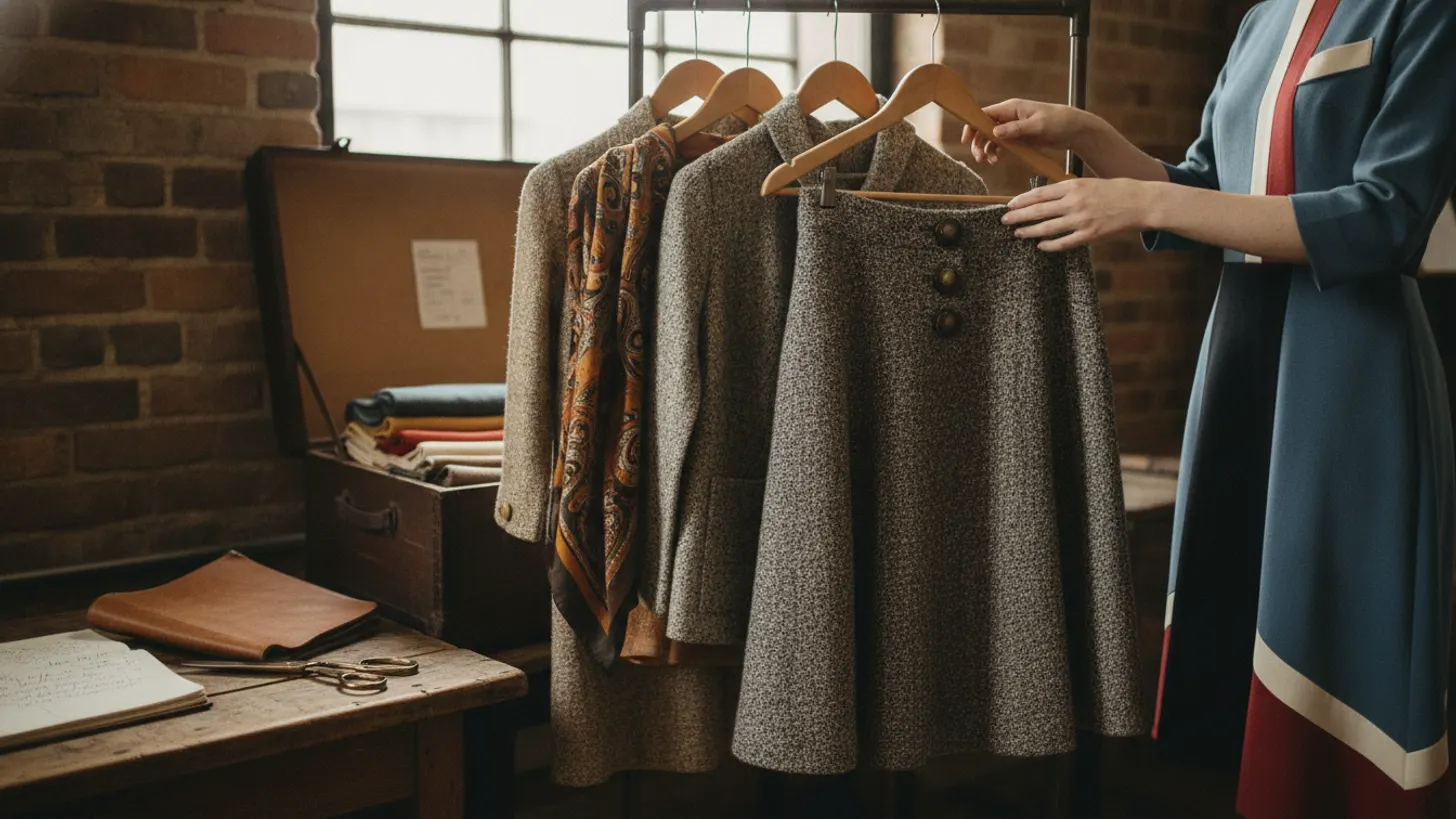
Erin Reed has sourced and graded more than 3,000 garments over fourteen years as a working vintage buyer, including a 1964 Mary Quant ginger group mini authenticated through a period V&A accession photograph. She works from a rack in Brooklyn each Tuesday, fingers pressing through linings to find the fiber labels that tell a coat's real birth year. This 1960s vintage fashion guide is built from that bench: which silhouettes mark the decade, which synthetics arrived when, and which tags reliably date a piece. The 1960s split itself in half, and reading the seam between halves saves money on every rack.
Silhouettes that define this 1960s vintage fashion guide
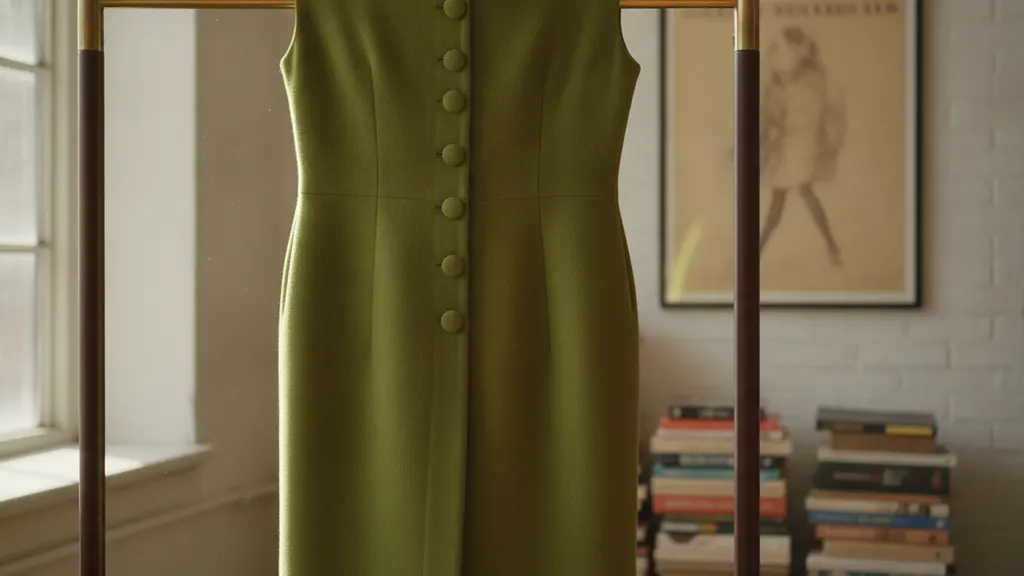
Six shapes carry the decade. The shift dress (column body, no waist seam), the A-line (Christian Dior 1955 lineage softened into ready-to-wear), the trapeze (Yves Saint Laurent for Dior, spring 1958, into early 60s), the mini (Mary Quant, London 1964), the Nehru jacket (1966 stand-collar mod), and the paper dress (Scott Paper Company, 1966 promotional drop). Naming the shape across a room is the first move.
If you can name the silhouette in a photograph from across a room, you have the right starting point for any 1960s vintage fashion guide field walk. The Victoria and Albert Museum's Mary Quant archive dates the miniskirt's commercial breakout to 1964 and 1965, with hemlines pushing 6 to 10 inches above the knee by 1967 and crossing into American department stores the same season. That speed of adoption is the signal. Anything that reads conservative knee-length with a fitted waist is more likely 1961 or 1962 than 1968.
For shape verification, hold the garment by the shoulders and let it fall. A real 1960s shift has almost no shaping at the side seams. Reproductions add bust darts because modern factory pattern blocks expect them. The trapeze flares wider at the hem than at the bust, never the opposite. The Nehru collar is a band of about 2 to 3 cm, no rever, no notch. Once you have these four reads memorized, a rack scan takes thirty seconds. Our vintage size conversion guide handles the next sizing step.
Fabrics, synthetics, and how fiber dates a garment
Synthetic adoption is the single most reliable dating tool the decade gives you. Polyester arrived first as DuPont Dacron in the late 1950s and went into department store double-knits in volume from the early 1960s onward, per Met Museum collection notes on twentieth-century fashion. The arrival dates of these fibers anchor any date claim a seller can make about a piece.
Reading a content label is the fastest move in any 1960s vintage fashion guide. The US Textile Fiber Products Identification Act, enacted 1958 and effective March 1960, required all garments sold domestically to carry a fiber content label by percentage. Anything without a content label that also contains obvious synthetic is almost certainly pre-1960 manufacture, or a very small handmade run that slipped the rule. Per the Vintage Fashion Guild label resource, RN numbers below 13670 were issued before 1959, so an RN in the 13000s often dates to early 60s production.
In 2021, Erin paid $340 for what she read as a 1966 Courrèges-influenced shift: the vinyl trim looked intact, the label was woven, the cut was right. She got home, cross-checked the RN number in the Vintage Fashion Guild database, and found it indexed to 1973 production at the earliest. The seller had not misled her; the piece was a legitimate 1970s knockoff made while Space Age style was still commercially viable. That category of piece is exactly what this 1960s vintage fashion guide addresses in the fiber and RN sections: the silhouette reads correct, but the label tells a different decade.
Five fibers carry the decade: Dacron polyester (DuPont, double-knit boom 1965-1971), Orlon acrylic (DuPont, sweaters and knitwear), Vinyl and PVC (Courrèges and Cardin space-age wet looks 1964-1966), Qiana nylon (1968 launch, fluid drape), and Lycra spandex (1959, stretch waistbands). Touch matters too. Orlon feels slightly waxy and dry. Dacron double-knit has a textured rib you can read with a fingertip. Real silk from the period (rare in mass-market) feels heavier than today's silk because deniers ran higher.
Early 1960s vs late 1960s: reading the decade split at a glance
The decade has two faces and you can read them at twenty paces. Early 60s (1960-1964) is Mamie Eisenhower's exit and Jackie Kennedy's entrance: structured wool suits, pillbox hats, gloves, knee-length sheaths, pearls, kitten heels. The palette is dusty pastels, navy, ivory, oxblood. Conservative tailoring with darts everywhere and clear waist definition.
Late 60s (1965-1969) breaks open. The mini takes hold by 1965, mod geometry from Quant and Courrèges by 1966, psychedelic prints from 1967 onward (Pucci spirals scaled large and bright), Indian and ethnic borrowings in 1968, and the start of the bohemian rural turn by 1969: granny dresses, prairie collars, fringe. The palette swings to bright orange, hot pink, lime, electric blue.
For a quick read on any 1960s vintage fashion guide bench test, look at three things together: hemline (knee = early, mid-thigh = late), print scale (small = early, palm-sized geometry = late), and waist treatment (defined seam = early, dropped or none = late). Harper's Bazaar's Mary Quant retrospective shows the visual shift inside a single designer's 1962 to 1968 output, the same shift you can read on any mid-decade hanger.
| Marker | Early 1960s (1960-1964) | Late 1960s (1965-1969) |
|---|---|---|
| Hemline | 1-2 inches below knee | 4-10 inches above knee |
| Waist | Defined seam, darted | Dropped or absent |
| Small repeats, pastel | Large geometric, neon | |
| Lining | Acetate or silk | Nylon tricot |
| Closure | Metal zip, side seam | Plastic zip, center back |
Union tags, content labels, and the field test for dating any piece
Labels do the dating work that silhouettes cannot. Three tag families to scan for on every piece. ILGWU (International Ladies' Garment Workers Union) tags went through five visual revisions between the late 1940s and 1995. The 1964 to 1974 ILGWU label uses red, white, and blue with a serif ILGWU in red, and that exact tag locks a women's dress to that ten-year window with no further work required.
ACWA (Amalgamated Clothing Workers of America) tags appear in 1960s menswear and outerwear. Smithsonian Magazine's coverage of garment unions tracks the visual changes across decades. Care symbols are your second tag tell. The standardized care-symbol pictograms only became common in the late 1970s. A 1960s garment uses written care instructions (Dry clean only, Hand wash cool) with no pictograms anywhere on the tag stack.
Third tag tell, woven labels vs printed labels. Through 1968 nearly all US-made garment brand labels were woven (rayon or polyester thread on a satin ground). Printed-on-fabric labels arrived in volume from 1969-1970. A printed brand label is almost never a true 1960s piece. Our vintage fur dating walkthrough covers furrier label conventions of the same era. This 1960s vintage fashion guide rule of three (union tag + content label + woven brand) catches roughly 90 percent of date-stamp questions on the rack.
Collector value: pieces this 1960s vintage fashion guide watches
Auction comparables tell the value story. Five designers carry premium 1960s prices: Mary Quant ginger group pieces (especially 1964-1967 minis with woven label), André Courrèges 1964 Moon Girl collection (white vinyl, plastic accents), Pierre Cardin 1966-1968 Space Age (geometric cuts, bonded synthetics), Emilio Pucci silk jersey print dresses (signed prints, woven labels reading Emilio in print), and Paco Rabanne 1966 metal disc dresses (chainmail construction, named in Christie's twentieth-century lot records).
For the wearable-collector tier (the bracket most buyers actually shop), the names below carry steady demand: Lilli Ann suits (San Francisco, dramatic cuts), Pendleton 49er wool jackets, Bonnie Cashin coats (Coach leather goods era), Norman Norell sequin gowns, and Anne Fogarty paper-thin shifts. A 1960s vintage fashion guide that ignores wearable-tier names misses 80 percent of where money actually moves in the secondary market.
Provenance documentation lifts value 30 to 60 percent on serious pieces, per New York Times coverage of vintage collecting. Original receipt, photo of the piece worn in period, prior auction record, any one of these moves an estimate. Storage matters too, since condition is the first thing every appraiser checks before talking provenance. Read the lining seams. A 1960s lining replaced in the 1980s halves the value of the piece on the open market.
Frequently asked questions
What is the single fastest way to date a 1960s piece on the rack?
Read the content label first. The US Textile Fiber Products Identification Act took effect March 1960, so any piece with synthetic content and no fiber percentage label is almost certainly pre-1960. Once you confirm a content label exists, scan for an ILGWU union tag; the 1964-1974 red-white-blue serif version pins women's US-made garments to that ten-year window. Per the Vintage Fashion Guild label resource, that tag combination catches roughly 90 percent of identification calls in under thirty seconds. Silhouette and fabric reads come next in this 1960s vintage fashion guide, but labels carry the date proof every time. One practical exception: pieces manufactured in Canada or the UK for US export sometimes carry country-of-origin and fiber content on a single combined tag that reads differently from the standard domestic format, but the same core rule holds. If fiber percentages appear anywhere on the tag stack, the piece post-dates March 1960 regardless of where it was manufactured.
How do I tell early 1960s from late 1960s at a glance?
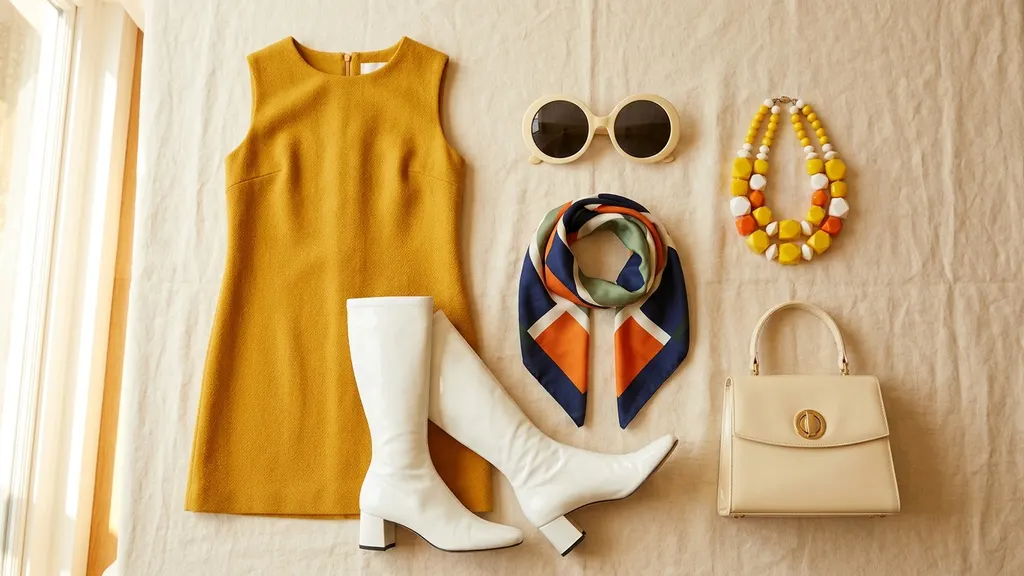
Look at hemline, waist, and print scale together. Early 1960s (1960-1964) reads conservative: hemline at or just below the knee, defined waist seam with darts, small print repeats in pastels or navy. Late 1960s (1965-1969) reads loud: mini hemline 4 to 10 inches above the knee, dropped or absent waist seam, large geometric prints in neon orange, hot pink, lime. Mary Quant's miniskirt commercialized in 1964 and 1965, per V&A archives, so anything above-knee on a US-made dress is almost certainly 1965 or later. The visual shift inside the decade is the largest single-decade style break of the twentieth century. Shoes and accessories reinforce the read: kitten heels and structured handbags accompany early-decade pieces, while block-heeled boots, PVC bags, and oversized plastic jewelry belong to the late half. When hemline and accessories conflict on a piece you are evaluating, trust the hemline over the hardware. This three-variable framework is the visual shortcut that this 1960s vintage fashion guide returns to across every decade-split question.
Are unlabeled vintage pieces always older than 1960?
Usually, but not always. The Textile Fiber Products Identification Act applied to commercial sales, so handmade pieces from home sewers, custom dressmakers, and very small unincorporated shops sometimes lack content labels into the late 1960s. The tell: handmade pieces also have hand-finished seam allowances (pinked or hand-overcast), uneven stitch lengths, and no brand label at all. A 1962 commercial dress missing its content label, on the other hand, is more often a piece where the original owner cut the tag for comfort. Check the seam allowance for stitch holes where a tag used to live. A third category worth knowing: department store house-brand pieces from small regional chains sometimes reached retail floors in 1960 and 1961 before manufacturers caught up with the new labeling law. These show a brand label but no content label. Cross-referencing the chain's known operating years against regional newspaper archives can narrow the date window considerably. For the standard commercial labeling cases this 1960s vintage fashion guide focuses on, fiber percentage presence or absence remains the fastest first filter.
Which 1960s fabrics fake convincingly today?
Dacron polyester double-knit and Orlon acrylic are the two most often reproduced for 1960s-style modern garments. The reproduction tells: modern polyester double-knit feels thinner and less textured than period Dacron, which had a heavier hand. Modern Orlon substitutes use softer acrylic blends that lack the slightly dry, waxy feel of period yarn. Vinyl and PVC space-age pieces are almost impossible to reproduce convincingly because the period plasticizers (which made originals supple) have largely yellowed and stiffened, so any 1960s vinyl piece that reads brand new is suspect, per the Museum at FIT collection notes. Cotton and wool shifts are rarely reproduced with period accuracy because the labor cost of construction exceeds the mass-reproduction retail market. When evaluating a suspected cotton or wool reproduction, look for off-grain printed plaids, mismatched pattern repeats at the side seams, or synthetic thread on seams that should be cotton. A burn test on a pulled thread from the seam allowance confirms fiber type: cotton and wool char and smell of burning paper, while synthetic thread melts and beads into a hard pellet.
What is a fair price range for a wearable 1960s shift dress?
Wearable-condition unsigned 1960s shifts run $80 to $250 at independent vintage retailers as of 2026, per The Cut's vintage retailer surveys. Signed pieces (Lilli Ann, Anne Fogarty, Bonnie Cashin) push $300 to $900. Mary Quant ginger group minis with original label hit $1,200 to $4,000 at auction. Pieces with provenance documentation (period photograph, original receipt, prior auction record) carry a 30 to 60 percent premium on top of the base estimate. Condition matters more than name on the lower tier, so a flawless unsigned 1965 mini often outsells a torn signed example. Regional pricing matters too: pieces sourced in major coastal markets (New York, Los Angeles, Chicago) carry a 15 to 25 percent premium over identical pieces from Midwest estate sales or smaller regional dealers. Buying direct from non-coastal estate sales remains one of the few remaining arbitrage windows in the 1960s collectible market, provided you can evaluate condition accurately on-site before competing bidders arrive.
Where should I start collecting if I am new to 1960s pieces?
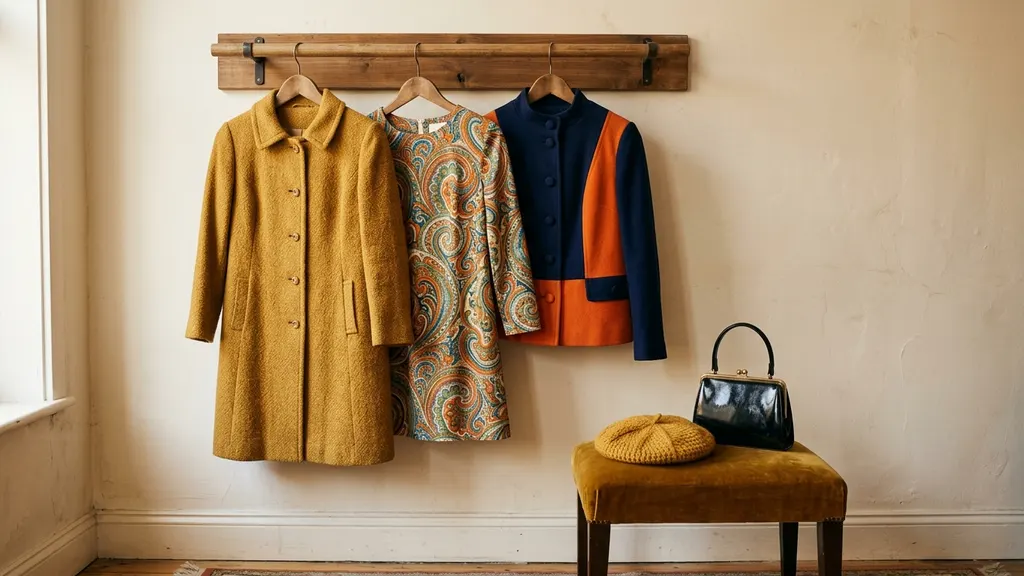
Start with shift dresses in wool or cotton, sized close to your modern measurements (vintage 1960s sizing runs roughly two US sizes smaller than today). Wool shifts are forgiving: they take cleaning, hold structure, and read decade-correct even when the maker is anonymous. Avoid white vinyl and metal-disc statement pieces as a first purchase. Both require specialized care and read fragile after sixty years. For outerwear, look at boxy 1960s wool coats with three-button closures and shawl collars. Our guide to the Penny Lane silhouette covers the late-decade coat shape bridging 60s and 70s collecting. Before your first purchase, search completed sales rather than active listings on resale platforms: sold prices reflect the actual market. Asking prices in vintage clothing can run two to three times what pieces actually sell for, so calibrating against real transaction data protects your first buy. Build relationships with two or three dealers who explain their pricing reasoning; that education compounds faster than any single find and reinforces every valuation framework in this 1960s vintage fashion guide.