May 2026
Vintage fox fur coat era guide: what decade are you buying into
How to date a vintage fox fur coat by decade. From 1940s swing cuts to 1980s power shoulders, here's how Sol Siren reads silhouette, dye, and maker label.
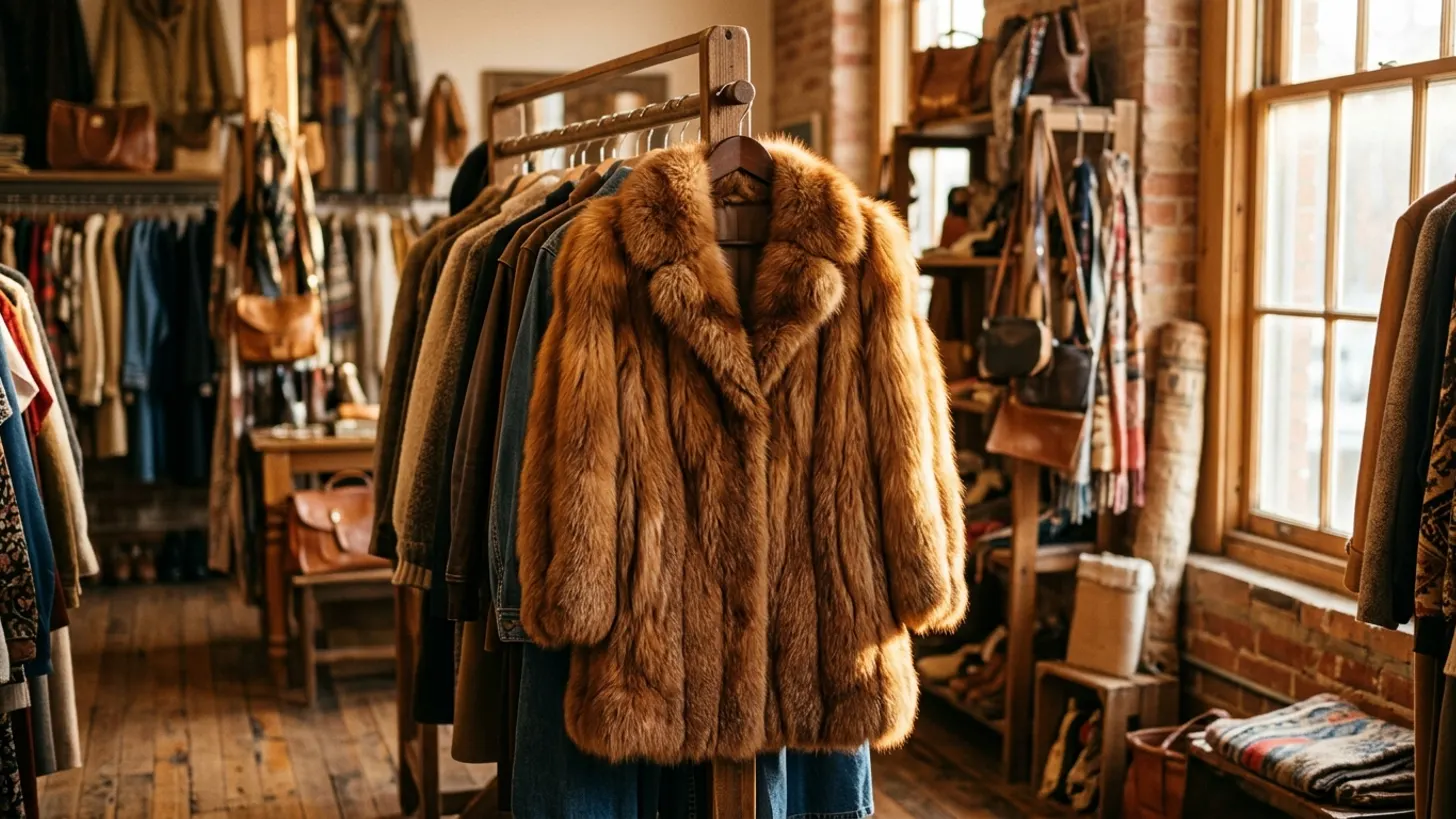
A woman in Brooklyn writes asking whether the silver fox stole she found at her grandmother's is 1950s or 1960s. The label says only Union Made. The lining is bridal satin. Inside the cuff: a single hand-stitched initial. Dating a vintage fox fur coat lives in details like these, not in the shoulder line. Each decade left its signature on cut, dye, length, and finish. Here is how to read those signatures before money changes hands.
Why decade matters when buying a vintage fox fur coat
Decade is the difference between a coat that fits the way you live and one that wears you. A 1948 swing coat falls from the shoulder and floats. A 1985 cropped jacket sits boxy, structured, padded across the back. Same pelt, different garment language, and the resale price between them can diverge by 70 percent. When buyers ask whether a vintage fox fur coat is genuine, the honest answer is that traditional evaluation, not laboratory work, identifies the species. Conservators at the Museum at FIT rely on pelt feel, guard hair pattern, leather grain, and stitch type. They date by the same details: cut, lining cloth, dye saturation, label form, and seam construction. For decade-by-decade comparison the Costume Institute at the Metropolitan Museum of Art dates hundreds of fur garments by accession. If you are starting out, our guide to dating vintage fur labels covers the union and ILGWU stamps that anchor most American makes.
1940s to early 1950s: postwar swing silhouettes
Fox in the late 1940s and early 1950s read formal. After wartime rationing ended, women bought back the silhouette they had been denied. Dior's 1947 collection set the visual rule: shoulders soft, waist nipped, hem flared. Furriers translated the language into long swing coats with shawl or notch collars, often in red fox or natural cross fox. A vintage fox fur coat from this window will rarely show a modern care tag; the lining bears an embroidered furrier signature instead.
What to look for from the era: a hem that reaches the calf or ankle, sleeves cut wide enough to clear an evening glove, and a generous tuxedo-style turn-back lapel. Linings ran to bridal satin in ivory or champagne, frequently with embroidered makers' marks rather than woven labels. The V&A's Dior retrospective documents how the New Look spread into fur as quickly as into wool gabardine. Many surviving coats carry a small leather tab at the inner pocket, hand-stamped with the furrier's address; that detail mostly disappears after 1955. A swing-cut piece from this window holds its shape on the hanger like a sculpture. If it collapses limp, the pelt has dried out and the price should reflect it.
Mid-1950s to mid-1960s: silver fox and the stole era
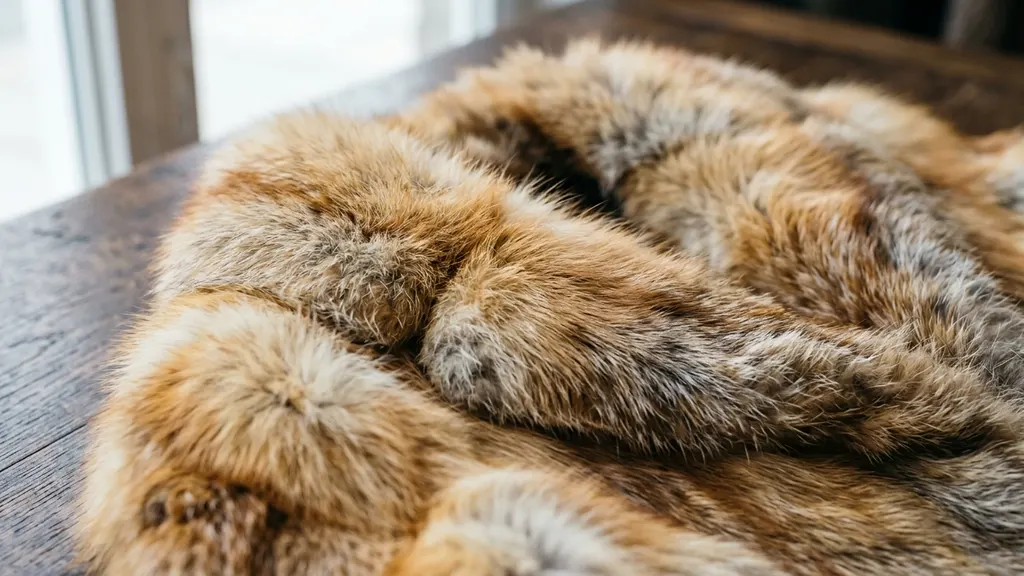
The capelet and stole defined this window. A vintage fox fur coat from 1956 to 1962 will often be a stole rather than a full coat: a long, narrow flat pelt with bias-cut ends, worn over a sheath dress. Silver fox dominated, with white and platinum mutations rising fast. Mamie Eisenhower's 1957 White House photographs show a near-uniform of dinner jacket dressing layered with single-pelt silvers.
Furriers signed their work openly on satin labels: names like Maximilian, Ben Kahn, Revillon Freres, and Bergdorf Goodman appear constantly. A full pelt stole has the head, tail, and paws still attached, while a clip-fronted capelet shows seamed pelts joined down the spine. Linings shifted from heavy satin to lighter crepe-back as central heating spread through American homes. The Vintage Fashion Guild label resource cross-dates most American furrier labels by typeface and union stamp; it is the single most useful free tool in this hobby. If the satin label reads ILGWU but lacks the AFL-CIO addition, the coat predates December 1955. After that date the label combined the two unions.
The 1970s vintage fox fur coat: maxi shapes and dyed pelts
The 1970s loosened everything. A vintage fox fur coat from this decade often reaches the ankle in a maxi cut, paneled with horizontal seams rather than the vertical drop of earlier years. Halston put fox on the Studio 54 floor in casual swing shapes that read more bohemian than baronial. Dyes ranged from raspberry red to pumpkin orange to a saturated chocolate brown, colors furriers had rarely attempted before 1968.
Construction shifts with the era. Linings turn to printed acetate or paisley silk-blend, sometimes with the wearer's monogram added at the inside breast. Stitching widens, pelts get joined in irregular geometry rather than the neat strips of the 1950s, and shoulder seams sit slightly dropped. The collar reads either huge shawl or no collar at all, with the front simply hooked closed. The shaggy red fox swing, what most resellers now call a Penny Lane fox, is a 1971 to 1978 archetype. Our field guide to Penny Lane silhouettes covers the shearling cousins, but the same era logic applies. The Smithsonian Magazine retrospective on Halston documents how American sportswear casualness reached even formal pelts in this window.
The 1980s: Fendi, shoulders, and color-blocked fur
The 1980s rebuilt fox as power dressing. A vintage fox fur coat from 1982 to 1989 typically wears short, cropped at the hip or just below, with engineered shoulders padded a half inch wider than the natural line. The Fendi sisters' 1985 Pelliccia ready-to-wear shifted the conversation away from couture furriers toward designer ready-to-wear, with color blocking and inset leather panels becoming common. Karl Lagerfeld's intarsia fox work for Fendi during this period appears regularly at Christie's vintage fur sales and remains the most collectible 1980s archive.
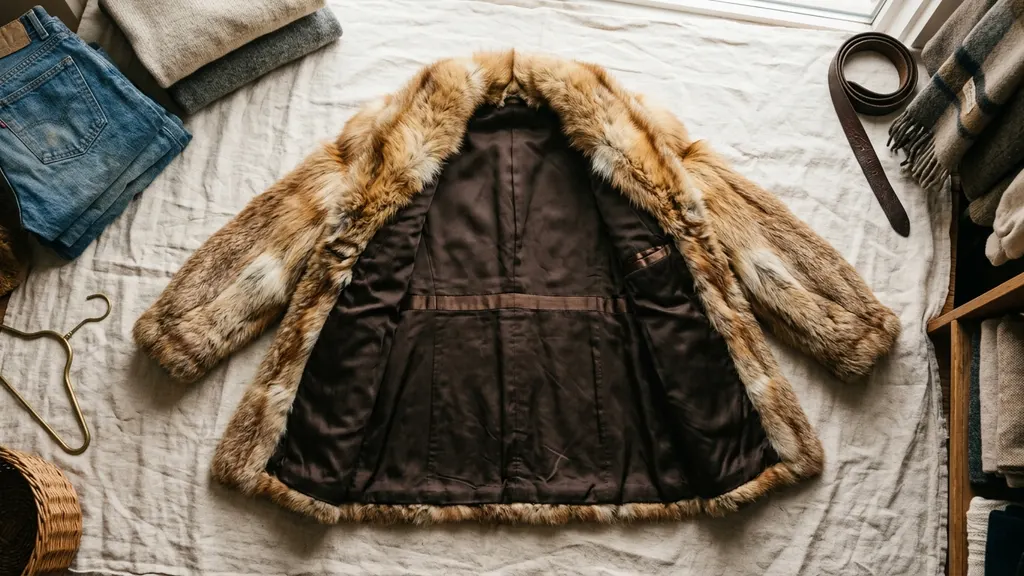
Read these coats by their lining first. Polyester satins with bold pattern prints (leopard, geometric, brand monogram) replace the earlier silks. Inside labels frequently carry the European country of origin alongside the American retailer. Hardware appears: heavy hook-and-eye, large covered buttons, and decorative kilt-pin closures. Shoulder seams are pronounced and often topstitched. A 1986 jacket sits with intention even on a hanger; the structure holds without a body inside. Worth pairing with the Vogue Fendi archive for visual sourcing before you commit to a piece.
Reading a vintage fox fur coat for honest condition
Before you buy any vintage fox fur coat, handle it. A healthy pelt feels supple and cool, with guard hairs that part and fall back smoothly when you run your fingers through them. Dryness shows as cracking at the leather side when you flex a seam: a quiet pop or zipping sound means the skin has lost moisture and may tear in wear. Bald patches on the shoulder, lapel edge, or armpit indicate decades of friction; these areas can be re-faced but the cost often exceeds the resale value.
Check the lining for shattered silk: the slipperiness of a fabric that disintegrates into powder under light pressure. Replacing a lining runs 300 to 600 dollars at a competent furrier. Look at seam stitching. White cotton thread that has yellowed indicates pre-1970 construction; nylon thread came in after 1972 and survives better. Sniff the inside collar. A clean, faintly waxy smell is right. Mustiness, mothball traces, or any sour note costs negotiation room. The Vintage Fashion Guild's fur resource publishes a no-charge species guide that beats most paid identification tools, and our own storage guide walks through humidity ranges that prevent further degradation.
Caring for fox across seasons
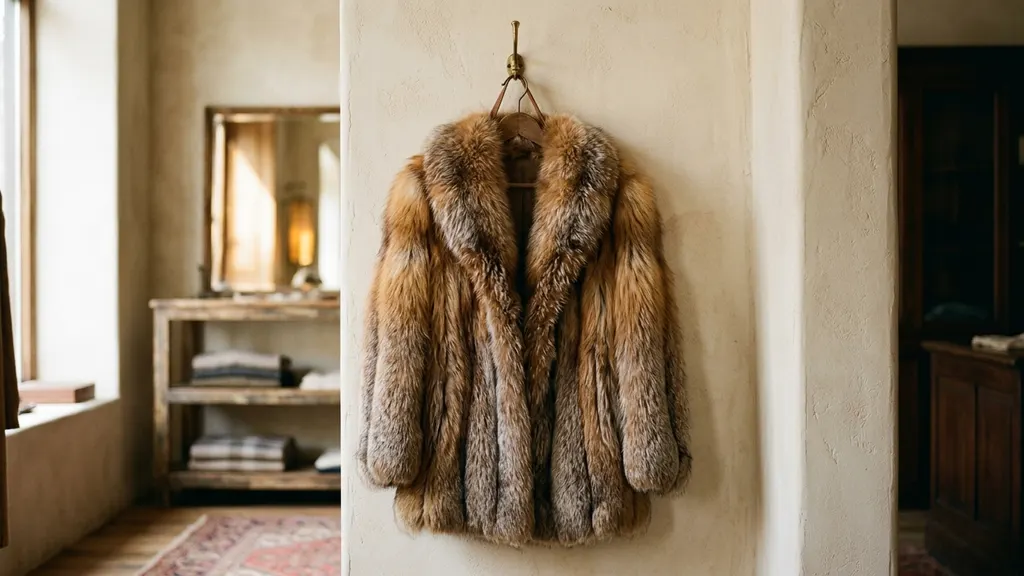
Care defines whether a vintage fox fur coat lives another 60 years. Store fox in a cold, dry, dark space, ideally 45 to 55 degrees Fahrenheit at 50 percent humidity, away from sunlight and central heating vents. Avoid plastic garment bags; they trap moisture and accelerate the leather drying that ends most vintage pieces. A breathable cotton garment bag, hung on a wide wooden hanger so the shoulders do not pucker, is enough. For New York and London summer months, professional cold storage at a furrier runs roughly 40 to 80 dollars per piece per season and pays for itself within a few years.
Wear matters too. Avoid spraying perfume or hair product directly while wearing the coat; alcohol dries pelts faster than anything else. Light rain will not destroy fox if you shake the coat out, hang it loose on a wooden hanger, and let it air-dry at room temperature. Heavy rain calls for a professional. For ethical context on the modern fur conversation, the Humane World for Animals position on the fur trade sets out current sourcing standards, and most buyers in our community choose vintage precisely because no new animal enters the supply chain.
Frequently asked questions
How can I tell if my fox fur coat is real vintage or modern?
Real vintage fox typically shows construction signatures absent from modern pieces. The lining bears a satin label rather than a printed care tag. Pelts are sewn in narrow vertical strips for pre-1970 garments and irregular blocks after. Hand-stitched details at the cuff and collar mostly disappear after 1985, replaced by machine stitching. Hardware will be lead-finished hook-and-eye or fabric-covered buttons rather than plastic. The Vintage Fashion Guild publishes a full chronology of furrier labels with photos that lets owners cross-check most major American houses without specialist help.
What is a fair price for a 1960s silver fox stole today?
Resale ranges run wide depending on label, length, and condition. As of late 2024 a clean 60 inch silver fox stole with intact satin lining and a Maximilian, Ben Kahn, or Revillon Freres label trades between 600 and 1,400 dollars on platforms like 1stDibs and selective Etsy sellers. Unsigned pieces in similar condition sit 250 to 500 dollars. Damaged linings drop the value by 30 to 50 percent. The Business of Fashion secondhand luxury report has tracked the market's roughly 20 percent annual growth since 2020, and vintage fur has moved with that trend rather than against it.
Is buying a vintage fox fur coat ethical?
The answer depends on where you stand. Buying vintage means no new animal enters production for your garment: the pelt has been in circulation for 40 or more years. Most vintage dealers, including Sol Siren, treat each coat as an heirloom artifact already produced rather than an endorsement of present-day farming. Animal welfare organizations such as Humane World for Animals separate their position clearly: they oppose new fur production while acknowledging that vintage represents a closed system. Make the call that matches your own values, with the facts disclosed honestly by the seller and a clear paper trail of provenance from the seller's hand to yours.
How do I store a vintage fox fur coat in summer?
Cold, dry, dark, and breathable. The ideal is 45 to 55 degrees Fahrenheit at around 50 percent humidity in a closet that does not share an exterior wall. Never use a plastic garment bag; the lack of airflow accelerates pelt drying. A cotton bag on a wide wooden hanger works for most homes. If you live somewhere humid or above 80 degrees in summer, professional cold storage at a working furrier runs 40 to 80 dollars per garment per season and roughly doubles the lifespan of the lining. Avoid stacking other coats against it on the rod.