June 2026
How to store vintage outerwear and keep it lasting for decades
How to store vintage outerwear with cedar, padded hangers, climate control, and museum-grade tips to keep fur, leather, and shearling intact for decades.
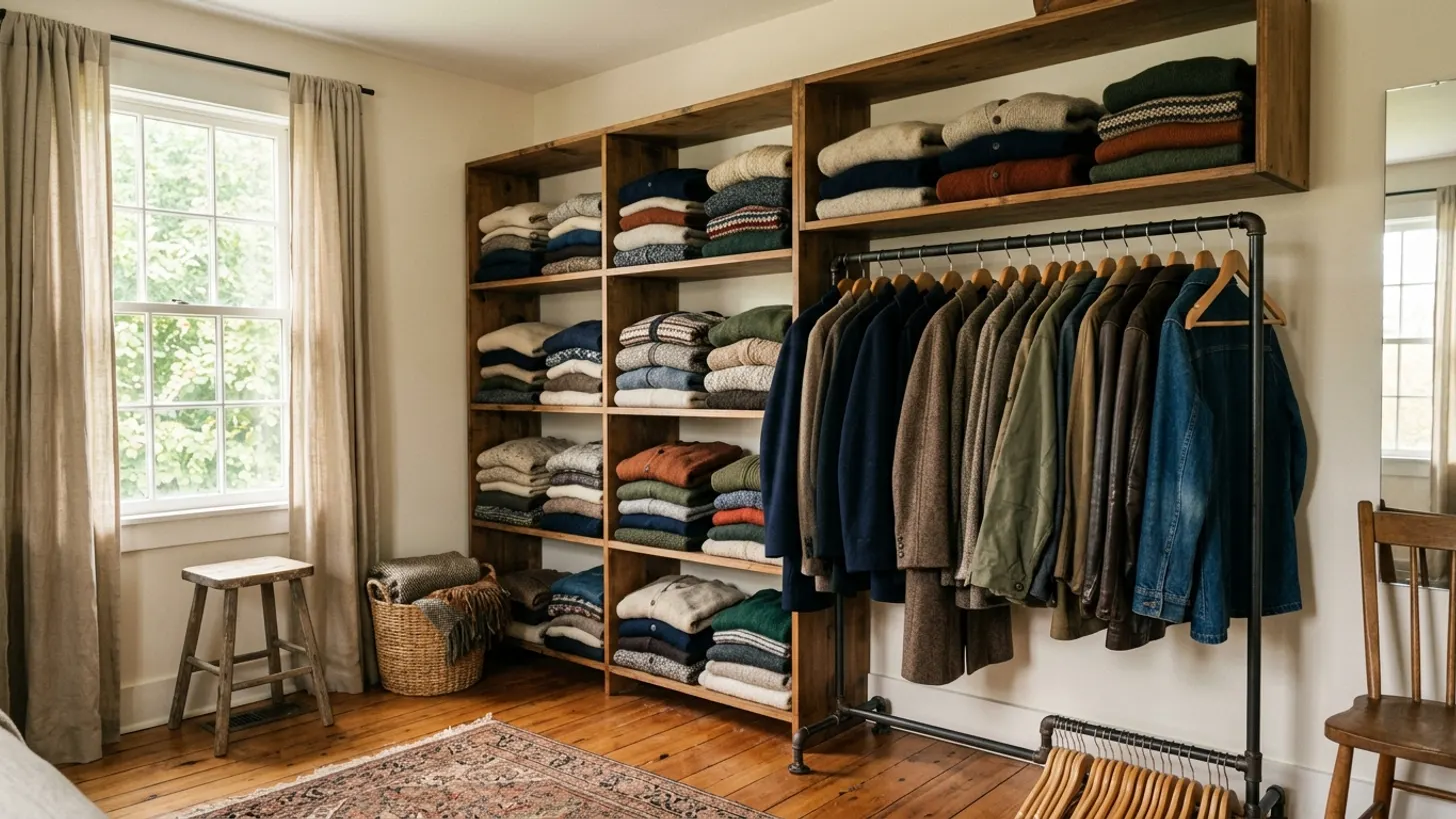
A 1972 ranch mink that traveled from a Boston estate sale to a Brooklyn closet to my studio table arrived with the quiet, sour smell of attic dust and a slow tear along the lining seam. Most damage to vintage coats happens not in wear, but in storage. Learning how to store vintage outerwear is the difference between a piece that lives forty more years and a piece that dies in a garment bag by August. The climate, the hanger, and the cover all matter.
How to store vintage outerwear: the climate that ages it gracefully
The single biggest factor in how to store vintage outerwear is the room you keep it in. Cool, dim, dry, and stable, between 60 and 68°F at 40 to 55 percent relative humidity, slows oxidation, prevents mildew, and keeps leather pliable. Attics, basements, and exterior closets fail on at least one of those counts every season.
The Metropolitan Museum's textile conservation team keeps its garment storage at a steady 65°F and 50 percent humidity for exactly this reason. The V&A's guidance on caring for historic clothing echoes the same range. Both note that swings matter more than the average. A closet that climbs from 55°F in January to 85°F in July does more damage than one that stays at a constant warmer 72°F.
A small hygrometer, the kind sold for cigar humidors (about $15), sits on the closet shelf and gives a reading any time you walk past. If the room runs dry in winter, a single-room humidifier set low keeps the air from cracking leather and brittling silk linings. If summers run damp, a small dehumidifier and a fan on low protect against the slow mildew bloom that destroys lining seams. See our closet climate-control walkthrough for specific equipment Erin uses at the Sol Siren studio.
The starter kit: cedar, padded hangers, cotton garment bags
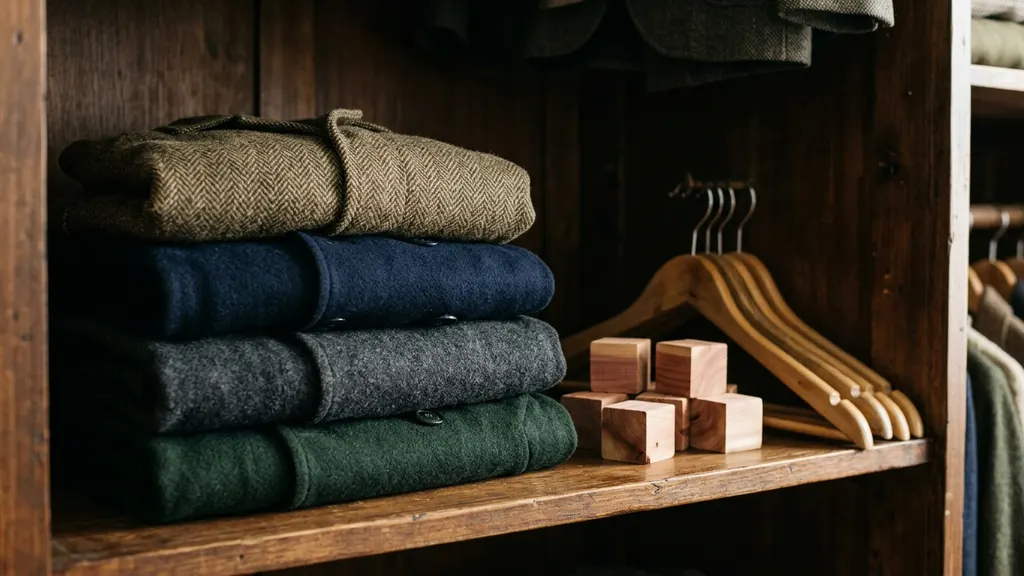
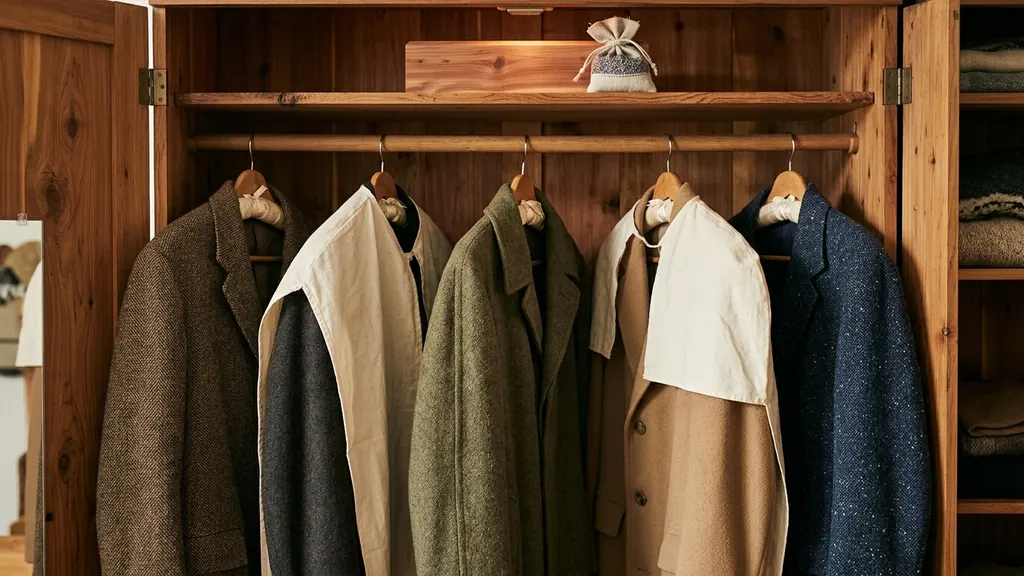
Four items form the entire foundation of how to store vintage outerwear properly: padded wooden hangers shaped to real shoulders, unbleached muslin garment bags that let fibers breathe, cedar blocks for the closet floor, and a hygrometer to read the room. A complete kit costs under $60 and lasts for years.
Wire hangers crease and collapse shoulders within months. Plastic dry-cleaner bags trap humidity and off-gas chemicals into wool and fur. The Vintage Fashion Guild storage guide calls plastic the single most common cause of preventable damage in collectible outerwear. Replace every plastic bag in your closet with cotton before you touch anything else.
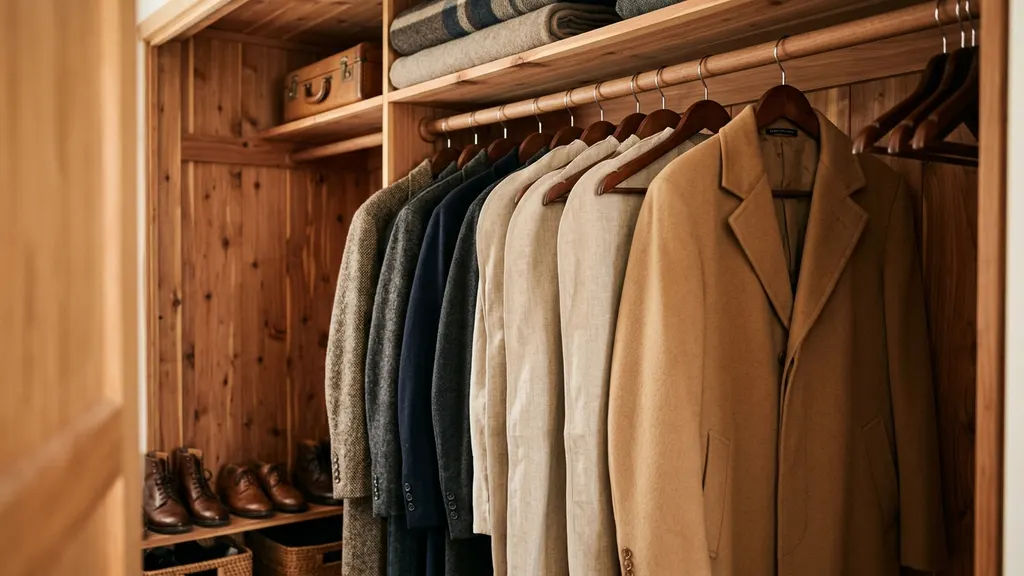
Padded hangers matter more than most owners expect. A 4-pound 1970s ranch mink on a thin wire hanger develops permanent shoulder collapse within a year. The same coat on a contoured wooden hanger with two inches of padding holds its line indefinitely. For long coats, the hanger should fill the shoulder almost to the seam, not stop short of it.
How to store vintage outerwear made of fur, shearling, and Mongolian lamb
Fur and shearling are protein fibers that crack when dry and mat when damp. The right approach to how to store vintage outerwear of this kind is a dark, cool, ventilated space, never plastic, never in a basement, never compressed against another garment.
Professional fur storage facilities run cold rooms at 45 to 50°F with 50 percent humidity from May through September. Most home closets cannot reach that, and that is fine for a one or two-coat collection, but the temperature should still stay below 70°F year-round. Heat dries the natural oils in pelts and the leather backing, which leads to the dry, papery feel that signals a coat past saving.
Mongolian lamb and Tibetan curly lamb need extra space. The long, loose curls flatten under any compression and never fully recover. Give a Mongolian piece its own hanger and its own bag with at least two inches of clearance on each side. Brush the curls gently with a wide-tooth wooden comb every season to keep them from matting at the back where the coat touches the bag. For sourcing notes and condition language, see our Mongolian lamb buying guide.
How to store vintage outerwear in leather, suede, and Penny Lane shearling
Leather is skin, and skin needs hydration. The mistake most owners make when figuring out how to store vintage outerwear in leather form is treating it like a wool coat. Leather wants slightly lower humidity (around 40 to 50 percent), gentle conditioning twice a year, and a cotton cover that wicks rather than smothers.
A Penny Lane coat is a specific 1970s silhouette made famous by the 2000 Cameron Crowe film Almost Famous, in which the character Penny Lane wears a wide-lapel shearling that became the defining image of that decade's boho outerwear. Structurally, the coat pairs a smooth suede or leather shell, cut to hip or mid-thigh length, with a thick curly-lamb or shearling collar, cuff trim, and a full shearling lining. That split-fiber construction is precisely what makes knowing how to store vintage outerwear of this kind so demanding: the suede shell prefers drier conditions around 40 to 50 percent humidity, while the shearling lining needs at least 45 percent to stay pliable and soft. Owners who default to full leather care let the shearling dry out; those who default to fur-only care let the suede stiffen. The storage solution threads that difference by holding 40 to 50 percent relative humidity, the middle ground where both fibers stay stable and neither suffers long-term damage.
For 1970s Penny Lane shearling, the suede exterior and curly lamb collar pull in opposite directions. Suede needs a brush, never a damp cloth, and benefits from a light dusting of cornstarch over an oil mark, left overnight before brushing out. Shearling collars want the same cool, dry room as standalone fur. The FIT Museum's textile conservation practice notes that the lining is often the first thing to fail, and worth checking every six months when you rotate. More history at our Penny Lane coat history.
Suede jackets keep their shape better when stuffed lightly. Crumpled acid-free tissue paper inside the sleeves and shoulders during long off-season storage prevents the permanent crease at the elbow that no steamer can release. These are the building blocks of how to store vintage outerwear that combines suede, leather, and fur in one garment.
Seasonal rotation: what gets wrapped, what stays accessible
Working coats and archival coats live different lives. Rotation is not about reorganizing for fun; it gives heavier outerwear a long, undisturbed rest in dark archival storage while lighter pieces move into the active closet for the warmer months.
The rotation calendar I keep at the Sol Siren studio is borrowed from Smithsonian textile conservators with one home-closet modification: I rotate at the equinoxes rather than the solstices, because the temperature swing is more brutal at those points and the active closet needs to match the season already underway. Our seasonal rotation checklist walks through the full reset.
| Garment | Active winter | Active summer | Archival rest months |
|---|---|---|---|
| Full-length mink | Front closet | Wrapped, dark closet | April through October |
| Penny Lane shearling | Front closet | Wrapped, dark closet | May through September |
| Leather trench | Front closet | Front closet (mild) | July through August |
| 1970s suede jacket | Wrapped, dark closet | Front closet | December through February |
| Wool overcoat | Front closet | Wrapped, dark closet | May through September |
Two notes on how to store vintage outerwear that come from museum practice are worth stealing. First, write a small index card for each coat and tuck it inside the garment bag with the date last conditioned, the date last frozen against pests, and any oddities discovered (a worn cuff, a missing button, a faint smell). Second, do not unzip a wrapped bag until you actually plan to wear the coat, since every opening lets fresh air, dust, and light back in.
Common mistakes when learning how to store vintage outerwear
Most damage to vintage coats is preventable, and most prevention is unglamorous. When new collectors ask how to store vintage outerwear and immediately reach for a vacuum-seal bag, I always step in. Compression, plastic, perfume residue, and direct sun do far more harm than moths ever will.
The five mistakes I see most often, ranked by how often they end a coat's life early:
- Vacuum-seal bags. They compress pile and lining into a shape the fibers remember forever. The Humane World guide to fur care notes that one summer in compression can permanently flatten guard hairs.
- Plastic dry-cleaner bags left on after pickup. Designed to protect for the drive home, never for storage.
- Cedar oils applied directly. The blocks work through slow scent vapor; oil rubbed onto a pelt or leather permanently stains.
- Perfume sprayed near the closet. Alcohol vapor degrades silk linings within months.
- Hanging by the back-of-neck ribbon loop. That loop is for shop display, not for an 8-pound coat. Always hang from the shoulders.
Frequently asked questions
Can I store vintage fur in a regular bedroom closet?
Yes, with three modifications. The closet needs to stay below 70°F year-round (a small thermometer left inside through August will tell you), keep humidity in the 45 to 55 percent range (a hygrometer costs roughly $15), and stay dark when the door is closed. Direct sun through a closet window will fade and dry pelts within a season. Avoid bedroom closets that share a wall with a bathroom, since shower steam migrates through drywall and creates a slow humidity bloom that mildews lining seams. The Vintage Fashion Guild's storage guide confirms a stable home closet beats an inconsistent cedar chest for most single-coat owners. One practical step: hang a small muslin sachet of dried lavender on the rod across from the coat. Lavender deters moths without the chemical residue of mothballs, which damage silk linings on direct contact and leave an odor that no amount of airing removes.
Are vacuum-seal bags ever safe for vintage coats?
No. Vacuum-seal bags compress the pile, crush the lining, and trap whatever moisture was inside at sealing. The compression sets a permanent shape in fur, shearling, and wool that no amount of steaming reverses. The Humane World fur storage guide is explicit: no compression of any kind, not even loose folding for shipping. For moving or storing in a different city, use a hanging garment bag inside a wardrobe box, never a flat compression sack. The same rule applies to leather, suede, and Penny Lane shearling, where compression sets creases the lining will hold for years. If a move requires the coat to lie flat even briefly, layer it face-down on acid-free tissue, fold once along the natural shoulder line, and cushion that fold with additional tissue rather than pressing it closed. Rehang the coat within 24 hours and allow it to recover its shape fully before returning it to rotation.
How often should leather coats be conditioned in storage?
Twice a year is the conservator standard. The first conditioning happens before the coat goes into off-season storage (April for winter pieces in most US climates), the second when it comes back out in October. Use a leather-specific conditioner, never a general furniture polish or saddle soap, and apply a thin coat with a cotton cloth following the grain. The FIT Museum's conservation guidance notes that over-conditioning is as harmful as under, since excess oil migrates into the lining and stains permanently. A whisper of product is the right amount, less than you think. Test any new conditioner on an interior seam or hem first, then wait 24 hours before applying to visible surfaces; some products permanently darken suede, and discovering that on a collar rather than a hidden seam is not correctable. Wipe the lining separately with a clean dry cloth to remove dust, since lining fabric needs no oil at all.
What about moths and carpet beetles?
Cedar repels moths through scent (which fades, so blocks need re-sanding or replacing every six months) but does nothing against carpet beetles, which actually cause more vintage outerwear damage in modern US homes. If you suspect larvae (look for irregular small holes and shed casings), freeze the garment in a sealed cotton bag at 0°F for 72 hours, thaw at room temperature for 24 hours, then freeze again for another 72 hours. This kills both adults and eggs. The Met Costume Institute uses the same protocol for incoming pieces before they enter collection storage. After the final thaw, inspect every seam, pocket, and lining fold before returning the coat to the closet, since desiccated casings can harbor eggs the freeze did not reach. Re-sand or replace the cedar blocks and vacuum the closet floor before rehanging, since larvae travel along baseboards and the reset closes that entry point.