November 2026
Vintage 1940s dresses: how to identify rayon, prints, and fit
Learn how to identify vintage 1940s dresses by rayon hand, print scale, zipper placement, and flat measurements, plus which flaws are worth repairing at home.
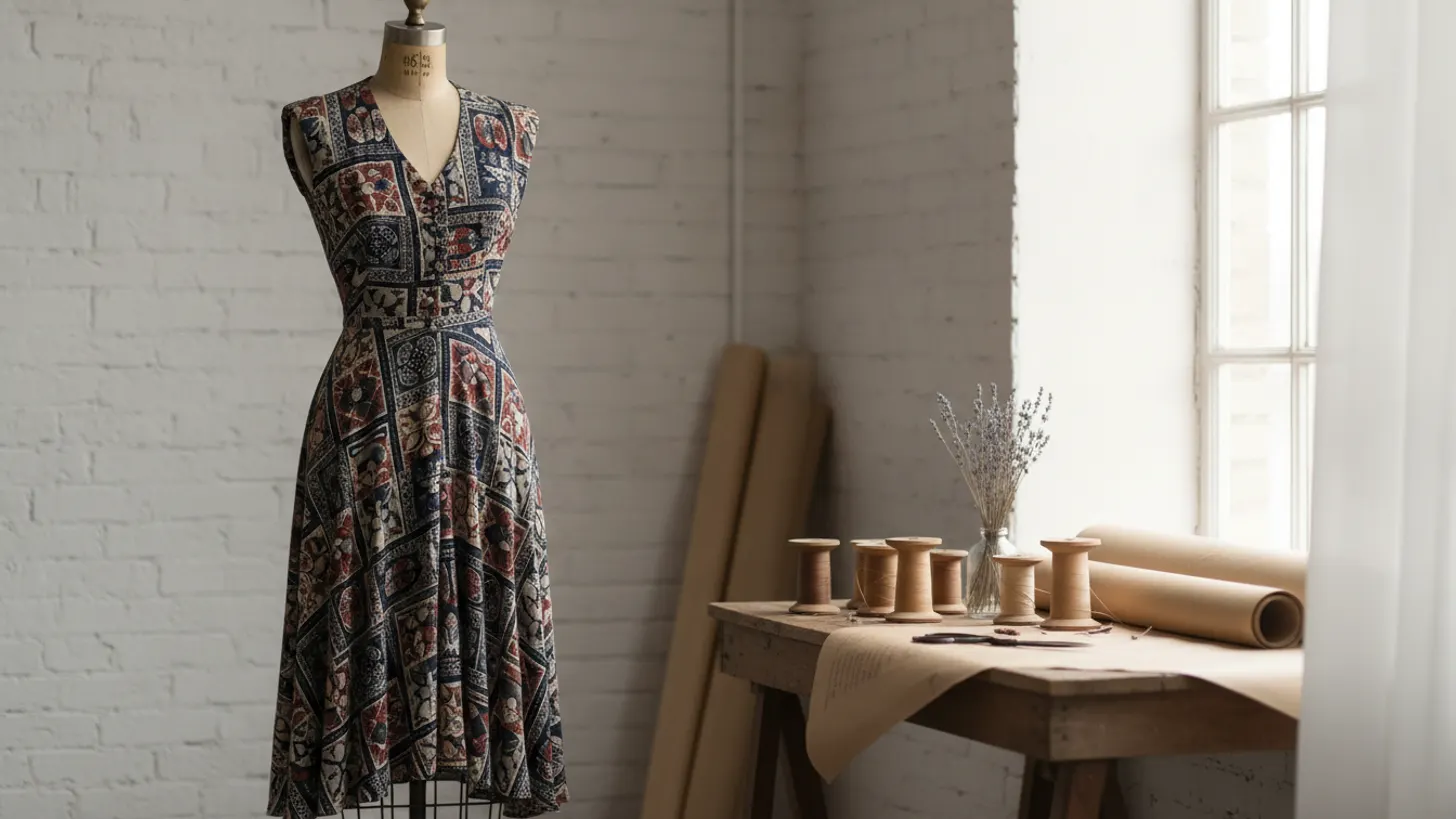
Madeleine Vionnet had already taught dressmakers to cut on the bias before the 1940s began, and the Metropolitan Museum of Art dates that technique to her 1920s and 1930s work. What the war years added was restraint: narrower skirts, shorter hems, a metal zipper set into the side seam. Learn those constraints and vintage 1940s dresses stop being guesswork, because fabric hand, print scale, and closure placement date a dress long before any label does.
What silhouettes define authentic vintage 1940s dresses?
Three lines repeat across the decade: a squared or lightly padded shoulder, a waist marked by a seam or a self belt, and a skirt that falls straight or in soft gores to just below the knee. Width sits at the shoulder, never at the hem.
That narrowness was not only taste. Smithsonian magazine's reporting on wartime clothing restrictions explains how civilian fashion bent around rationing and government limits on cloth, which is why skirts stop short of a full sweep and why pockets, cuffs, and pleats are used sparingly. The drape still comes from technique: the Metropolitan Museum of Art's costume holdings for Madeleine Vionnet date the bias cut to her 1920s and 1930s designs, and dressmakers carried that cutting logic into the next decade on a tighter cloth budget.
When a dress reads wider through the skirt, softer in the shoulder, and longer in the hem, you are usually looking at 1947 or later, after Dior reset proportions. Period-correct vintage 1940s dresses stay vertical. Compare the line against a 1950s rockabilly silhouette and the difference in skirt volume is immediate.
There is a full breakdown of this topic in Vintage 1990s minimalist dresses: slip silhouettes, fabric, fit.
There is a full breakdown of this topic in Vintage 1960s mod dresses: a guide to shift shapes and labels.
How to identify rayon, crepe, and cotton in vintage 1940s dresses
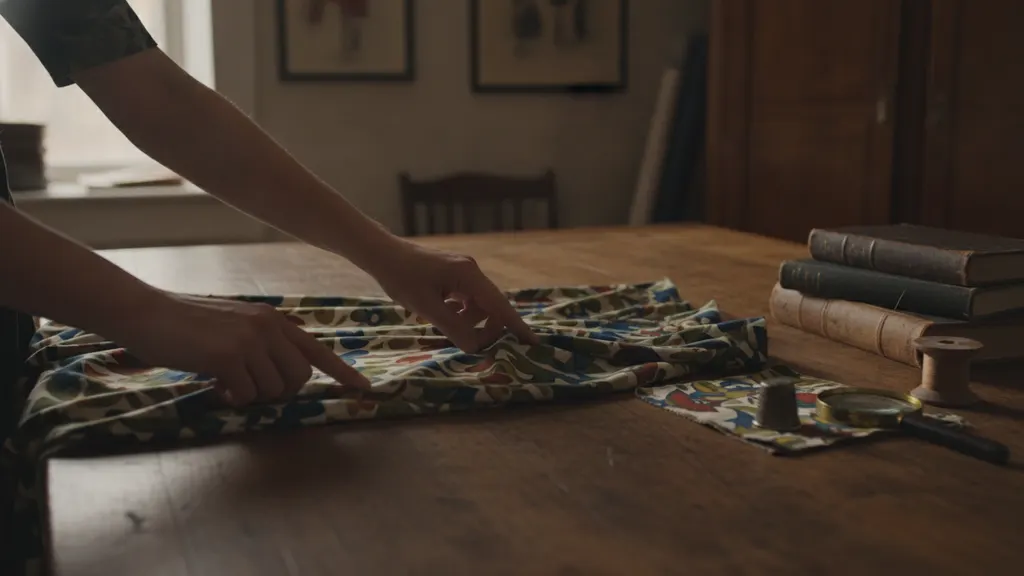
Work by hand, by drape, and with a single drop of water. Rayon crepe feels cool and slightly dry, drapes heavily, and darkens fast where water touches it. Cotton feels warmer and creases sharply. Silk warms to the palm and springs back. No destructive testing required.
The Museum at FIT's textile reference identifies rayon as a regenerated cellulose fiber used widely in twentieth century apparel, which matters because it behaves like a plant fiber rather than a plastic one: it weakens when wet, it creases, and it will not melt under heat the way later synthetics do. Good On You's material guide to viscose rayon describes the same cellulose chemistry in modern production terms.
For dating, the weave matters as much as the fiber. Moss crepe, rayon faille, and matte jersey carry most vintage 1940s dresses, while polyester double knit does not arrive until decades later, so a slick, springy, crease-resistant knit is a reproduction tell. If you do want to burn-test a fiber, pull the thread from an inside seam allowance rather than the garment face, and read cleaning guidance for vintage clothing before any wet work.
We cover the details separately in How to identify vintage 1920s dresses: beading, bias, and labels.
We cover the details separately in How to identify vintage fabrics: rayon, acetate, nylon, polyester.
Which prints, closures, and seams date vintage 1940s dresses
Look at three places in order: the print scale, the closure type and its position, and the inside of the seams. Period prints run small and tight, closures sit at the side seam, and seam allowances are pinked or left raw rather than overlocked.
Novelty prints, conversational prints, small florals on dark grounds, and polka dots all read as period correct, and the Victoria and Albert Museum's utility clothing collection shows how austerity-era pattern and trim were handled in Britain under the same pressures. Labels help when they survive: the Vintage Fashion Guild label resource is the reference to check before trusting a union tag or a woven brand label, and the same logic applies to dating vintage silk scarves by print and label.
Construction carries the rest. Metal zippers at the left side seam, snap plackets, hand-finished hooks, narrow hand-turned hems, and seam allowances cut with pinking shears are what I expect inside vintage 1940s dresses. Serged edges, fusible interfacing, and plastic coil zippers belong to later production, and the Vintage Fashion Guild resource above is the cross-check on any label that disagrees with the hardware.
Related reading: How to authenticate vintage band t-shirts: tags, prints, and wear.
How do 1940s dress measurements compare with modern sizing?
Treat the printed size as decoration. Mid-century sizing ran on different bust and waist standards than contemporary ready-to-wear, so the only reliable comparison is flat measurement against a garment you already own and wear comfortably. Measure that dress, write the numbers down, and shop the numbers.
Ask for five measurements before buying, and ask whether they were taken flat or doubled. Vogue's archive coverage of 1940s fashion is useful for seeing how close the fit was meant to sit at the waist, which is where most returns start. Period dresses also assume period underpinnings, so a smooth bust line often depends on what goes underneath. Sellers who publish flat measurements make this easy, and shopping vintage fashion online gets much safer once you compare numbers instead of labels.
| Measurement | How to take it flat | What it tells you |
|---|---|---|
| Bust | Armpit to armpit, doubled | Whether the bodice closes without strain |
| Waist | Narrowest point, doubled | The most common reason a period dress does not fit |
| Hip | Nine inches below the waist seam, doubled | Whether a narrow skirt sits smooth |
| Shoulder | Seam to seam across the back | Where the padded shoulder will land |
| Length | Shoulder seam to hem | Whether the hem falls at the period knee line |
Alterations are possible but limited on vintage 1940s dresses, because the seam allowances are often narrow and the fabric has already aged at every stitch line. Letting out is usually off the table. Taking in by a small amount, shortening a hem, and replacing a zipper are realistic.
What flaws are repairable, and which should stop a purchase?
Repairable: a missing snap, a short seam split, a loose hook, a hem that needs re-turning, light surface soil on cotton. Walk away from underarm shatter in rayon crepe, brittle dye-rot in dark grounds, and widespread moth loss, because in those cases the fiber itself has failed. I learned the underarm rule the expensive way: I once bought a honey-colored rayon day dress at an estate sale in Asheville, North Carolina, in the spring of 2019, checked the hem and the collar, and skipped the underarms because the seller had steamed the dress and it hung beautifully on the rack. Within two wears both underarm seams shattered along the grain, fiber gone powdery from decades of perspiration with no outward sign until the cloth was flexed under a raised arm. No stitch restores strength to fiber that has already failed. Sotheby's fashion department condition notes show how carefully condition is graded at the collecting end of the market, and that same grading habit, checking stress points before checking hems, protects a wearer buying for everyday use.
Price the repair in time before committing. A split underarm seam with a wide allowance is an afternoon of work; a disintegrating one is a wall hanging. The logic is close to the triage used for knits in mending vintage knitwear, and honest condition disclosure is what makes vintage 1940s dresses safe to buy sight unseen.
Frequently asked questions
How can I tell if a dress is really from the 1940s?
Read construction before labels. Expect a squared shoulder, a waist seam or self belt, a narrow skirt ending near the knee, a metal zipper at the left side seam or a snap placket, pinked or raw seam allowances, and a hand-finished hem. Print scale runs small. Then check the fiber by hand: rayon crepe is cool, dry, and heavy in the drape. Harper's Bazaar archive coverage of 1940s fashion is a useful visual cross-reference for silhouette. No single clue is proof by itself: I have bought a dress with a correct-looking side zipper that turned out to be a later replacement, so look for four or five agreeing details before you commit, not one.
Is rayon the same thing as polyester?
No. Rayon is made from regenerated cellulose, which is plant matter chemically reformed into fiber, while polyester is petroleum based. That difference drives care: rayon loses strength when wet, shrinks, water-spots, and creases, where polyester shrugs all of that off. Sourcing Journal's reporting on cellulosic fibers covers how viscose rayon is still produced from wood pulp today. For a 1940s dress it means cold, brief, minimal handling, and it also means the fabric takes a warm iron without melting, unlike the later synthetics it is often mistaken for.
What's the safest way to clean a 1940s rayon dress?
Usually not safely at home. Rayon gives up a large share of its strength when saturated, and old dyes in dark rayon prints bleed. Spot treatment tested on an inside seam, airing, and professional cleaning are the conservative order of operations. If the dress is cotton and the stitching is sound, a brief cold hand soak is sometimes reasonable. New York Times reporting on garment care and any specialist who handles vintage will say the same thing: test first, then decide. Never machine wash a rayon crepe garment, whatever the listing claims.
What does a side zipper tell you about a 1940s dress?
Side closures were the standard dressmaking solution before center-back zippers became routine. They let a fitted bodice pass over the head and then cinch at the waist. A short metal zipper set into the left side seam is one of the strongest period tells, especially paired with snaps above it. Plastic and nylon coil zippers belong to later decades, so a coil zipper at center back usually means a reproduction or a replacement. Who What Wear's guide to shopping vintage covers similar hardware checks worth running before you pay.
What size is a 1940s dress compared with today?
Smaller than the number printed on it, in most cases, because mid-century size standards were built on different body measurements than current ready-to-wear. Do not convert, measure. Take a dress that already fits you well, record bust, waist, hip, shoulder, and length flat, and compare those five numbers to the seller's. Waist is where fit fails most often on vintage 1940s dresses. The Cut's reporting on apparel sizing explains how unstable sizing has been across decades. Ask whether measurements were taken flat and doubled, and ask about seam allowance width if you plan alterations.
Are vintage 1940s dresses worth collecting or only wearing?
Both, and the split comes down to condition and fabric. A sound rayon day dress with a good print is wearable and findable again; a labeled designer piece, a documented utility garment, or an unworn example belongs in storage. Christie's fashion sale results show which names and conditions carry value at auction. For everything else the value sits in the print, the fit, and the fact that one garment survived eighty years. Wear the common ones, store the rare ones flat, and keep the provenance note with the dress.