October 2026
How to clean vintage clothing so it lasts for decades at home
How to clean vintage clothing without damaging it: fiber tests, safe hand-washing, archival storage, stain removal, and when to call a dry cleaner instead.
A 1970s Penny Lane coat can survive fifty years in a closet and then lose its collar in a single wash. That gap, between decades of patience and one hot cycle, is the whole subject of how to clean vintage clothing. The Woolmark Company puts the ceiling for wool at 30 degrees Celsius, and most loss happens above it. Name the fiber first, wash cold or not at all, then store the piece flat, dark, and acid free.
How to clean vintage clothing starts with identifying the fiber
Before water touches anything, name the fiber. Silk, wool, rayon, acetate, and the early synthetics all react differently to moisture, heat, and agitation, and a wrong guess is the most common cause of permanent damage. Hand feel, drape, weave, and the label narrow it down in minutes, with no equipment at all.
Start with the label, then distrust it. Union labels, RN numbers, and content rules shifted across the decades, so a garment with no fiber tag is often pre-1960. The Vintage Fashion Guild fabric resource catalogues period fabrics by name and photograph, which is how most dealers and collectors identify cloth. Conservators at the Costume Institute at the Metropolitan Museum of Art work in the same order: observation first, intervention last.
Tactile tells do the rest. Wool springs back from a crushed fist and smells faintly of lanolin when warmed. Silk is cool at first touch, then warms quickly. Rayon feels like silk when dry and like wet paper once damp, because it loses much of its strength saturated. Acetate goes brittle and shiny with age and dissolves in acetone, which is why nail polish remover near a 1950s lining ends badly.
I do not test materials in a lab. Identification here is visual and tactile, the way Carol Burns taught me on the floor of her Los Angeles shop fifteen years ago, and anything uncertain is listed as uncertain. That matters because how to clean vintage clothing is downstream of what the cloth actually is. If you cannot name the fiber, treat the piece as the most fragile thing it could be.
How to clean vintage clothing by hand: silk, wool, and rayon
Most vintage pieces never need immersion. Brush them, air them, treat spots locally, and they stay stable for years. When a wash is genuinely needed, work cold, flat, and fast. Wool sits at 30 degrees Celsius or below, because hotter water interlocks the scales on the fiber and felts the cloth for good.
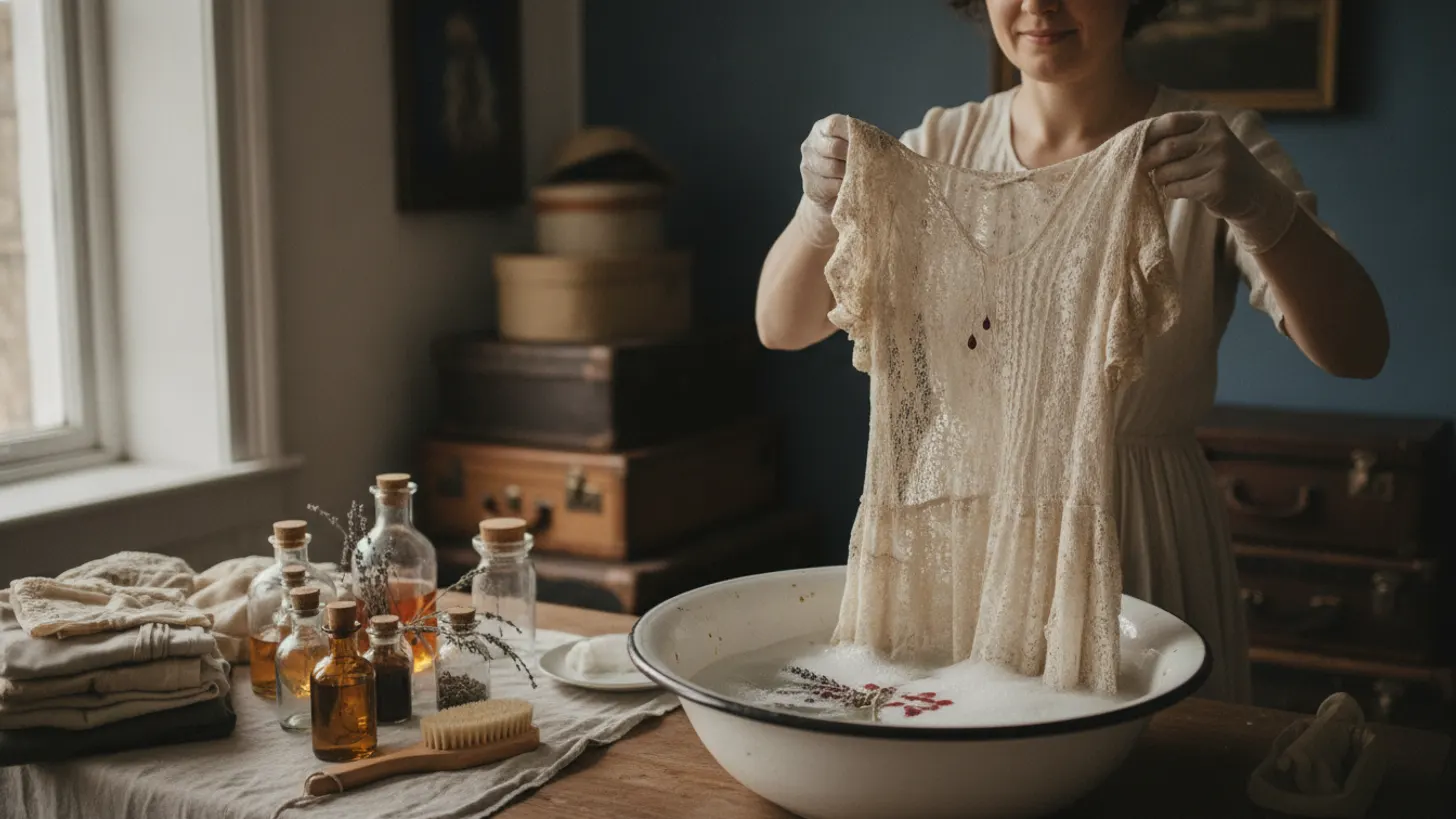
The hand-wash half of how to clean vintage clothing is a short, rehearsed sequence. Fill a clean basin with cool water, add a small amount of pH-neutral wash made for wool or silk, and submerge the garment flat. Press water through it with open palms for no more than ten minutes. Lift it supported from underneath, because a saturated garment weighs several times its dry weight and tears at the shoulders. Rinse the same way. Never wring, never twist, never hang it wet.
Dry flat on white towels, reshaped to its measurements, out of sun and away from radiators, turned every few hours. The Woolmark Company's wool care guidelines are the clearest public reference on temperature, and the handling matches how dress historians at the Museum at FIT describe moving textiles: support the weight, limit movement, let water leave slowly. For heavy outerwear, washing gains almost nothing, which I go into in our guide to cleaning a vintage wool coat.
| Fiber | Water | Method | Never |
|---|---|---|---|
| Wool, shearling | 30 C maximum | Brush, air, spot clean; full wash only if seams are sound | Hot water, machine agitation, hanging wet |
| Silk | Cool, brief | Ten-minute flat soak, pH-neutral wash, roll in a towel | Sun drying, enzyme detergent, chlorine bleach |
| Rayon, acetate | Avoid where possible | Specialist solvent cleaning; test trim first | Long soaking, acetone, hot pressing |
| Cotton, linen | Cool to lukewarm | Gentle hand wash; mesh bag for sturdy pieces | Chlorine bleach, hot dryer |
| Fur, leather | None | Specialist only; cold storage between seasons | Home washing, saddle soap on vintage finishes |
How to clean vintage clothing and store it to prevent yellowing, moths, and fiber breakdown
Good cleaning habits only hold if storage does not undo them. Yellowing comes from acid migration and light; holes come from clothes moth and carpet beetle larvae feeding on soiled fiber; brittleness comes from heat swings in humidity. Fix those three variables and a garment can sit for a decade without changing.
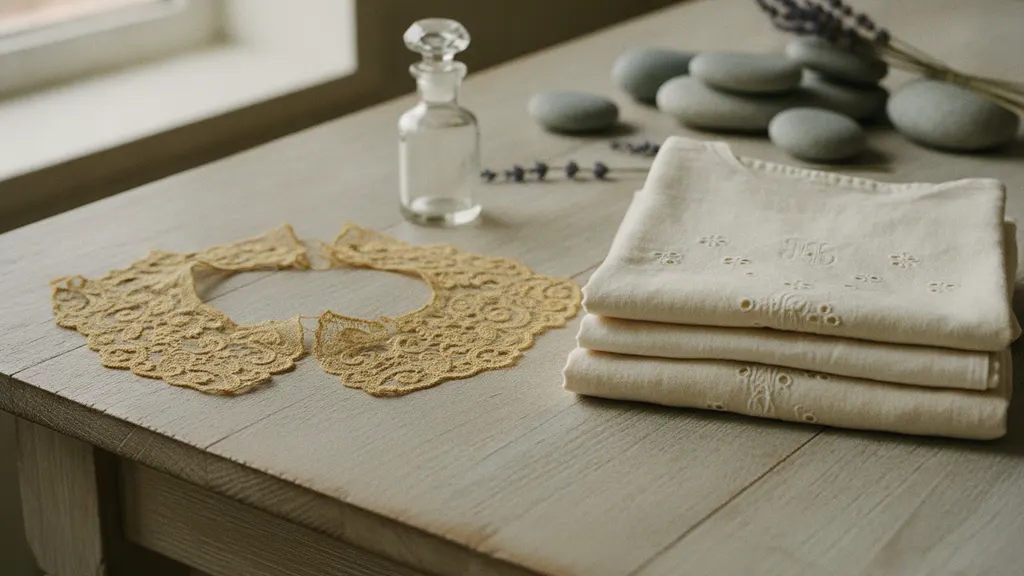
Use unbuffered acid-free tissue to pad shoulders, sleeves, and every fold, then lay the piece in an archival box rated pH 7.0 or above. That threshold is the standard textile conservators at the Victoria and Albert Museum apply to long-term garment storage, and it is the one number worth spending money on. Ordinary tissue and cardboard are acidic and print their own stains into cloth over years. Plastic dry cleaning bags trap moisture and off-gas; washed cotton sheeting does the same job without the chemistry.
Moth larvae are not especially interested in clean wool. They eat perspiration, skin oils, and food residue sitting on wool, which is the real reason a piece goes away brushed and aired rather than straight off your back. Cedar is the most over-trusted tool in the closet: entomologists at University of California Agriculture and Natural Resources note that cedar's natural oils fade within 12 to 24 months, after which the block must be sanded back or replaced to do anything at all.
Hang only what can take it: coats and tailored jackets on wide padded hangers with the shoulders fully supported. Knits, bias-cut silk, beading, and anything heavy lies flat. Keep everything dark, cool, and stable rather than warm and swinging, and away from attics and exterior walls. Seasonal rotation gets more detail in our guide to storing vintage outerwear.
How to clean vintage clothing professionally: when to call a dry cleaner
Send a garment out when the fiber cannot meet water, when the construction is too complex to dry flat, or when a stain is older than your memory of it. Tailored structure, fur, leather, rayon crepe, weighted silk, and glued trim all belong with a specialist rather than in a basin.
Then do the part most people skip: write the instructions down. Say the garment is vintage and give the decade, point out every weak seam, split lining, and loose bead, and state plainly that you accept visible age and do not want it pressed out. Ask for hand finishing, steam rather than press, and no plastic bag afterward. Ask whether the shop handles bridal, costume, or museum work; the answer tells you most of what you need. Sourcing Journal's coverage of textile care is a useful window into how industrial cleaning treats fiber.
Say what you expect before the garment changes hands. Get a condition note confirmed in writing, point out every flaw you already know about, and set the ground rules before any cleaning starts. For fur and shearling, ask about cold storage rather than cleaning, since tanned skins dry out and a cleaner who does not work with fur will treat them like cloth. Construction tells you how much a piece can take, which is part of why dating matters, as in our guide to dating a vintage fur coat.
How to clean vintage clothing stains: removing foxing, perspiration, and old sizing safely
Old stains are chemistry that has had decades to set, and the fix gets riskier the longer it waited. Work from the least aggressive method upward, test on an inside seam allowance first, and accept that some marks stay: a repair attempted on forty-year-old fiber usually does more harm than the original mark ever did.
Perspiration stains are alkaline salts plus oxidized protein, and they weaken the fiber underneath, especially silk under the arms. A long cool soak with pH-neutral wash and patience does more than any single product. Yellow halos on cotton and linen respond to oxygen-based soaks, slowly and repeated; chlorine bleach removes the stain by removing the cloth.
Foxing, the rust-brown spotting that Smithsonian Magazine's reporting on archives and conservation describes on paper and textiles, sits inside the fiber and seldom lifts fully. Old sizing, the starch or filler added at the mill, goes stiff and gray with age and often softens with repeated cool soaks and nothing else. Oils, wax, and lipstick want absorption before any solvent: cornstarch, a few hours, brush away, repeat. The cloth itself sets the limit, which is why identification came first and why condition gets logged honestly in every listing rather than promised away.
Frequently asked questions
Can I put vintage clothes in the washing machine?
Almost never, and the exceptions are narrow. Agitation is the problem more than the water: a drum twists seams that have been resting for forty years, and old thread gives way before the cloth does. Sturdy mid-century cotton and linen with sound stitching can take a cold, short delicates cycle inside a mesh bag. Wool, silk, rayon, beading, fur, and anything with a crumbling lining stays out. Washing less often, as Good On You's garment care guidance argues for modern clothes, matters more for old ones. For most pieces, how to clean vintage clothing at home means airing and spot work instead.
How do I get a musty smell out of a vintage coat?
Air it first, for longer than feels reasonable. Hang the coat in shade with moving air for three to seven days, inside out, away from direct sun. Most closet smell is volatile and simply leaves. If it lingers, set the garment in a box with an open container of baking soda nearby, never touching the cloth, for a week. Activated charcoal works the same way. Steam, perfume, and fabric spray mask the smell and add moisture, which is how mildew starts. The Vintage Fashion Guild's care discussions reach the same conclusion, and the full sequence sits in our guide to removing musty smells.
Does freezing vintage clothing actually kill clothes moths?
It can, done properly. Seal the garment in a bag with as little air as possible, freeze at the lowest setting your freezer reaches for at least two weeks, then thaw it sealed so condensation forms on the plastic rather than the cloth. Brief overnight freezing does not reliably reach eggs. Entomologists with the UC Statewide Integrated Pest Management Program treat temperature, duration, and sealing as one protocol rather than a quick trick. Freezing kills what is present now and does nothing about reinfestation, so clean the piece before storage: larvae feed on perspiration and food residue, not clean fiber.
Is dry cleaning safe for 1960s and 1970s garments?
Sometimes, and the risk is usually heat and pressing rather than solvent. Perchloroethylene is hard on adhesives, sequins, early plastics, and rubberized elastic, and a hot commercial press flattens the nap of wool and shearling for good. Find a cleaner who handles bridal, costume, or museum work, request hand finishing with no press, and ask them to test any trim before the full cycle. The Cut's reporting on caring for secondhand clothes makes the same point about finding a specialist first. The professional side of how to clean vintage clothing is mostly choosing the right shop and writing down what not to do.
What is foxing, and can it be removed from fabric?
Foxing is the rust-brown spotting familiar from old paper, tied to metal impurities, humidity, and fungal activity. On textiles it shows as small reddish-brown blooms, often along stored folds or near metal findings and hangers. It is staining inside the fiber rather than surface dirt, so it rarely lifts completely. Gentle sun exposure on white cotton and linen helps slightly; chlorine bleach does not, and it weakens cellulose permanently. Christie's condition-reporting practice treats foxing as a documented condition issue rather than something to erase. Disclose it, then stop the humidity that caused it.
How should I store vintage clothing long term?
Clean, dark, dry, and flat, in materials that are chemically neutral. Use unbuffered acid-free tissue to pad shoulders, sleeves, and every fold, then box the garment in an archival box rated pH 7.0 or above, the standard textile conservators at the Victoria and Albert Museum apply. Heavy coats can hang on wide padded hangers; knits, bias-cut silk, and beading must lie flat or they stretch out of shape. Skip plastic bags, cedar chests in direct contact with cloth, and attics. Conservation training at the Fashion Institute of Technology treats stable temperature and humidity as the main variable, ahead of any product you can buy.