November 2026
Vintage 1990s minimalist dresses: slip silhouettes, fabric, fit
How to spot vintage 1990s minimalist dresses: bias slip tells, rayon and acetate clues, label dating, condition checks, and styling that still works today.
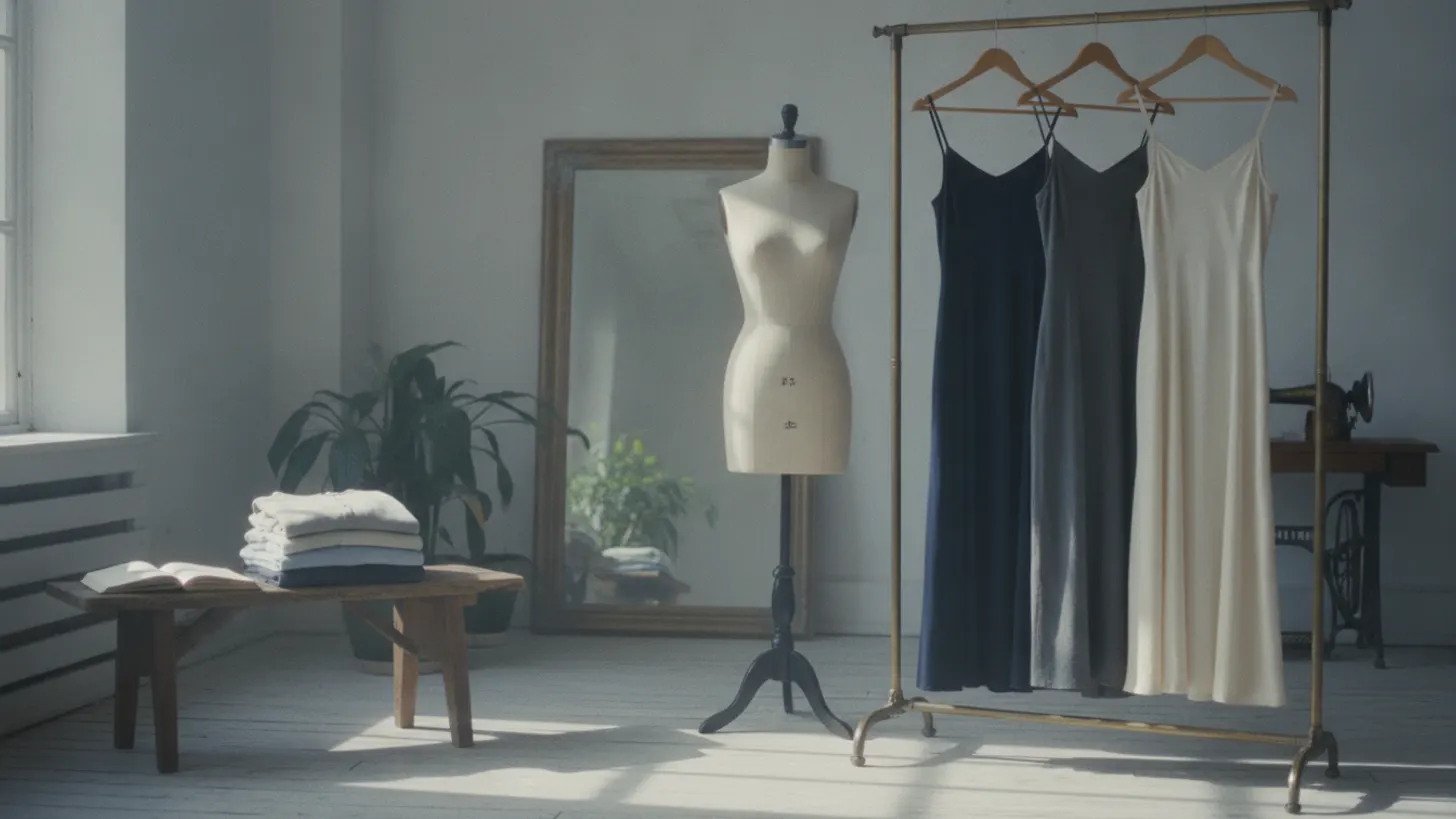
At an estate sale outside Asheville, early in my buying years, I priced a champagne bias slip as a 2015 copy and almost walked away. Turning it inside out, I found a three-thread overlock seam and a union label that placed it in the 1990s. I had been reading the silhouette instead of the construction, and I nearly lost a real piece to someone who looked closer. That is the whole skill with vintage 1990s minimalist dresses, reading construction before you read the label, and it is learnable in an afternoon.
What defines authentic vintage 1990s minimalist dresses?
Restraint, not decoration. The clearest markers of vintage 1990s minimalist dresses are a narrow set: unadorned surfaces, a shallow neckline or plain spaghetti straps, a hem that falls below the knee, and construction that spends its effort on the cut rather than on trim.
The decade looked plain because the one before it had just finished being loud. The Victoria and Albert Museum's fashion collection describes early 1990s style as incorporating workwear fabrics, industrial textures, and sculptural knitwear, which explains why a slate viscose column and a stiff cotton shift can both belong to the same three years. The museum also holds Rifat Ozbek's 1996 top as a documented example of late 1990s fashion, a useful anchor when a seller's date feels vague.
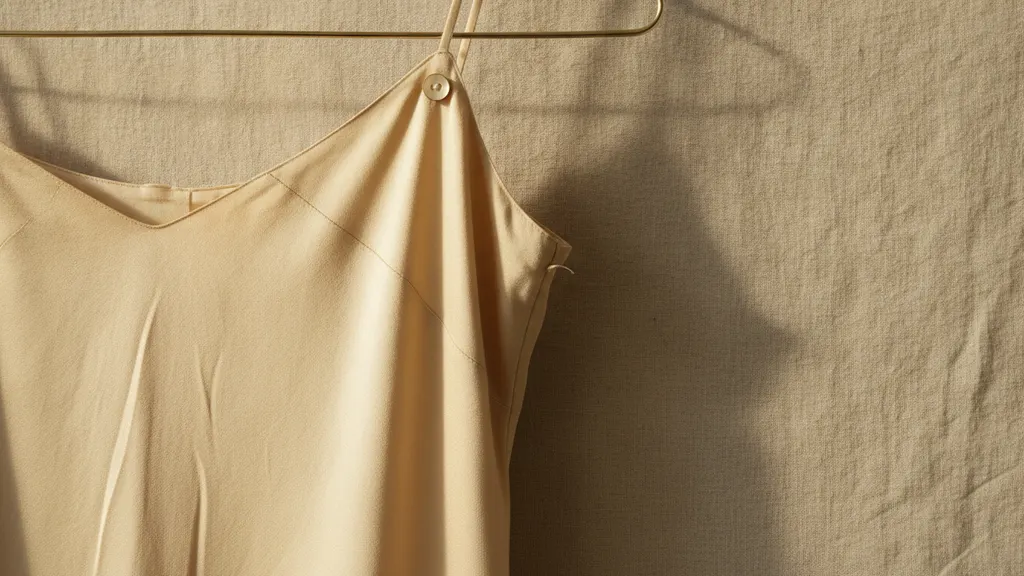
Construction carries the date more reliably than shape, and on most vintage 1990s minimalist dresses the inside tells you first. Straps are narrow and adjusted through small metal sliders, stitched flat rather than tacked on top. Side zips are short, because a bias shell steps on over the hip without one. Mass-market side seams are finished with a three-thread overlock; better houses used French seams and a rolled hem no wider than a quarter inch. Period tags pair fiber percentages with country of origin, and the Vintage Fashion Guild label resource is the fastest way to place a maker in a decade. If the dress has a moulded bra cup or a stretch knit lining, suspect a 2010s revival piece instead.
How vintage 1990s minimalist dresses fit: slip, bias cut, and column shapes differ
They fail in different places. A bias slip borrows ease from the fabric, so it fits the hip and forgives the waist. A straight-cut slip hangs from the bust and needs the hip measurement to be right. A column dress fits like a sleeve, with the shoulder and the hem doing all the work.
The mechanism is older than the decade that made it famous. The Met's Heilbrunn Timeline of Art History explains that bias-cut evening dresses clung to the body as the 1930s silhouette regained structure, and the 1990s version works the same way with less corsetry under it. That inheritance is why a 1990s slip dress and a 1930s gown share a diagonal seam line at the side, and why both move when you walk instead of staying put. If you want the earlier chapter, our guide to identifying 1920s dresses covers how bias entered dressmaking, and the vintage slips and lingerie guide covers the underwear the silhouette grew out of.
| Silhouette | Where it takes its fit | Measurement that decides | Most common failure |
|---|---|---|---|
| Bias slip | Hip and upper thigh | Hip | Pulls across the seat, side seam ripples |
| Straight-cut slip | Bust, hangs free below | Bust, then hip | Gapes at the strap, tents at the waist |
| Column sheath | Shoulder and ribcage | Shoulder width | Shoulder seam drops, armhole binds |
| Shift | Shoulder only | Shoulder, hem length | Reads boxy, hem lands badly |
Sizing mistakes with vintage 1990s minimalist dresses almost always come from trusting the tag instead of the tape. Ask the seller for flat measurements across the bust, waist, hip, and shoulder-to-hem, taken with the garment relaxed. On a bias piece, ask whether the measurement was taken stretched, because bias fabric gives a different number under light tension.
We cover the details separately in Vintage 1960s mod dresses: a guide to shift shapes and labels.
Which fabrics and labels date vintage 1990s minimalist dresses
Fiber content is the fastest filter. Silk charmeuse, viscose rayon, acetate, triacetate, and polyester crepe carried most of the decade's plain dresses, and each one drapes and ages differently. Read the care label first, then confirm by hand, because tags get cut out more often than they survive.
Labels date vintage 1990s minimalist dresses more precisely than fabric does. Union labels are the sharpest tool: the ILGWU and ACTWU merged into UNITE in 1995, so a UNITE label puts a garment at or after that year, while an ILGWU label sits before it. Country of origin shifted through the decade as production moved, and an RN number on a separate narrow tag is normal for American manufacture. The Vintage Fashion Guild fabric resource is where to settle arguments about whether a fluid fabric is rayon or acetate, and our own notes on identifying vintage fabrics cover the burn and hand tests that work at home.
How to check condition on vintage 1990s minimalist dresses
Three checks, in this order: hold the dress to a window for transparency, stretch a strap and watch whether it returns, then turn the lining inside out and look at the seams. Most disappointments are visible in those three moves before any money changes hands.
Transparency and surface wear
Single-layer silk and light viscose both pass daylight, so photograph the dress with a flash before deciding what you can wear it to. Then look at the underarm and the back of the hip, where perspiration and friction dull the surface permanently. A chalky patch does not press out.
Stretch loss and lining
The vintage 1990s minimalist dresses that disappoint buyers usually fail at the elastic rather than the cloth. Elastane and rubber-cored thread perish with age, so a strap that stays long after stretching will not recover, and a shirred back panel that feels crunchy is finished. Acetate linings split along the seam line rather than tearing in the middle, which is repairable if the allowance is wide. Ask for close photos of the lining hem, the zipper tape, and the inside of both side seams, and read our guide to shopping vintage online for the questions that get honest answers. Good On You's material guides are a sensible background read on how these fibers behave over a long life.
How to style vintage 1990s minimalist dresses in a modern wardrobe
Treat the dress as a layer, not an outfit. The 1990s cut sits well over a fine-gauge long sleeve, under a heavy coat, and above a flat shoe. The slip reads modern when the proportions around it are heavier than the dress itself.
Styling vintage 1990s minimalist dresses works best when you stop treating them as eveningwear. Put a ribbed cotton tee underneath and the neckline becomes daytime. Add a shearling or a wool overcoat and the silhouette holds its line instead of looking underdressed. Vogue's runway archive is the place to compare how the original collections were shown, and The Cut's fashion desk has tracked the slip's steady return through later seasons. Keep jewelry small and warm against matte fabric, and see our notes on styling vintage clothing across eras if you are mixing decades in one outfit.
Frequently asked questions
How do I know if a slip dress is actually from the 1990s?
Start with the inside. A period slip usually has narrow straps adjusted through small metal sliders, a short side zip or no zip at all, side seams finished with a three-thread overlock or a French seam, and a hem rolled narrow rather than fused. The care label carries fiber percentages and country of origin on the same tag, printed rather than woven in a modern typeface. Then compare the shape against dated museum examples; the exhibition archive at the Museum at FIT shows confirmed 1990s pieces photographed front and side. A moulded built-in bra cup usually means a later copy.
Are 1990s slip dresses see-through, and what can I do about it?
Often yes, and that was part of the design at the time. Single-layer silk charmeuse and light viscose both pass daylight, and a flash photograph will show you more than a shop mirror will. Three fixes work without touching the dress: a slip worn underneath in a matched tone, a fine knit layered over the top half, or an opaque skirt under a sheer hem. New York Times fashion coverage has followed the sheer-layering question across many seasons and the practical answer has not changed. If you plan to wear it in daylight, buy the lined version.
What size should I buy if the tag says 1990s medium?
Ignore the letter and read the tape. 1990s sizing ran closer to the body than current labels, and tags were also cut out and replaced freely over thirty years. For a bias slip the hip measurement decides whether it works; the waist will forgive a little either way, the hip will not. For a column, the shoulder and the bust decide. Ask for flat measurements taken on an unstretched garment plus shoulder-to-hem length. Harper's Bazaar fashion coverage keeps returning to the same point about vintage fit: you are buying the garment's measurements, not its label.
Is rayon from the 1990s worth buying, or will it fall apart?
Rayon and viscose from that decade hold up well if they were handled gently and badly if they were washed hot. The fiber loses strength when wet, so old shrinkage and seam puckering are usually permanent rather than pressable. Check for a chalky dull patch at the underarm and for splitting at the back of the hip, where a bias cut takes the most load. Smithsonian Magazine's reporting on textile history is good background on how manufactured fibers reached everyday clothing. Dry clean, or hand wash cold and dry flat.
What shoes work with a 1990s slip dress during the day?
Flat and plain. A thin strappy sandal reads evening, which fights the dress in daylight, while a loafer, a mule, a leather flat, or a low boot puts it back into ordinary clothing. Keep the shoe visually heavier than the dress, since the fabric is light and the silhouette is narrow. Who What Wear's styling coverage tracks the same pairing year after year, which suggests a stable formula rather than a seasonal trick. If you want height, choose a block or low kitten heel and keep the hem long enough to cover the ankle bone.
Can a 1990s minimalist dress be altered without ruining it?
Hems and straps, yes. Side seams on a bias cut only with a tailor who has done bias work before, because the grain moves the moment it is cut and a new seam can ripple permanently. Shortening a bias hem means hanging the dress for a day or two first so the fabric settles, then marking it on the body. Taking in a column at the side is straightforward by comparison. Business of Fashion's reporting on resale is a reminder that alterations change what a piece is worth later, so keep the original seam allowances inside rather than trimming them away.