June 2026
How to clean vintage wool coat: storage and care without damage
Learn how to clean vintage wool coat safely without felting, moth holes, or fiber breakdown using gentle spot-wash, smart storage, and dry-clean rules.
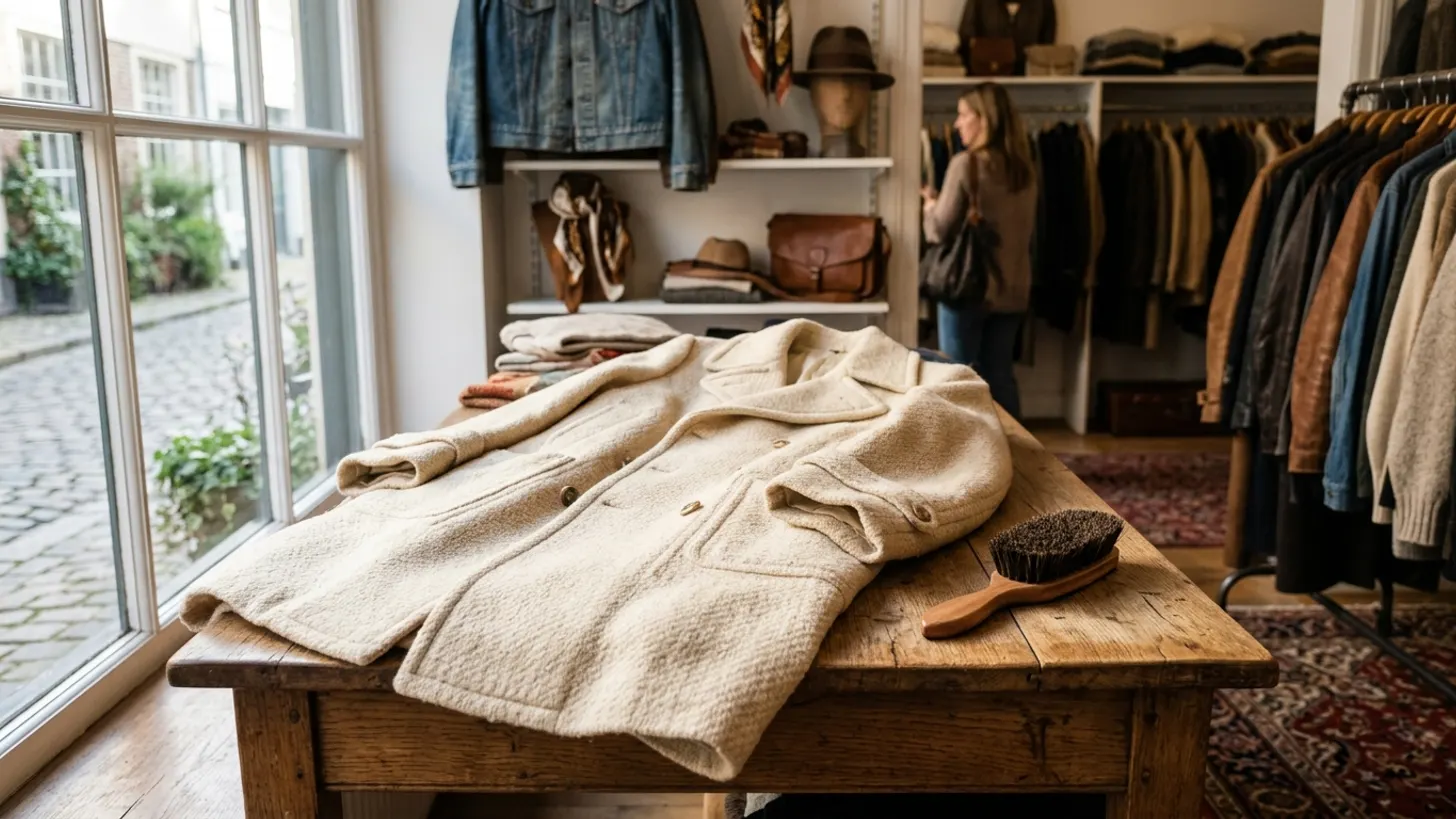
In November 2024, I opened a customer email about a 1972 burgundy Pendleton that had spent eight years folded in a plastic tote. The wool was sound. The folds were not. I have been sourcing vintage outerwear for Sol Siren since 2016, learning each fiber's limits from estate sale floors across the Pacific Northwest. The same question comes back every week: how to clean vintage wool coat, what to risk, what to leave alone. Most damage happens during well-meaning home cleaning, not during decades of careful neglect.
What ruins vintage wool during cleaning
Woolmark fiber data places the felting threshold at 86°F, and vintage wool, stripped of some natural lanolin through decades of use, reaches that threshold faster than new wool does. Heat, friction, alkaline detergent, and harsh solvents all trigger the same permanent collapse: microscopic barbed scales on each fiber swell, lock against neighboring scales, and compress the cloth. That process is felting, and it cannot be undone.
Knowing how to clean vintage wool coat starts with knowing what destroys it. The Vintage Fashion Guild's fiber reference documents how older wool, with weakened natural lanolin, is more vulnerable to felting than new wool. Heat opens the cuticle scales on each fiber, friction locks neighboring fibers, and the cloth tightens until the original drape disappears.
Then there is the dry cleaning side. Perchloroethylene, often shortened to PERC, is still the most common dry-cleaning solvent. Per Sourcing Journal industry reporting on textile chemistry, PERC strips the natural lanolin and waxes that give vintage wool its hand, water resistance, and color saturation. One trip will not destroy a coat. Repeated trips over decades will.
Pressing is the third major hazard. Industrial steam presses flatten the dimensional nap of vintage worsted or melton wool. Once the nap collapses, the coat reads as tired and flat, even after brushing. The dimensional surface that made the wool feel rich in the first place is gone.
How to clean vintage wool coat at home: spot-wash and hand-wash
In ten years of evaluating estate-sale pieces for Sol Siren, the pattern holds: fewer than one in five vintage coats needs full water immersion to look its best. Surface dust, drink rings, and underarm residue respond to careful spot work, sparing the wool from unnecessary water exposure. Knowing how to clean vintage wool coat without a basin is the first and safest decision in the process.
Start by brushing the entire coat with a horsehair garment brush in the direction of the nap. Follow with a lint roller for pet hair. For a stain, blot, never rub. Mix cold distilled water with one drop of pH-neutral wool wash like Eucalan or Soak. Dip a microfiber cloth, wring it nearly dry, and press the stain from the outside in toward the center to prevent halo rings.
Air-dry flat on a clean white towel, away from sun and direct heat. Never use a hair dryer. If the coat smells musty rather than dirty, our walkthrough on removing musty smells from vintage clothing is a better starting point than washing.
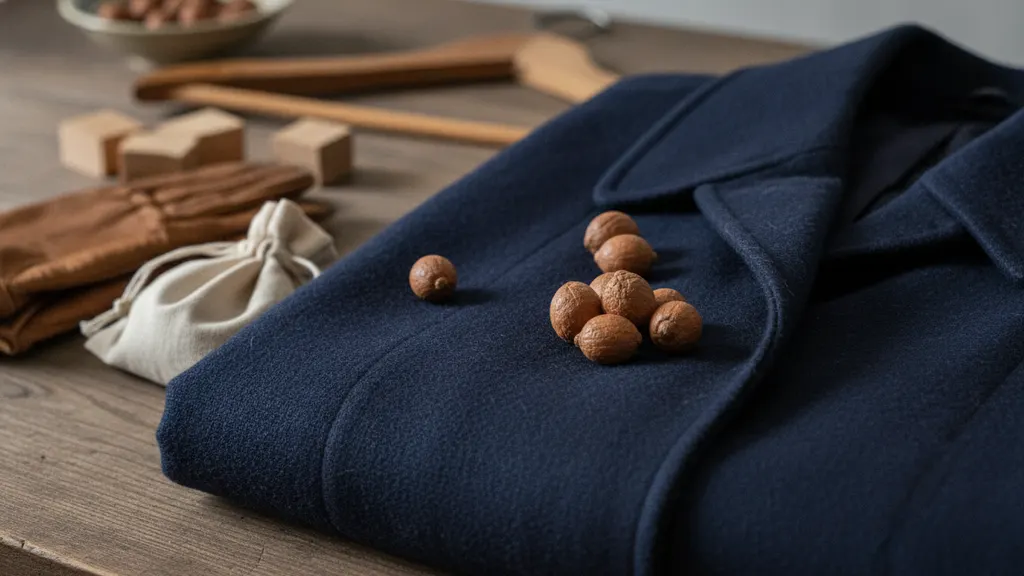
For full hand-washing of an unlined or lightly lined wool piece, fill a basin with cold water under 75°F, add wool wash, and submerge the coat. Press gently. Do not wring, twist, or scrub. Rinse with fresh cold water at the same temperature. Roll the coat inside a clean towel to absorb water, then lay flat to dry over a mesh sweater rack. Reshape while damp. The whole process should take roughly 90 minutes from basin to drying rack.
How to clean vintage wool coat for storage between seasons
Clothes moth larvae complete a lifecycle from egg to adult in 65 to 90 days at room temperature, per Smithsonian Magazine textile preservation reporting, with fiber damage concentrated in that larval window. Even well-made vintage wool warps, fades, or feeds moths if put away wrong. The base rules stay constant: clean before storage, breathable bag, padded hanger, cool dry closet, away from sunlight, no plastic anywhere in the system.
How to clean vintage wool coat before storage matters because larvae target keratin in wool, drawn to sweat, food residue, and skin oils. A clean coat is a less appealing meal. Spot-clean visible soil, brush the surface, and let the coat air for 24 hours in a ventilated room before bagging it.
Cedar is widely sold as a moth deterrent. According to Smithsonian Magazine textile preservation reporting, the volatile oils in cedar that repel moths evaporate within roughly six months. After that, cedar is decorative wood, not active protection. Sand the blocks lightly with fine-grit paper, or replace them, twice a year to keep the oils active.
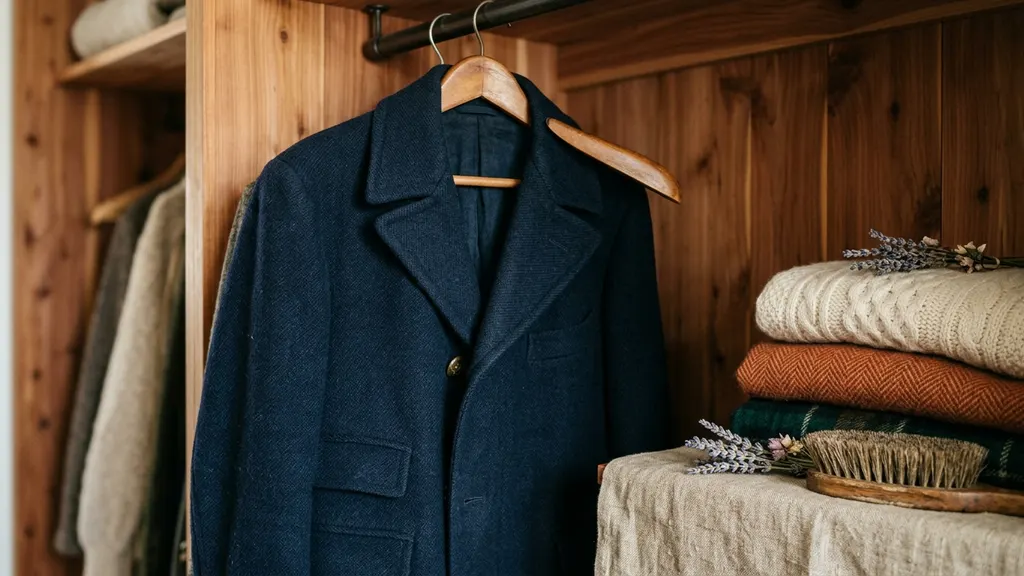
Hang heavier coats on padded or shaped wooden hangers wide enough to support the shoulder line. A standard plastic hanger will deform the shoulders within a season. Skip the dry-cleaner plastic bag, which traps humidity and accelerates yellowing. Use a cotton garment bag instead. For deeper storage thinking, our vintage outerwear storage guide covers fur, shearling, and leather alongside wool.
How to clean vintage wool coat through a dry cleaner safely
Per Sourcing Journal textile chemistry reporting, perchloroethylene strips natural lanolin from wool fibers with each treatment, and a coat dry-cleaned annually for a decade feels noticeably flatter for it. A red wine stain in the lining, ground-in soot, or a decade of compressed odors push toward professional cleaning. The question is how to clean vintage wool coat without surrendering it to the wrong chemistry.
| Method | Safety for vintage wool | Typical cost | Soil level addressed | Lanolin impact |
|---|---|---|---|---|
| Spot-clean (cold water + wool wash) | Highest: no agitation, no immersion | Under $5 | Light surface stains | None |
| Cold hand-wash (Eucalan or Soak) | High if water stays below 75°F | Under $10 | Light to moderate overall soil | Minimal with pH-neutral wash |
| Hydrocarbon dry cleaning | High | $20-$50 | Moderate to heavy, including oily stains | Low, gentler than PERC |
| PERC dry cleaning | Moderate, degrades with repetition | $15-$40 | Moderate to heavy, including oily stains | High, strips lanolin over time |
First, ask whether the cleaner offers hydrocarbon cleaning or professional wet cleaning, not only PERC. Per Good On You's textile care reporting, hydrocarbon and professional wet cleaning are gentler on natural fibers and on the natural waxes that protect them. A specialist with vintage experience will know the difference without prompting.
Second, ask to opt out of pressing, or request hand pressing only. Industrial steam presses flatten the nap and crush three-dimensional structure that took 50 years to settle. A capable cleaner will steam-finish on a form, not a flat board.
Third, point out every weak spot before they take the coat. Lining tears, loose buttons, fragile silk linings, fading. A reputable cleaner will mark the ticket. A careless one will deny the damage afterward. If the cleaner cannot or will not answer these questions, walk out. For coats with mixed-fiber construction, our note on authenticating vintage trench coats flags construction details that affect cleaning choices.
Reviving a vintage wool coat after years of bad storage
Wool's keratin structure retains elastic memory for decades, per Woolmark fiber research, which means a coat compressed in a tote for five years can usually be saved. It will look terrible at first. Creases will be set. The hand may feel papery. There will probably be a smell. Long-term success with how to clean vintage wool coat depends on doing less, not more.
Start by hanging the coat on a padded hanger in a well-ventilated room with a fan running for at least 48 hours. Most musty odor is volatile and will dissipate on its own. Steam the coat gently with a handheld garment steamer held six inches from the surface, in vertical passes. Steam relaxes the keratin bonds in wool and lets the fibers recover their original shape. Never press a hot iron directly on vintage wool.
For deeper compression damage, a soft horsehair brush worked along the nap can re-raise the surface. Be patient. Brushing the entire coat may take an hour. For trapped odors that survive ventilation, sealing the coat in a clean cotton bag with an open box of activated charcoal for two weeks pulls residual molecules out without introducing fragrance.
If moth damage is present, isolate the coat immediately in a sealed bag and freeze it for at least 72 hours at temperatures below 0°F. Freezing kills larvae and eggs. According to Victoria and Albert Museum textile conservation guidance, freezing is the standard pest-control method for museum textiles because it leaves no chemical residue. Then have any holes professionally rewoven by a specialist. We see this often on heavy 1970s wools, like the ones featured in our piece on vintage Penny Lane coats, where reweaving is often worth the cost.
Frequently asked questions
How to clean vintage wool coat: is machine washing ever safe?
No, even modern wool cycles use too much agitation for vintage wool. New York Times reporting on textile care has flagged repeatedly that home machines cannot hold low enough temperatures reliably for older wool, and Woolmark fiber data shows wool can shrink up to 30 percent when agitated in water hotter than 86°F. Hand-washing in cold water with one drop of pH-neutral wool wash, or dry cleaning with a hydrocarbon-using cleaner, is safer. The risk-to-reward on machine washing is poor. One mistake is permanent. For full guidance on how to clean vintage wool coat without machine washing, the spot-wash section above is the standard process.
How often should you dry clean a vintage wool coat?
As rarely as possible. Per Sourcing Journal industry reporting on textile cleaning chemistry, perchloroethylene degrades natural lanolin in wool over repeated treatments, accelerating fiber breakdown. Many vintage owners dry clean once per decade or only when a stain forces it. The rest of the year, a brushing, a vinegar-and-water spot mist for odor, and proper hanging do the work. If you must clean, request hydrocarbon or professional wet cleaning instead of PERC, and ask for hand finishing without industrial pressing. A skilled vintage-aware cleaner will know which method matches the coat.
Are cedar blocks enough to protect a wool coat from moths?
Not on their own. Smithsonian Magazine textile preservation reporting notes that cedar's moth-repelling volatile oils evaporate within roughly six months, after which the wood is mostly decorative. Sand cedar blocks twice a year with fine-grit paper, or replace them, to keep the oils active. Pair them with breathable cotton garment bags, a clean coat surface, and a closet held below 70°F. Lavender sachets, regular vacuum cleaning of closet floors, and pheromone moth traps for early warning round out the system. Mothballs work but their odor saturates wool for years and is difficult to remove.
How to clean vintage wool coat: what water temperature is safe?
Above 86°F (30°C), per Woolmark fiber technical data. The shrinkage happens because cuticle scales on each wool fiber open with heat and lock with friction. Water alone at higher temperatures will not cause much shrinkage if the coat is undisturbed, but any agitation accelerates felting dramatically. Cold water, ideally below 75°F, is safer for any vintage wool work. When learning how to clean vintage wool coat at home, the temperature rule overrides every other consideration. Avoid alternating hot and cold rinses, since the temperature swing alone can shock fibers.
How do you store a vintage wool coat in a small apartment?
Pick a vertical bar in a closet with stable temperature, ideally below 70°F. Use a padded shaped hanger sized to the shoulder line. Skip plastic dry-cleaner bags, which trap humidity against the wool. A cotton garment bag, lavender sachets refreshed every six months, and a moth pheromone trap nearby cover most threats. If closet space is short, a clean cotton sheet draped over hanging coats protects from dust without sealing in moisture. Per Victoria and Albert Museum textile guidance, cool, dark, dry, and ventilated remains the standard recommendation for natural fibers.
Can a dry cleaner ruin a vintage wool coat in one trip?
Yes, although it usually takes several. The fastest single-trip damage comes from industrial steam pressing, which flattens the nap and crushes texture that took decades to settle. Aggressive pre-spotting with alkaline solvents on a stain whose origin the cleaner did not identify can also strip color in one pass. Per Good On You's reporting on textile cleaning, ask for hand pressing on a form, hydrocarbon or wet cleaning, and a written note of any pre-existing damage. Knowing how to clean vintage wool coat through a dry cleaner is partly about knowing when to walk away.