June 2026
How to remove musty smell vintage clothing: safe methods that work
Safe methods to remove musty smell vintage clothing without damaging fur, shearling, or fragile silk. Activated charcoal, baking soda, vinegar steam tips.
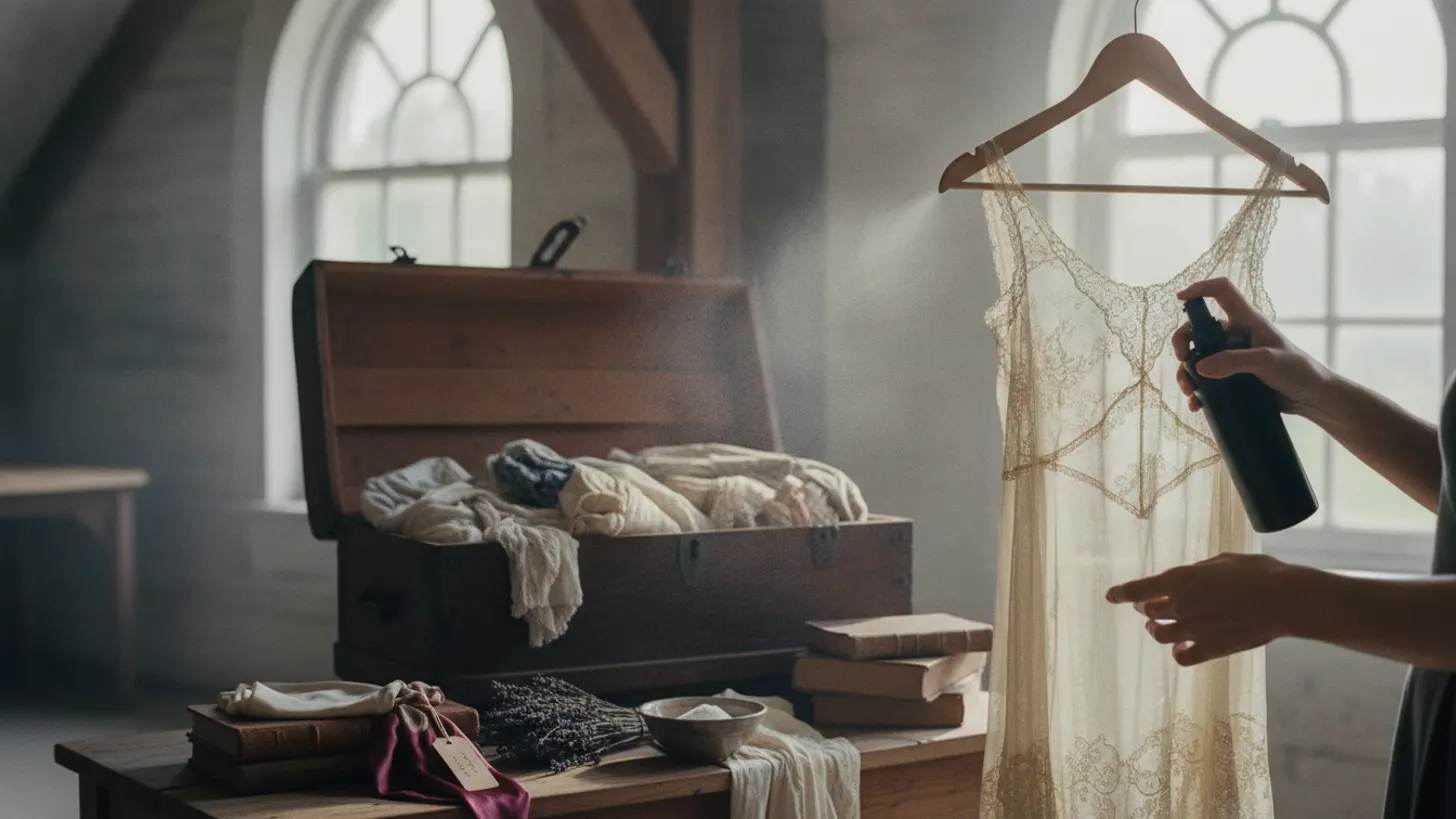
A buyer in Sydney sent Erin a question last month: the 1972 shearling she just received smelled like her grandmother's basement, and she was scared to wear it. The coat was beautiful. The cedar-and-mildew note was decades old. Here is the answer to the question Erin gets most often. To remove musty smell vintage clothing safely, you need patience, the right airflow, and three or four things from the pantry. No dry cleaner needed.
Why vintage clothing develops a musty smell
Musty smell in vintage clothing is not fabric decay. It is mould and mildew colonies leaving volatile organic compounds in the fibres. Spores germinate within 24 to 48 hours once relative humidity exceeds 65%, so a single wet season embeds the smell permanently in wool and shearling. Most of Erin's coats spent a decade in sealed storage before arriving.
Three things create that classic musty note. Moisture above 65% relative humidity, lack of airflow, and trapped organic residue from skin oils, hair products, and smoke from the 1970s. Once mould colonies establish themselves, they keep producing geosmin and 2-methylisoborneol, the same compounds that give wet basements their character. The Bureau of Meteorology climate data archive shows large parts of coastal Australia sit above 65% average relative humidity for months at a time, which is exactly why your grandmother's shearling came out of the wardrobe smelling that way.
Not every musty smell can be removed. If the fabric has visible mould growth eating into the weave, or if the leather backing of a shearling has gone tacky from hydrolysis, the damage is structural. Treating odor on a structurally compromised piece is cosmetic only. Inspect first. To remove musty smell vintage clothing successfully, you need a garment that is intact under the smell. A short leather and shearling inspection guide helps you tell the difference between surface odor and structural damage.
Safe methods to remove musty smell vintage clothing without damage
To remove musty smell vintage clothing without damaging delicate fibres, work from gentlest to strongest. Start with airflow and indirect shade. Move to dry absorbents like activated charcoal. Use diluted vinegar or steam only when the fabric tolerates moisture. Skip dry cleaning solvents on shearling, fur, or fragile silk unless the lining demands a deeper clean.
Stage one is always passive. Hang the piece outside in dry shade for 24 to 48 hours, away from direct sun and away from any humid surface. Indirect airflow alone removes 30 to 50% of surface odor on most cotton, linen, and wool pieces. Erin's standard intake routine starts here. A morning on the back porch, no sun touching the wool. By sunset the coat smells like fresh air instead of basement.
Stage two adds absorbents. Activated charcoal in cotton sachets, baking soda in open dishes, dry coffee grounds for stubborn cases. Place the garment in a clean cotton pillowcase with the absorbent and seal loosely. Wait 72 hours. Re-check.
Stage three involves moisture. A 1:3 vinegar-to-water spritz, applied lightly and air-dried in shade, neutralises remaining odor on cotton and most wool. Choice Australia covers this in their laundry product testing. Steam comes last and only on appropriate fabrics.
How to remove musty smell vintage clothing using activated charcoal and baking soda
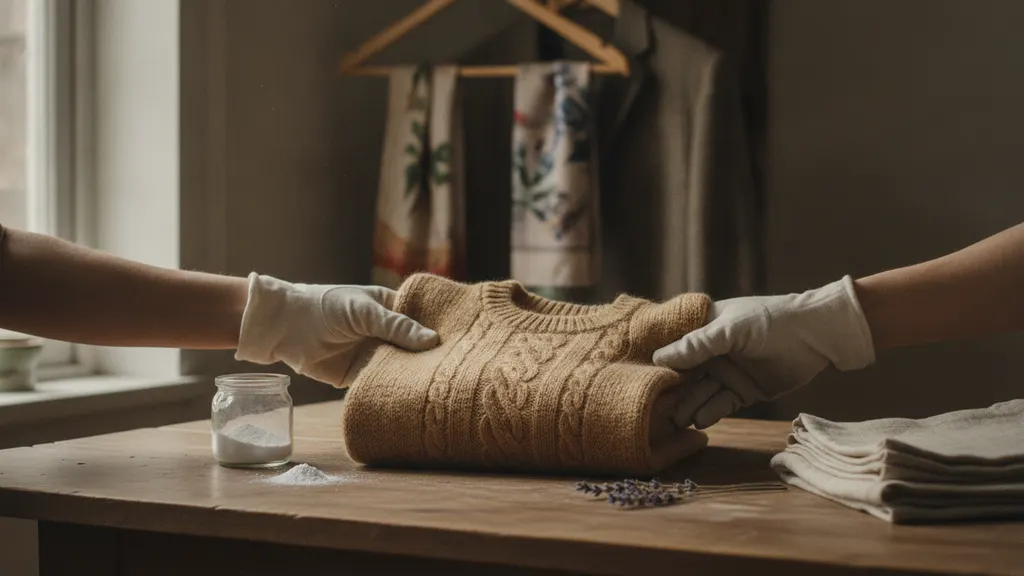
To remove musty smell vintage clothing using activated charcoal and baking soda, you build a closed micro-environment where the absorbent draws out odor molecules without touching the fabric. The garment never gets wet. Erin reaches for this method on structured fur, beaded 1960s shifts, and anything where steam or liquid contact would cause damage.
Activated charcoal is the more powerful of the two. Its surface area, around 1,000 square metres per gram, means a small bowl pulls volatile organic compounds out of a sealed bag of air within 24 hours. CSIRO research on microbes and volatile organic compounds confirms that activated carbon adsorbs the same geosmin and 2-MIB compounds responsible for musty notes. Baking soda is gentler and slower, neutralising mildly acidic odors and absorbing moisture along the way. Combine the two for stubborn cases. The setup takes ten minutes: place the garment in a clean cotton pillowcase or breathable garment bag, add one small open container of activated charcoal at the bottom and one of baking soda at the top, neither touching the fabric, tie loosely, never airtight. Wait 72 hours minimum, up to seven days for heavy odor. Sniff-check at 24, 48, and 72 hours.
The In Her Honor outerwear pieces in the shop have all been through this exact treatment before listing. Erin designed that collection in memory of her mother, who died of Ewing sarcoma, and the intake standard it shaped now applies to every garment Sol Siren receives.
When to steam and how to remove musty smell vintage clothing gently
Steam works on cotton, linen, polyester, and most modern wool. Air-out works on everything. To remove musty smell vintage clothing gently, choose air-out first for any piece older than 1970, anything with leather or shearling trim, and anything with original beading, sequins, or fragile silk lining. Steam is the second pass once the heaviest odor is gone.
Heat plus moisture from a handheld steamer breaks down odor compounds and relaxes wrinkles in one step. Hold the steamer six to eight inches from the fabric, never resting it on the surface. Two passes is usually enough. Your Home indoor air quality guidance from the Australian Government covers ventilation principles that apply directly to drying garments after steam.
Air-out is the safer default for older pieces. Hang in dry shade with strong indirect airflow for two to four days. Position so air passes through the lining, not just over the surface. Turn inside out on day two. Erin runs an air-out cycle on every vintage piece that arrives at the studio, even pieces that smell clean, because storage odors hide inside structured shoulders and quilted linings. The shearling care guide covers the rotation she uses on every shearling intake.
Two warnings. Never steam beaded silk, fragile lace, or velvet with disintegrating pile. Never air-out in direct sunlight, which fades dyes and damages protein fibres.
| Fabric | Steam | Air-out | Charcoal |
|---|---|---|---|
| Wool 1960s to 1970s | Light passes only | Yes | Yes |
| Shearling and fur | Never | Yes | Yes |
| Beaded silk | Never | Yes | Yes |
| Cotton and linen | Yes | Yes | Optional |
| Velvet (intact pile) | Light passes | Yes | Yes |
How to prevent musty odor from returning to your vintage pieces
Prevention is humidity control plus airflow. Mould needs water activity above 0.75 to grow, which roughly corresponds to relative humidity above 65%. Keep your wardrobe under 55% RH year-round. Use silica gel packets refreshed every three months. Hang coats on padded hangers with breathing room. Never store sealed in plastic, ever.
Silica gel is the workhorse. A 100 gram pack in a small cotton bag keeps a single coat dry for three months in a Sydney summer. Refresh by drying packs in a low oven, 80 degrees Celsius for two hours, until colour-indicating crystals turn back from green to orange. Sustainability Victoria textile care guidance supports moisture-controlled storage to extend garment lifespan.
Avoid mothballs entirely. Naphthalene and paradichlorobenzene crystals are classified as hazardous under Australian product safety rules, and the ACCC product safety notice on mothballs warns of respiratory and dermal risks. Cedar blocks and lavender sachets perform the same insect-deterrent role without the toxicity. Refresh cedar with light sandpaper twice a year.
Final rule: rotate. Hang vintage pieces out of the wardrobe every six to eight weeks for a half-day air. Stagnant storage is what restarts the cycle. To remove musty smell vintage clothing once is doable. To keep that smell from returning is a matter of routine. The vintage coat storage walkthrough covers wardrobe setup in detail.
Frequently asked questions
Can I machine-wash vintage wool to remove musty smell vintage clothing odors?
Almost never. Vintage wool from the 1960s and 1970s was not finished for modern machine washing, and agitation causes felting that cannot be undone. The safest path to remove musty smell vintage clothing wool pieces uses dry absorbents first: activated charcoal in a sealed cotton bag for 72 hours, then a 1:3 vinegar mist on the lining only, air-dried in shade. The CSIRO has published research on microbial odor compounds showing dry adsorption neutralises the same molecules as a wet wash. Skip the machine. Skip dry cleaning chemicals unless a specialist confirms the piece can handle it.
How long does activated charcoal need to remove musty smell vintage clothing fur and shearling?
Fur and shearling need 72 hours minimum, sometimes up to seven days for heavy basement odor. The leather backing on shearling holds odor molecules deeper than wool or cotton, so charcoal works slower. Erin's intake routine for shearling pieces runs charcoal for five days in a breathable garment bag, then a 24-hour open air finish on a padded hanger. The Bureau of Meteorology humidity data for your region matters too. In humid coastal areas the same treatment takes longer because ambient moisture slows the absorption process. Drier inland air finishes the job faster.
Are mothballs safe for storing my vintage clothing collection?
No. Naphthalene mothballs are classified as hazardous under Australian product safety rules and release vapours that cause respiratory irritation, headaches, and possible long-term health effects with prolonged exposure. The ACCC product safety information includes direct warnings against household use of mothballs in living spaces or open wardrobes. Beyond the health risk, naphthalene reacts with natural protein fibres and yellows silk and wool over decades of exposure. Use cedar blocks, lavender sachets, or rosemary bundles instead. These deter insects, smell clean, and are safe around children and pets. Cedar needs a light sanding twice a year to refresh the natural oils.
Does dry cleaning damage vintage clothing more than airing out?
Dry cleaning solvents like perchloroethylene strip natural oils from wool and leather, dry out shearling backing, and weaken vintage stitching that was never made for industrial chemical baths. For most vintage pieces, dry cleaning should be the last resort, not the first. The gentler path to remove musty smell vintage clothing keeps the original fibres intact: air-out, charcoal, baking soda, and a controlled vinegar mist. Australian Government ventilation guidance recommends airflow over chemical treatment whenever possible, a principle that applies to garments as much as buildings. Reserve dry cleaning for pieces with grease stains or set-in dirt that absorbents cannot reach.