October 2026
Vintage 1970s disco dresses: fabrics, silhouettes, buying tips
A curator's guide to vintage 1970s disco dresses: the fabrics, necklines, and labels that date a piece, plus the fit checks to make before you buy one.
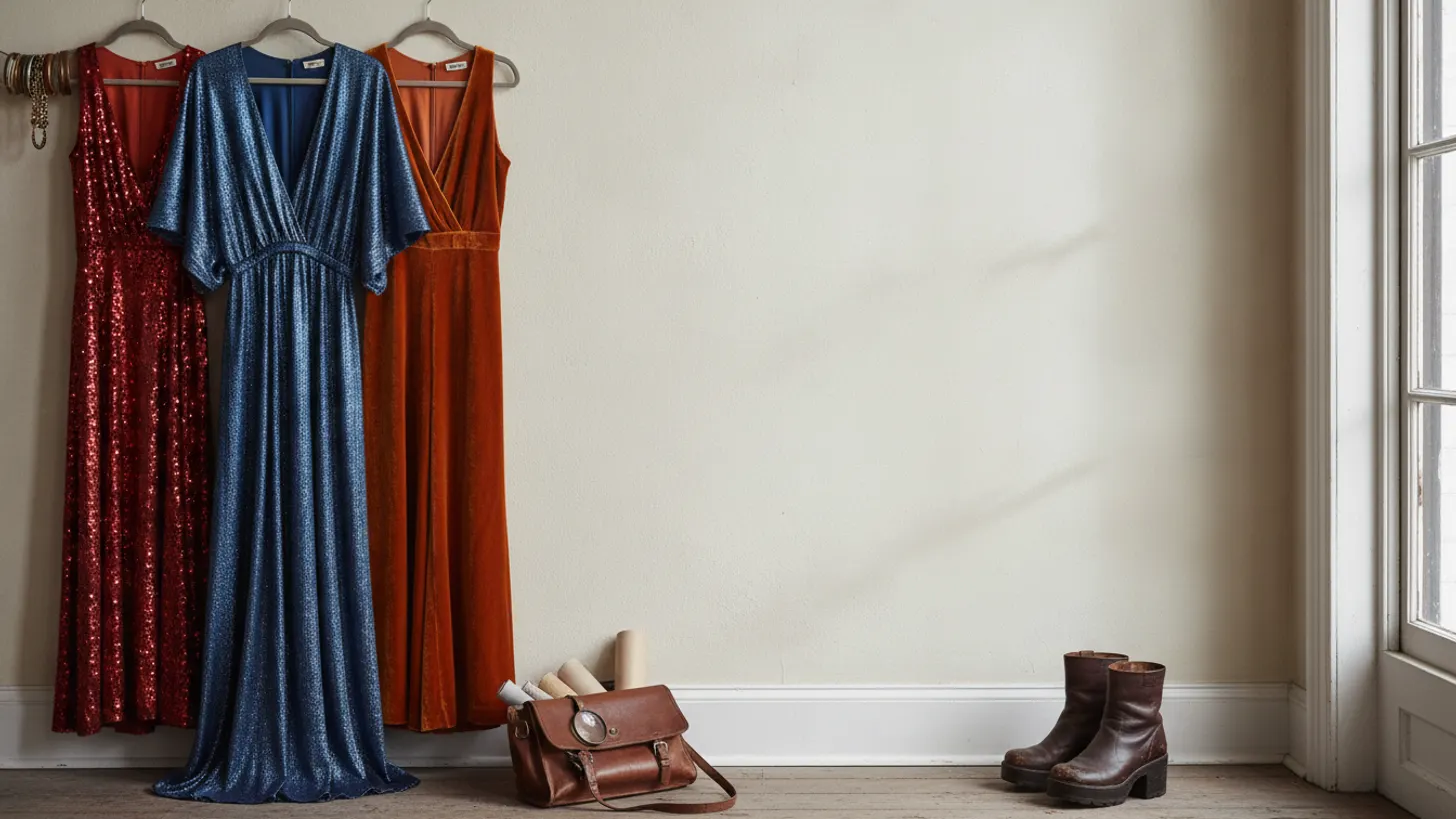
Studio 54 opened on West 54th Street in 1977, and within a season the dress code on that floor had hardened into a formula: liquid jersey, a bare back, nothing that fought the body. That floor is still the reference point for vintage 1970s disco dresses. The pieces worth buying today are the ones built for movement, and you can feel the difference in the first thirty seconds of handling one.
What defines genuine vintage 1970s disco dresses?
A genuine disco dress from the 1970s was built for a dance floor: fluid fabric, a bare or nearly bare back, and a cut that falls from one anchor point rather than from a structured foundation. Most vintage 1970s disco dresses use two to four pattern pieces total, carry no lining, no shoulder pads, and almost no interior engineering, against six to ten pieces in a structured daywear dress from the same decade.
The cultural anchor is specific. The New York Times, which recorded Studio 54's 1977 opening in New York, treated the club as the point where disco stopped being a subculture and became a dress code. Clothes made for that floor answered a narrow brief. They had to read under moving light, survive four hours of heat, and travel faster than the body wearing them.
Smithsonian Magazine's history of polyester in 1970s fashion explains why the fiber took the decade: cheap to produce, colorfast, quick to dry, and free of the creasing that made natural fibers a chore. For eveningwear that meant a jersey that poured instead of hanging, at a price a nineteen-year-old could actually pay. It also means a synthetic fiber content tag is rarely a reason to put a dress back on the rail.
At the designer end the reference is Halston. The Museum at FIT's fashion collection, which holds 1970s Halston eveningwear, shows the formula stripped back: one width of fabric, as few seams as the cut allows, often no closure at all. Vogue's archive coverage of Halston traces how that restraint spread downward into mass-market copies, which is why an unlabeled dress can carry the same logic as a signed one.
Which fabrics and silhouettes make vintage 1970s disco dresses collectible?
Collectibility follows fabric and cut, in that order. The vintage 1970s disco dresses that hold value are liquid: polyester or acetate jersey, Qiana nylon, silk charmeuse, or a metallic lamé with real weight, typically 180 to 220 grams per square meter rather than the sub-150 weight that flutters. The four silhouettes that matter most are the halter, the one-shoulder, the cowl-back column, and the handkerchief-hem wrap.
Weight is a test you can run with your hands. Hold the dress by one shoulder and let it hang. A good jersey falls into a narrow column and swings back slowly; a thin one flutters and telegraphs every seam. The V&A's twentieth-century fashion collection is a useful eye-trainer, because museum photography shows how these cuts behave on a body rather than on a hanger.
| Fabric | Hand and drape | Era tell | Care |
|---|---|---|---|
| Polyester jersey | Heavy, pours, holds a column | The most common survivor; matte, opaque face | Cool hand wash, flat dry |
| Qiana nylon | Slick, cool to the touch, fluid | Named on labels from 1968 onward | Cool wash, no heat |
| Acetate charmeuse | Light, high shine, slippery | Water-spots easily; usually unlined | Specialist clean only |
| Metallic lamé | Dry, wiry, stiff glint | Lurex-type yarn, often on a knit ground | Spot clean, never press |
Fiber introduction dates double as dating evidence, since no dress can predate the yarn it is made from.
Two terms worth defining on their own: Qiana is DuPont's trademarked silk-like nylon filament, introduced in 1968, valued for a cool hand and a heavy, even drape. Lamé is any knit or woven fabric that carries a metallic yarn, often a Lurex-type thread, through the ground cloth for a dry, wiry glint rather than a soft sheen.

We cover the details separately in What is a vintage rockabilly dress? 1950s silhouettes and tells.
How to date vintage 1970s disco dresses by label and construction
Dating works from the outside in: country of origin, fiber content wording, label typography, zipper type, and seam finish. Each one sets a floor or a ceiling on the possible year. Stack three or four and you can usually place a dress inside a five-year window, which is as precise as most vintage 1970s disco dresses allow.
The most useful anchor is the care label. US regulation required permanent care instructions on most garments from the early 1970s, so a sewn-in care tag puts a domestic dress at 1972 or later. The Vintage Fashion Guild's label resource is what I check against for union labels, brand marks, and the typography shifts that separate a 1972 tag from a 1979 one.
I learned to run that check the hard way. In 2021 I paid full price for a lamé halter listed as a 1976 piece because the cut and the fabric both looked right, and I skipped the label entirely. The union mark sewn into that tag did not exist until 1983, which meant I had bought a well-made reissue, not an original, and I only caught the error after resale research turned up the mark's registration date. I now check the label before I check anything else, including the parts of the dress I am most confident about.
Construction carries the rest. Three-thread overlocked seams, a center-back metal zipper on a wide tape, and a hand-finished hem on anything expensive all read as period work. Nylon coil zippers, which use a continuous spiral of molded nylon teeth rather than individual metal teeth, run right through the decade too, so a coil zip on its own disqualifies nothing. Dating vintage 1970s disco dresses is cumulative, not a single test, and the method travels: the logic in my guide to dating vintage silk scarves by print and label is the same stacking exercise applied to a flat object instead of a garment.
What fit issues should you check before buying vintage 1970s disco dresses?
Five measurements settle most purchases: bust, waist, hip, shoulder to shoulder, and shoulder to hem. Beyond those, check the underarm for sweat damage, the zipper for a bent slider, and the seam allowances for room to let out. Many vintage 1970s disco dresses have almost no allowance, which limits alterations.
The number on the tag is era evidence, not sizing guidance. A dress labeled 14 can measure smaller than a modern 8, and the spread between makers inside a single year is wide. My guide to old size labels versus modern fit covers the arithmetic; the short version is that you buy inches, not numbers.
Rank the problems by how fixable they are. A hem is easy. A waist taken in on a jersey column is possible if the seams are straight. An armhole, a halter neckband, or a cowl drop is close to unfixable, because altering any of them changes the geometry the whole dress hangs from. Underarm staining is the other common deal-breaker: on acetate and lamé it has usually weakened the yarn, not just discolored it.
Bias-cut pieces need a separate check. Lay the dress flat and look at whether the side seams fall straight or spiral; a spiral means the fabric has relaxed unevenly and the dress will twist when worn. The same test applies to the later generation of fluid dresses described in my notes on telling an authentic 1990s slip dress from a reproduction.
How to style and care for a 1970s disco dress today
Treat the dress as clothing, not costume. One period silhouette, modern everything else: bare metal jewelry, a low heel, no wig and no headband. Care is simpler than most buyers expect: a 30 degree Celsius hand wash handles roughly 80 percent of surviving pieces, since most vintage 1970s disco dresses are polyester or nylon jersey rather than the acetate and metallic lamé that need a specialist cleaner.
Wash polyester and nylon jersey by hand in cool water with a pH-neutral detergent, press the water out in a towel, and dry flat. Keep acetate and metallic lamé away from water altogether. Good On You's reference material on synthetic fibers explains why these fabrics respond to heat the way they do, which is the reason a warm iron can glaze a polyester face permanently. My longer method for cleaning vintage clothing at home walks through the test-patch sequence I use before any garment touches water.
Store these dresses folded with acid-free tissue at the fold lines rather than hanging them. A heavy jersey halter left on a hanger for a year will stretch at the neckband and never recover. For wearing, the mixing rules in my piece on styling vintage clothing across eras apply directly: let the oldest thing in the outfit be the thing people notice, and keep the rest quiet.
Frequently asked questions
How can I tell if a disco dress is really from the 1970s?
Start with the inside. A 1970s dress usually carries a sewn-in care label, a single-size tag, and a metal or nylon coil zipper on a slightly coarse tape; seams are overlocked in a three-thread stitch and the hem is often a plain machine finish. Reproductions give themselves away with modern narrow serging, a care label printed with a web address, or an elastane percentage high enough to feel like activewear. Compare what you are holding against dated garments in the Metropolitan Museum of Art's costume holdings, where photography is close enough to read stitch type. If a dress has no label at all, judge it on fabric hand and cut instead.
What fabric were 1970s disco dresses made from?
Mostly polyester and acetate jersey, with nylon including DuPont's Qiana, silk charmeuse at the designer end, and metallic lamé for the loudest pieces. Polyester dominated because it was cheap, colorfast, and easy to care for, which is also why it makes up most surviving examples. Sourcing Journal's reporting on polyester in apparel supply chains shows how deeply the fiber sits inside garment manufacturing, then and now. For a buyer, fiber content matters less than weight and drape: a heavy polyester jersey from 1977 moves better on a floor than a thin silk cut the same year, and it survives more wearings.
Are vintage 1970s disco dresses true to size?
No. Vintage size labels run smaller than their modern equivalents, and the spread between makers is wide enough that the number on the tag is close to meaningless. Buy on flat measurements: bust, waist, hip, shoulder to shoulder, and shoulder to hem, taken with the dress laid flat and the across measurements doubled. A jersey halter forgives more across the bust than a cowl-back column, which sits where it was cut to sit. The Cut's writing on shopping vintage makes the same argument about ignoring label sizing. If the underarm-to-underarm figure is missing from a listing, ask for it before paying.
Can you wash a vintage polyester disco dress at home?
Usually yes, carefully. Polyester and nylon jersey take a cool hand wash with a pH-neutral detergent, a short soak, no wringing, and a flat dry out of sunlight. Acetate and metallic lamé are a different matter: acetate loses strength when wet and water-spots, and metallic yarns dull in hot water, so those go to a cleaner who handles vintage. Never press a metallic directly. Harper's Bazaar's coverage of caring for vintage eveningwear takes the same cautious line on anything with surface decoration. If the dress has beading, sequins, or glued trim, skip water and spot-clean the lining only.
Is a labeled Halston dress worth more than an unlabeled one?
Generally yes, and often by a wide margin, because attribution is what the collector market pays for. A named designer label, especially one tied to a documented production year, turns a dress into a catalogued object, and Christie's fashion and accessories sales show how strongly attribution shapes results at the top of the market. An unlabeled dress with a better cut and better condition, though, is the one more people will actually wear. Condition, fabric integrity, and whether the garment has been altered matter more to everyday value than a signature does. Buy the garment first and the label second.
What do you wear with a vintage 1970s disco dress now?
Keep the dress as the only loud thing in the outfit. A fluid column reads best with a low heel or a flat sandal, bare legs or sheer hosiery, and one piece of warm metal jewelry rather than a full set. Who What Wear's 1970s styling coverage leans the same direction: period silhouette, contemporary restraint. Skip the wig, the headband, and the costume cues, which turn a serious garment into a party outfit. In cold weather a long coat over the top closes the look without arguing with it. Let the fabric do the work it was cut to do.