October 2026
How vintage outerwear is sourced: notes from a Sol Siren trip
How vintage outerwear is sourced at Sol Siren: estate sales, private sellers, archive houses, the five checks before a coat comes home, and why I name it.
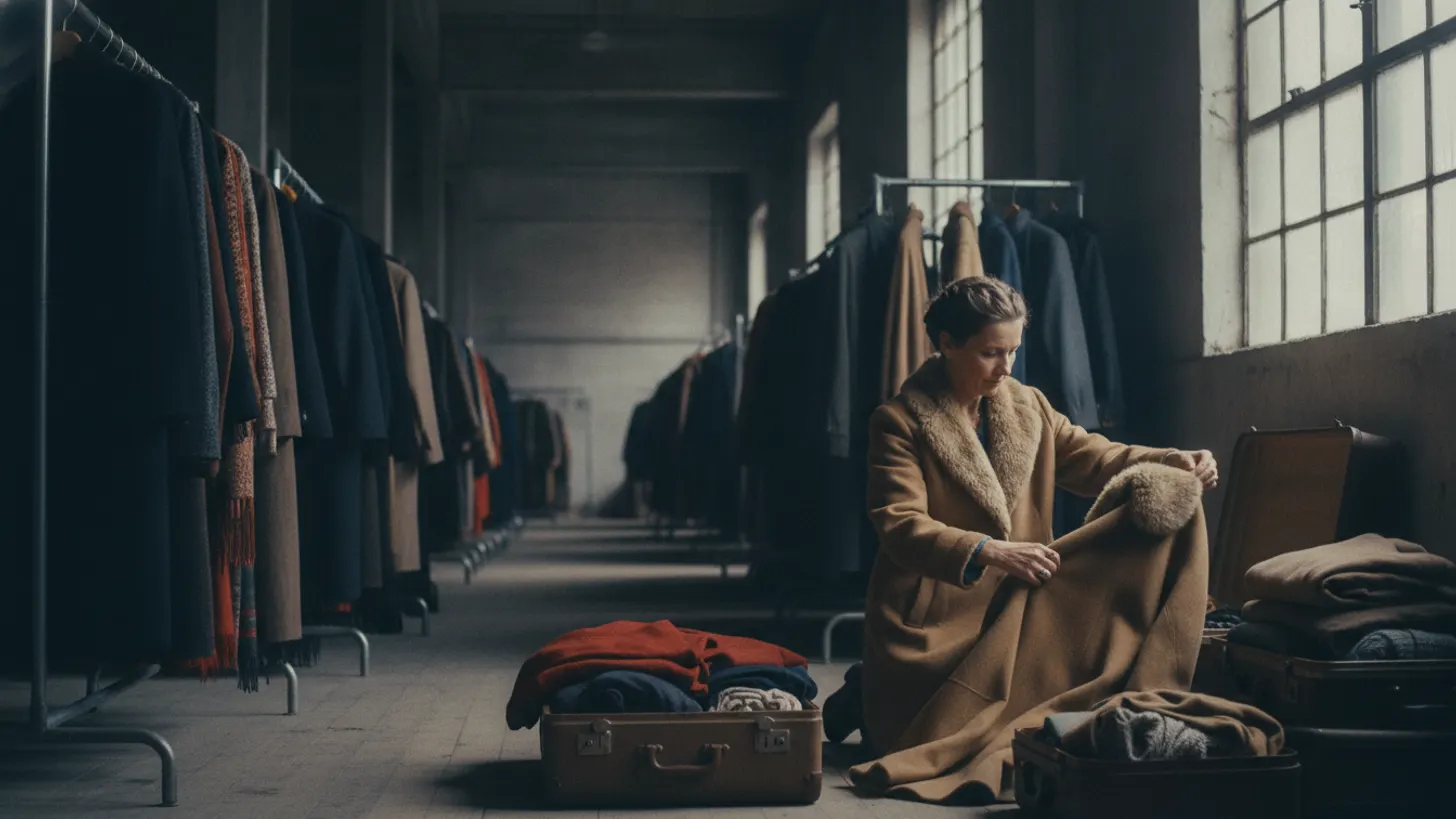
On a Thursday in March, in the back bedroom of a house being emptied by somebody's daughter outside Dayton, Ohio, I found a 1970s shearling behind a garment bag of winter quilts. I learned to read a pelt before I learned to price one, two years apprenticed to a furrier in Cleveland who still worked a 1960s machine. People ask how vintage outerwear is sourced, and the honest answer starts in rooms like that one: a folding table of costume jewelry, a closet rail nobody has touched since 1994, forty minutes to decide. Here is what I check, what I carry out, and what I leave behind.
Where the coats come from: how vintage outerwear is sourced in practice
Three channels, in this order of volume: estate sales, private sellers who inherited a closet, and archive houses that sell to dealers by appointment. That is how vintage outerwear is sourced here. No bale lots, no kilo bags, no blind-buy pallets. Every coat in the shop was looked at by one person before money moved.
Estate sales
This is most of it. A family clears a house, a company tags the contents over three days, and the outerwear is usually in a back closet, on wire hangers, under plastic gone brittle. Estate sales are where biography survives: a dry cleaner's tag still stapled to a sleeve, a name pencilled inside a storage box, a receipt in a pocket. Museums treat that paperwork as part of the object, which is why the Metropolitan Museum of Art's Costume Institute records provenance alongside construction.
Private sellers
Someone emails me a photo of their grandmother's mink, taken on a bed, flash on. These take longer and they are often the better pieces, because the coat has had one owner and one closet. I ask for the label, the lining, the hem, and the underarms before I ask the price. Half the time I talk the seller out of selling, because the coat should stay in the family.
Archive houses
Dealers' dealers. Sorted rooms, by era and category, appointment only, priced to resell. I use them for silhouettes I cannot find locally: Penny Lane coats (below-the-knee, shearling-lined suede with a notched collar, named for the coat worn by the character Penny Lane in the 1970s-set film Almost Famous), 1960s Afghan coats, and heavy 1970s shearlings. The trade-off is that provenance thins out, so I buy on construction instead of story. Study collections such as the ones catalogued by the Vintage Fashion Guild exist partly because construction evidence is what survives when the story does not.
Those three channels behave differently, and the difference decides what I can honestly write in a listing. An estate sale coat often arrives with a paper trail. An archive house coat arrives with better construction and less story. Knowing which is which is most of how vintage outerwear is sourced without overclaiming.
The five checks behind how vintage outerwear is sourced, one coat at a time
Condition, fur direction, lining integrity, weight, and smell. In that order, standing in a stranger's hallway with bad light. No laboratory analysis is involved. This is traditional visual and tactile evaluation, the same method dealers and conservators rely on before anything more invasive, and it still outperforms a lab result for every coat that comes through this shop.
| Check | What I am actually doing | What fails it |
|---|---|---|
| Condition | Open every seam line, turn the cuffs, pull gently at the hem | Dry, cracking hide; splits at the shoulder seam |
| Fur direction | Run a hand with the nap, then against it | Patchy lay, bald tracks, hair that stays bent |
| Lining integrity | Turn it inside out, look at the armhole and the hem tape | Shattered silk, repairs over repairs, no label left |
| Weight | Hold it off the rail on one finger | Heavy in the shoulders, thin at the skirt |
| Smell | Inside the collar and the underarm, twice | Mildew with a sour edge, which does not come out |
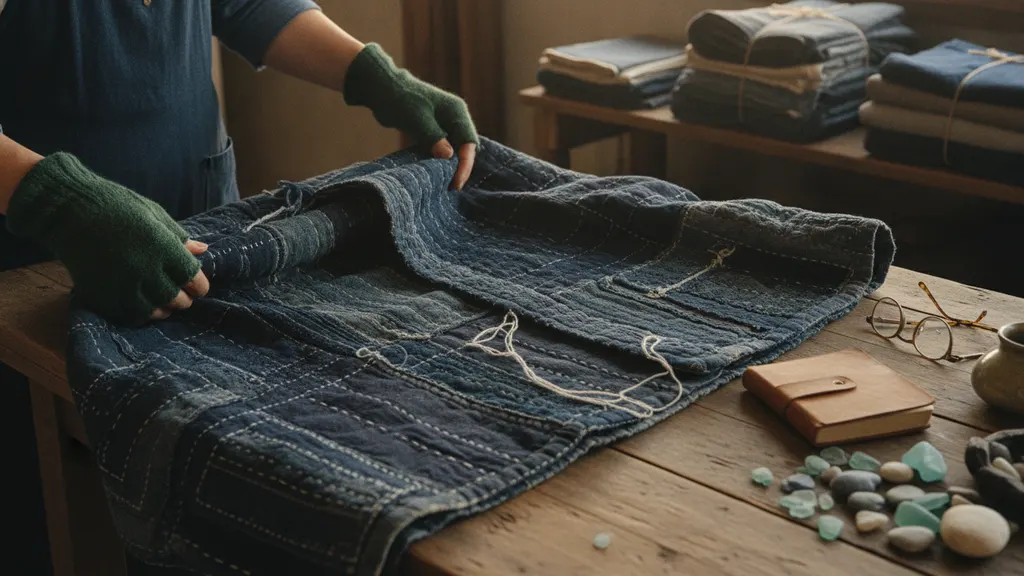
Fur direction is the check people find strange, and it saves me most often. Hair that lies flat with the nap and springs back is alive; hair that stays bent, or parts in tracks across the shoulders, is a coat on its way out. Pelt layout matters too: let-out mink, pelts sliced into narrow diagonal strips and resewn to lengthen the fur's drape, reads very differently from skin-on-skin plates, where whole pelts are stitched edge to edge, and both feed into how vintage outerwear is sourced and dated. The Vintage Fashion Guild's fur and label resources set out the same tells, and I use them alongside what my hands say. The long version is in my guide to dating a vintage fur coat.
Smell is last because it is final. Mildew gone sour in the collar does not come out with airing, and the remedies that do work are slow and partial, which I covered in removing musty smell from vintage clothing. Cigarette smoke is the sneaky one: it hides in a cold room and reappears when the coat warms on a body. If I cannot stand near it in a closed car, I leave it.
What naming has to do with how vintage outerwear is sourced
Every coat gets a name because a name forces me to finish looking. I cannot name a garment I have not understood. The name goes on the listing, the history card, and the engraved hanger, closing out the process of how vintage outerwear is sourced, evaluated, and prepared for a new closet.
The name comes from whatever the coat tells me first. A 1972 Penny Lane with a torn pocket and a theatre ticket still in it becomes one thing; a 1960s blonde fox with the original furrier's label becomes another. I write the name, the era, the construction, and the flaws on one card, and if I cannot fill the card, the coat is not ready to list. About one coat in five never earns a full card on the first pass, and it goes back on the rail until I can answer the gaps. Museums do the same at a different scale: the Victoria and Albert Museum's fashion collection records are long history cards. Naming also keeps me honest in listing copy, because a named garment resists vague description. For the silhouette behind the name I use most, see what a vintage penny lane coat is.
The pieces I left behind: how vintage outerwear is sourced by subtraction
Most of a sourcing trip is saying no. I leave more coats on the rail than I carry out, and the ones I leave are the more useful story, because how vintage outerwear is sourced is mostly a record of what did not pass and why it did not.
The common reasons, in order. Shattered lining with no sound seam left to sew into, because a reline costs more than the coat is worth and I will not hide it. Hide that cracks when the cuff is folded, which is dryness that cannot be reversed. A 1980s recut made from an older pelt, where the label and the construction disagree and I cannot explain the gap. A dyed long-hair fur being sold as something it is not. And the ones simply too small to ever fit a person who would love them, which is a real reason and not a polite one.
I note what I left and why, because the record teaches me a region, a decade, a particular dealer's eye. Smithsonian Magazine's fashion history coverage is good on how much garment evidence is lost to recutting, which is the quiet problem in fur. If you want to read a fox coat's decade yourself, my vintage fox fur coat era guide walks through the tells.
The packaging ritual: how vintage outerwear is sourced carries through to the box
Three things ship with every coat: a wooden hanger engraved with its name, a written history card covering era, construction, and condition, and a breathable garment bag. The bag is not decoration. It is the first instruction in how vintage outerwear is sourced, stored, and kept alive once it leaves me.
The hanger is wood because a wire hanger puts a crease in a shoulder that never comes out. The history card is written, not printed from a template, and it says what I know, what I think, and what I could not determine. The bag breathes, which matters more than anything decorative: fur and shearling need air and hate plastic. Resale value increasingly rests on presentation and disclosure, not just the garment itself, and disclosure is the part that lasts. Storage after that is yours, and the full version lives at how to store vintage outerwear.
Frequently asked questions
How do you actually find the coats you sell?
Three channels, and only three. Estate sales are the bulk of it, private sellers who inherited a closet are the slowest and often the best, and archive houses fill the gaps when a silhouette will not turn up locally. I do not buy wholesale bales or kilo bags, which is the main thing separating how vintage outerwear is sourced here from a volume reseller. Bale buying scales precisely because nobody looks at one coat twice, and single-piece buying does not scale at all. I buy slowly on purpose, because every listing has to describe one specific garment.
Do you test the fur to prove what it is?
No. I identify by hand, using guard hair length, underfur density, leather suppleness, pelt layout, and the label itself, then I say in the listing how confident I am and why. No laboratory analysis is involved and I will not pretend otherwise. Auction description practice at houses like Christie's works the same way, building an attribution from observable construction and marks. If a piece cannot be identified with reasonable confidence, it gets described by what is observable, such as dyed long-hair fur of uncertain species, rather than given a name it has not earned.
Why does every Sol Siren coat have a name?
Because naming forces me to finish the work. I cannot name a coat until I know its decade, its construction, its flaws, and something about the person who wore it, so the name is a completion test rather than a marketing device. The name then travels with the garment onto the listing, the history card, and the engraved hanger. Fashion writing has always treated provenance as part of the object, and Smithsonian Magazine's fashion history coverage shows how long a garment's story stays attached to it. A named coat is also harder for me to describe carelessly.
Is buying a vintage coat better than buying new?
For the garment itself, yes, in the sense that nothing new was made for it. A sixty-year-old shearling has already paid its production cost, and keeping it in circulation is the lowest-impact thing that can happen to it. The sustainability case for secondhand clothing rests on exactly that: nothing new gets made, and the limits of that argument matter as much as the argument itself. Vintage fur specifically is a personal decision, and I do not argue anybody into it. I describe what a piece is, how old it is, and what condition it is in, and the decision stays with you.
What makes you walk away from a coat?
Shattered lining with no sound seam to sew into, hide that cracks when it is folded, mildew in the collar that has gone sour, and any piece whose label and construction disagree in a way I cannot explain. Smoke is the quiet one, because it hides until the coat warms up on a body. Walking away is a real part of how vintage outerwear is sourced, and honest labeling matters more than a quick sale every time the two conflict. A coat I cannot describe accurately is a coat I cannot sell.
How should I store a vintage coat once it arrives?
Hang it on the wooden hanger it shipped with, in the breathable bag it shipped in, somewhere dark, dry, and cool, with air around it. Never plastic, never a cedar chest with the coat pressed flat, never an attic. Fur and shearling want middling humidity and no direct light. The Vintage Fashion Guild's care guidance for fur and shearling lines up with this exactly. If the coat gets wet, shake it out and dry it away from heat, and let a furrier handle anything structural rather than attempting a repair at home.