November 2026
How to date vintage leather jackets: Schott, Talon, and style clues
Learn how to date vintage leather jackets by reading Schott labels, Talon zippers, linings, and silhouettes, then judge leather condition before you buy one.
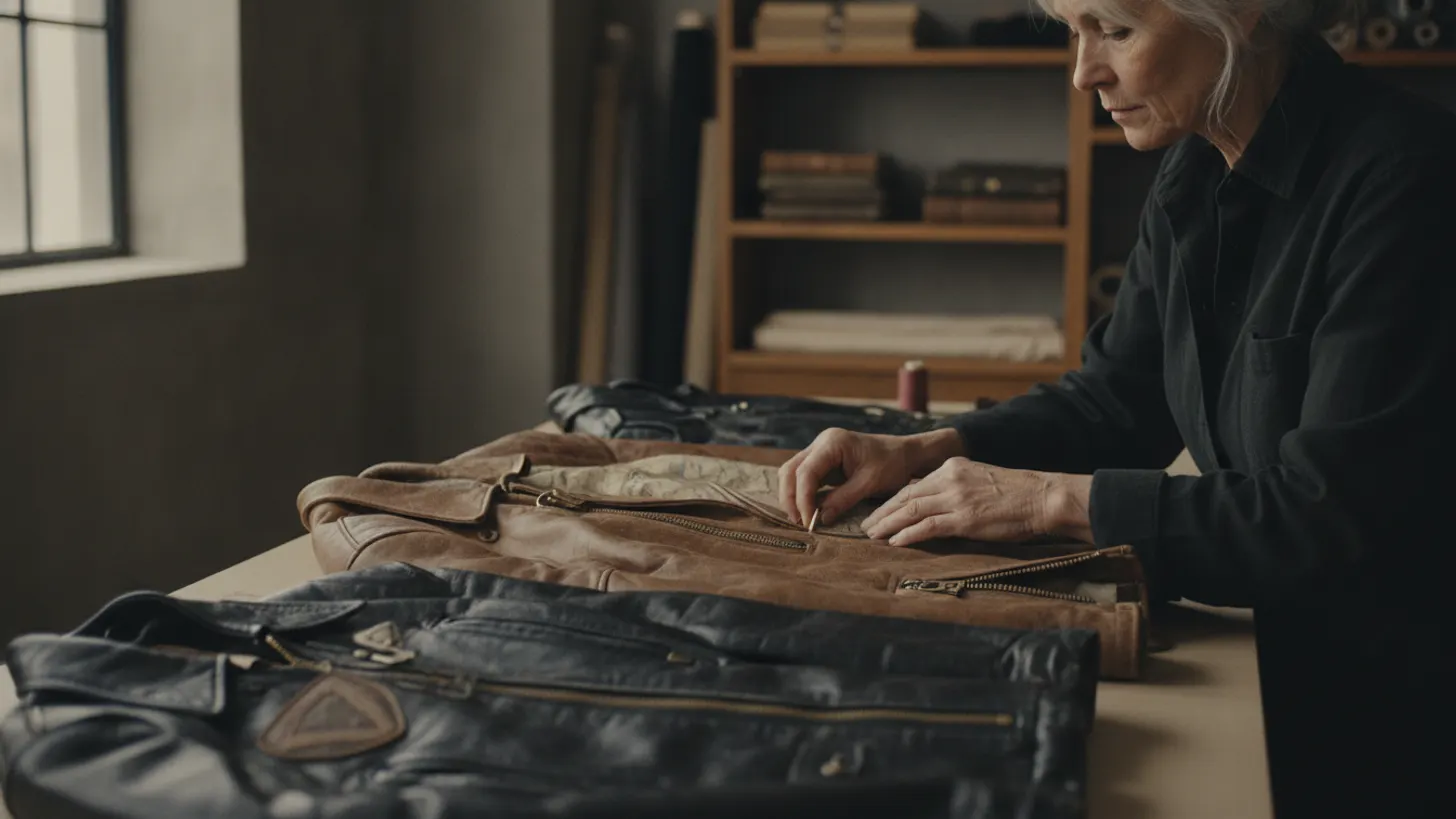
In 1928, in New York, Irving Schott cut a zippered horsehide riding jacket and called it the Perfecto. Nearly a century later, its descendants turn up on thrift racks and estate sales with no paperwork at all. Learning how to date vintage leather jackets means reading what the maker left behind: the cut, the label, the zipper, the lining. Get those four right and you can tell a 1950s original from a 1990s reissue before you pay for one.
How to date vintage leather jackets by silhouette and era
Silhouette is the first step in how to date vintage leather jackets, because the cut gives you a decade to start from. Belted riding jackets and flight-jacket shapes point toward the 1930s and 1940s, the asymmetric motorcycle jacket to the decades after 1928, slim café racers to the 1960s, long lapelled coats to the 1970s, and wide-shouldered bombers to the 1980s.
Leather outerwear began as equipment. The V&A fashion collections trace how leather moved from protective workwear and riding gear into mainstream fashion, and the early shapes still carry that working history: high collars that snap shut against wind, half belts and action backs that let a rider reach for the handlebars, and heavy hides cut short so the jacket does not bunch on a seat.
After the war, the motorcycle jacket became a costume for something larger. The Smithsonian Magazine arts and culture coverage notes that motorcycle jackets became associated with rebellious youth culture once mid-century subcultures adopted them, and the shift shows in the cut. 1950s jackets stay short, boxy, and heavy. By the 1960s the café racer arrives, pared back to a band collar and a straight zip. The 1970s lengthen everything into blazer cuts, belted car coats, and fringed suede, while the 1980s push the shoulders out and soften the hide.
The first lesson in reading a jacket's era is that cut tells you which decade a jacket wants to belong to, while hardware tells you when it was actually sewn. It is the same logic behind dating M-65, MA-1, and field coats, where shape and spec labels have to agree.
| Era | Common silhouettes | Closures you expect | Lining clues |
|---|---|---|---|
| 1930s to 1940s | Half-belt riding jackets, flight-jacket shapes, button-front work coats | Metal zippers, buttons, knit cuffs | Wool, cotton twill, plaid flannel |
| 1950s | Short asymmetric motorcycle jackets, boxy car coats | Heavy metal zippers, snap-down collars, belts | Quilted satin, flannel |
| 1960s | Café racers, slim band collars, mod car coats | Straight center zips, minimal snaps | Rayon or acetate satin |
| 1970s | Blazer cuts, belted trench and car coats, fringed suede | Buttons, longer zips, wide lapels | Acetate, nylon, polyester |
| 1980s | Oversized bombers, padded shoulders, batwing cuffs | Chunky zips, epaulets, studs | Nylon, polyester, quilting |
How to date vintage leather jackets with Schott labels and hardware
Schott labels are the brand-specific heart of how to date vintage leather jackets: their wording, typeface, and placement shift over the decades. Read the Perfecto name, the company wording, any union or RN details, and the size tag, then check the label against the snaps, buckles, and zipper rather than trusting one detail.
The history is short and well documented. Brothers Irving and Jack Schott started the business in New York in 1913, and Vogue's fashion history coverage dates the Perfecto, Schott's trademarked name for its asymmetric-zip motorcycle jacket, to 1928. Marlon Brando wore a Perfecto-style jacket in The Wild One in 1953, and the brand has been cutting versions of that jacket ever since. That long run is the problem: Schott reissues older patterns, so the silhouette alone proves very little.
I learned this the slow way. Early in sourcing for Sol Siren, I priced a fifties-style Perfecto high because the asymmetric zip, belt, and snap collar matched every photograph I had studied, and I misjudged how to date vintage leather jackets by trusting that cut alone. I did not flip the collar before I set the price. A customer asked about the RN number stitched inside, an RN being the registration number the Federal Trade Commission assigns to a clothing manufacturer for its care label, and there it was: a five-digit format issued decades after the jacket I thought I was selling. The cut had fooled me because Schott had kept cutting it. I relisted the jacket as a later reissue at a fairer price and now check the label before the silhouette on every piece that crosses my table.
Older labels tend to carry the Schott Bros. name with the Perfecto wordmark, while later labels lean toward Schott NYC branding. A separate sewn-in tag with printed care instructions or fiber content is a sign of later production, and so is a modern RN number. The Vintage Fashion Guild label resource is the best free reference for reading RN numbers, union labels, and care tags across American brands.
Part of learning to read a single maker's output is accepting that a vintage-looking cut with a modern care label is a reissue, not a find, as my own mistake with that Perfecto proved. Then turn to the metal. Snaps on the collar and epaulets should look worn in the same places as the leather, belt buckles should match the period of the zipper, and stamped maker marks on the snaps should agree with each other.
Talon zippers, linings, and how to date vintage leather jackets from the inside
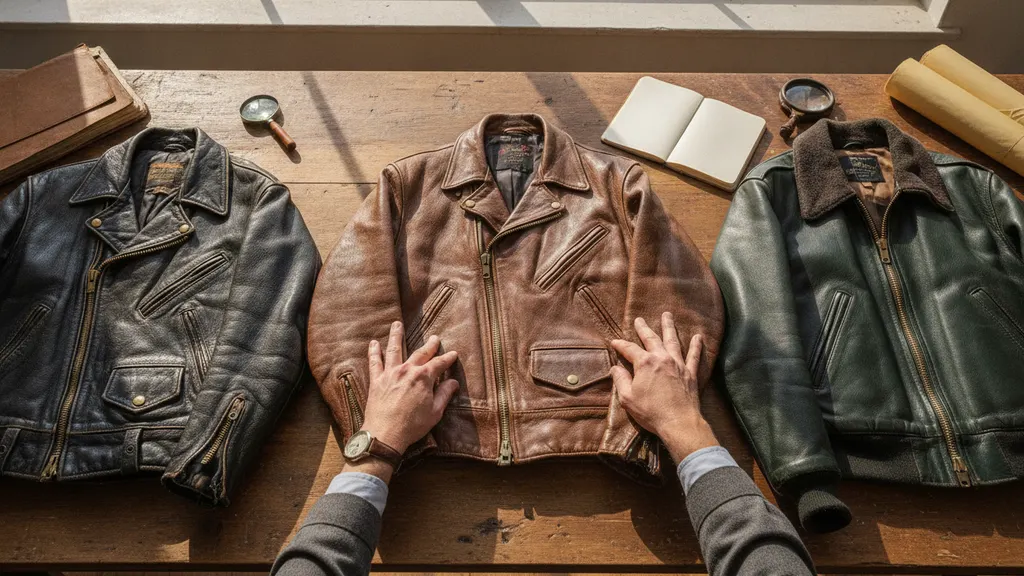
A Talon zipper, the trademark name for the slide fasteners made by Pennsylvania's Hookless Fastener Company before the brand renamed itself Talon Inc., suggests mid-century American manufacture, but it marks a range, not a year. Read the pull shape, the stamping on the slider, and whether the teeth are individual metal elements. Then turn the jacket inside out, because linings, pockets, and facings are replaced less often than zippers and usually tell you more about how to date vintage leather jackets than the hardware does.
Talon, made by the Hookless Fastener Company of Meadville, Pennsylvania, was the dominant American zipper for decades, which is why it turns up on so many work, riding, and fashion jackets. Competing metal zippers from Conmar, Crown, and Scovill appear on jackets of the same broad period. YKK hardware and nylon coil zippers become more common on later production. None of these makers dates a jacket alone, because zippers fail and get replaced.
So look at how the zipper sits. Original zippers are usually stitched with the same thread and stitch length as the surrounding seams. A replacement often shows a second row of needle holes, a tape color that does not match, or thread that looks newer than the leather. This is where dating a vintage jacket gets practical: the inside of a garment is harder to fake than the label on its collar.
Linings tell the rest. Quilted satin, plaid flannel, and wool blanket linings sit comfortably in earlier work and riding jackets, while slick nylon and polyester linings lean later. If you are unsure what a lining is made of, the guide to identifying rayon, acetate, nylon, and polyester walks through the differences. Museum catalogues such as those of The Met's Costume Institute describe garments by construction as well as label, and that is the habit worth copying.
How should buyers evaluate leather dryness, cracking, and repairs?
Condition decides whether a well-dated jacket is still wearable. Flex the leather at the elbows, collar fold, and pocket edges: fine surface crazing is often cosmetic, while cracks that open through the grain are structural. Check seams for brittle thread, look closely at patches and resewn panels, and smell the lining for mildew.
Dry leather feels papery and lightens where it bends. A careful conditioner, tested first on an inside facing, can bring back some flexibility, but it cannot close a crack that has already split the grain. Over-oiling causes its own trouble: darkened patches, a tacky surface, and stitching that loosens as the hide softens around it. The guide to cleaning vintage clothing at home covers the gentler steps that apply to linings and trims.
Repairs are not a dealbreaker, but they change the dating picture. A replaced knit cuff, a new lining, or a rezipped front each removes a clue. When a seller discloses a replaced zipper, the honest answer to how to date vintage leather jackets like that one is to lean harder on the label, the lining, and the cut. Storage after purchase matters too. Museums such as The Museum at FIT keep historic garments away from heat and direct light, a rule any closet can follow.
Measuring and styling once you know how to date vintage leather jackets
Measure the jacket flat rather than trusting the size tag: pit to pit, shoulder seam to shoulder seam, sleeve from shoulder to cuff, and back length from collar seam to hem. Vintage sizing ran differently, and leather gives little across the back, so the shoulder measurement matters most.
Compare those numbers with a jacket you already wear. The vintage clothing size guide explains ease and era fit in more detail, and it applies directly to leather: older motorcycle jackets often run short in the body and close at the arm, because they were cut for a rider leaning forward.
Knowing a jacket's decade also changes how you wear it. A 1950s motorcycle jacket wants straight denim, a plain tee, and boots, the same pairing that suits a well-dated vintage denim jacket. A 1960s café racer sits best over fine knitwear. A 1970s blazer-cut leather reads softer with flared trousers or a long skirt, and an 1980s bomber needs a slimmer leg to balance the shoulder.
A short checklist for how to date vintage leather jackets
Use the same order every time so no clue gets skipped. Start with the cut, move to the label, then the zipper, the lining, and finally the leather itself. A date you can defend comes from several clues pointing at the same decade, not from one detail that happens to look old.
- Silhouette: name the era the cut belongs to.
- Label: read the brand wording, RN number, and any care tag.
- Zipper: note the maker and check that the stitching around it is original.
- Lining: identify the fabric and look for replacement seams.
- Leather: flex the high-wear points and note every repair.
That checklist is how to date vintage leather jackets with some confidence, and it is the same reading every coat gets here before it is photographed and described.
Frequently asked questions
How can I tell what decade my leather jacket is from?
Start with four clues read together: the silhouette, the label, the zipper, and the lining. A belted riding cut or flight-jacket shape points earlier, a slim band collar suggests the 1960s, and long lapels or wide shoulders lean toward the 1970s and 1980s. Then check whether the label carries an RN number or printed care instructions, which the Vintage Fashion Guild label resource treats as later dating clues. A metal Talon zipper supports a mid-century reading, and an original quilted or flannel lining backs it up. When two or more clues agree, you have a usable date range rather than a guess. Photograph the label and zipper together before you buy, since side-by-side notes make it easier to compare a jacket against reference examples later.
When did Schott start making the Perfecto jacket?
Schott introduced the Perfecto motorcycle jacket in 1928, according to Vogue's fashion history coverage. The company had been founded in New York by brothers Irving and Jack Schott in 1913, and the Perfecto became its signature: an asymmetric front zipper, a snap-down collar, and a belted waist built for riders. Because Schott still makes the Perfecto and reissues older patterns, the cut alone cannot tell you the age of a particular jacket. Compare the label wording, the zipper maker, and the lining fabric against the period you expect, and treat a modern care tag as a sign of later production.
Does a Talon zipper mean my jacket is from the 1950s?
Not on its own. Talon began as the trademark of the Hookless Fastener Company, a Pennsylvania manufacturer that later renamed itself Talon Inc. after the brand name overtook the company name in buyers' minds. Talon was the dominant American zipper maker for decades, so a Talon slider narrows a jacket to a broad mid-century window rather than a single year. Zippers were also replaced during repairs, which means the hardware may be younger or older than the leather around it. Look for even, original stitching along the zipper tape, then check the label and lining for agreement. Museum catalogues such as those of The Met's Costume Institute describe garments by construction as well as label, which is a good habit for collectors: date the whole garment, not one part.
Is a vintage leather jacket with cracks still worth buying?
It depends on where the cracks sit and how deep they go. Fine surface crazing on the shoulders or sleeves is often cosmetic and can soften with careful conditioning. Cracks that open through the grain at the elbows, collar fold, or pocket edges are structural, and they tend to spread with wear. Bend a sleeve gently at the elbow and listen for a dry, crackling sound, since that tells you the hide has lost oil faster than a visual check alone. Check seams for brittle thread and ask the seller about any patches or replaced panels. Storage matters after purchase too. Museums such as The Museum at FIT keep historic garments away from heat and direct light, a simple rule that also slows drying in a home closet.
How should a vintage leather jacket fit?
Fit a vintage leather jacket by the shoulders first, because leather gives very little across the back and a tailor cannot easily move a shoulder seam. Measure a jacket you already own flat, pit to pit, shoulder to shoulder, sleeve, and back length, then compare those numbers with the listing instead of the size tag. Older motorcycle jackets often run short in the body and close at the arm, built for a riding position. Leather outerwear began as protective riding gear, as the V&A's fashion collections show, so expect a cut made for movement more than for layering.
Why are leather motorcycle jackets linked with rebellion?
Motorcycle jackets became associated with rebellious youth culture after mid-century subcultures adopted them, as the Smithsonian has noted. The jacket started as practical gear for riders, then gained a second life on screen and on the street. Marlon Brando wore a Perfecto-style jacket in The Wild One in 1953, and the look moved from motorcycle clubs to rock and roll, punk, and eventually ordinary wardrobes. That cultural arc is why early motorcycle jackets carry collector interest today, and why reissues are so common. Dating a jacket carefully separates an original from the many later tributes.