November 2026
How to date a vintage denim jacket: labels, hardware, and fit
Learn how to date a vintage denim jacket using label details, hardware finishes, pocket shapes, and measurements, plus condition checks before you buy.
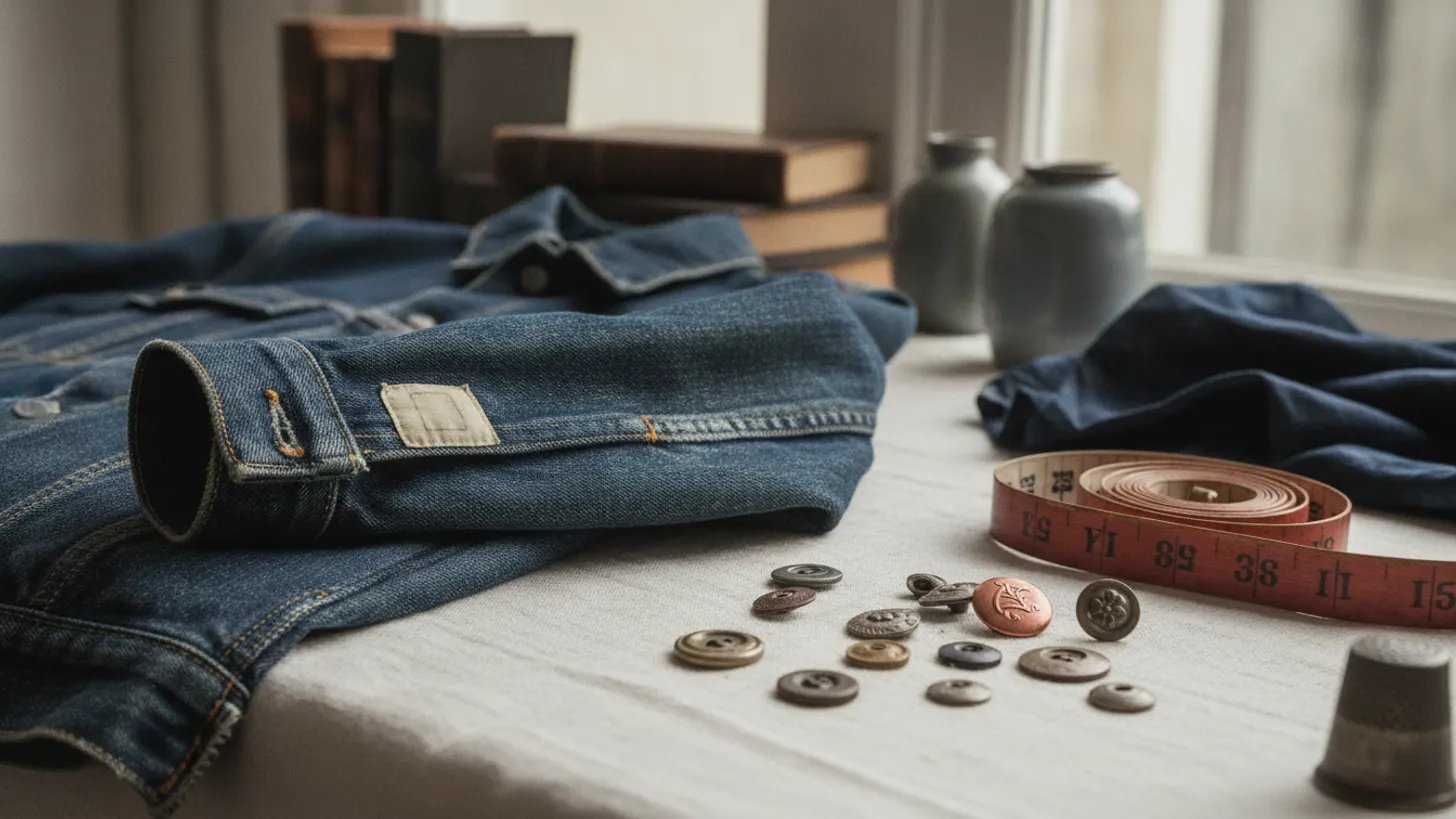
Stand in any Rose Bowl flea market aisle at 7 a.m. and you will see buyers doing the same three things: flipping a collar, squinting at a tab, and running a thumb over a rivet. Those three gestures date a vintage denim jacket faster than any seller's story does. Era lives in the label, the metal, and the cut of the pockets, and all of it reads in daylight.
What construction details help date a vintage denim jacket?
Start with the cloth and the seams. A vintage denim jacket built before the 1970s usually shows narrower panels, selvedge edges inside the plackets, and a hem finished with a chainstitch. Later factory work runs wider fabric, overlocked seams, and straighter yokes. Read construction first, then confirm with the label.
Denim is a cotton fabric with a characteristic twill weave, the definition used by the Museum at FIT, and that weave is where I start. Older cloth came off narrow shuttle looms, so the inside of a button placket or a side seam may show a finished selvedge edge instead of a raw overlocked one. Panel layout matters too. A single pleated chest pocket and a buttoned back cinch point at pre-war and mid-century workwear patterns, while two flapped chest pockets became the later standard. Dated workwear in the Metropolitan Museum of Art costume collection and the Victoria and Albert Museum fashion archive gives you known-date references to compare against.
A vintage denim jacket also records its own washing history. Chainstitched hems ripple as they shrink, lockstitched hems lie flat, and neither is proof alone. Treat construction as the bracket and the label as the narrowing.
How labels and union tags reveal a vintage denim jacket's era
Labels narrow a date faster than anything else on the garment. The Levi Strauss & Co. Two Horse label was introduced in 1886, according to the company's historical archive, so its presence sets a floor rather than a date. What changes decade by decade is the printing, the fiber content wording, and the stack of secondary tags beside it.
Union labels are the next layer. A domestic union tag sewn beside the brand label indicates union-made production and generally keeps a date inside the middle decades of the twentieth century. Printed cotton labels tend to predate woven synthetic ones. Country of origin and the arrival of sewn-in care instructions in the early 1970s each add a boundary. The Vintage Fashion Guild label resource photographs and dates thousands of these tags, which beats guessing from memory. Most vintage denim jacket dating mistakes come from reading one tag in isolation, or from trusting a tab that was stitched on last year. For the same method applied to trousers, my notes on dating vintage Levi's 501s follow the same order.
Which hardware finishes date a vintage denim jacket?
Hardware is the hardest thing to fake convincingly, which makes it the best second opinion. The copper rivet traces to an 1873 patent, and the placement, metal, and finish on a jacket track roughly 100 years of changes in factory practice, as Smithsonian Magazine's account of riveted workwear describes.
Exposed copper rivets at the pocket corners read earlier than bar tacks. Donut buttons, the ring-shaped type with an open center, turn up on mid-century work shells, while branded shank buttons with raised lettering are later and far more common. On zip styles, read the pull: American makers including Talon, Conmar, and Scovill stamped their names, and the move from metal teeth to nylon tape followed supply changes that trade coverage at Sourcing Journal still tracks. Pocket geometry is the quiet tell. Flap shape, pleat depth, and the gap between pocket and yoke all shifted as patterns were re-cut for new machinery. A vintage denim jacket whose hardware, pockets, and label disagree is usually a rebuild, not a rarity.
I learned this the hard way at the Alameda Point Antiques Faire in 2019. A seller had a jacket with a clean Red Tab and a selvedge seam that looked right, and I priced it as 1960s without checking the buttons. A regular customer wrote back within a week: the shank buttons carried a date code Levi's did not start using until 1998, which meant the tab had been cut from a wrecked jacket and sewn onto a newer shell. I refunded her, and now I will not call a date until hardware, label, and construction all agree, not two out of three.
| Era | Label and tag clues | Hardware | Pocket and fit tells |
|---|---|---|---|
| 1930s to 1940s | Printed brand label, no care instructions, stamped size | Exposed rivets, donut buttons, cinch buckle | Single pleated chest pocket, short boxy body |
| 1950s to 1960s | Brand label plus domestic union tag | Rivets giving way to bar tacks, branded shank buttons | Two pointed pocket flaps, narrow sleeve |
| 1970s to 1980s | Care label and fiber content in the side seam | Stamped shank buttons, nylon zippers on zip styles | Longer body, wider sleeve, blanket or pile linings |
| 1990s onward | Printed care tags, origin outside the United States | Lighter hardware, laser or spray finishing | Oversized cut, pre-distressed wear patterns |
How to evaluate vintage denim jacket measurements before you buy
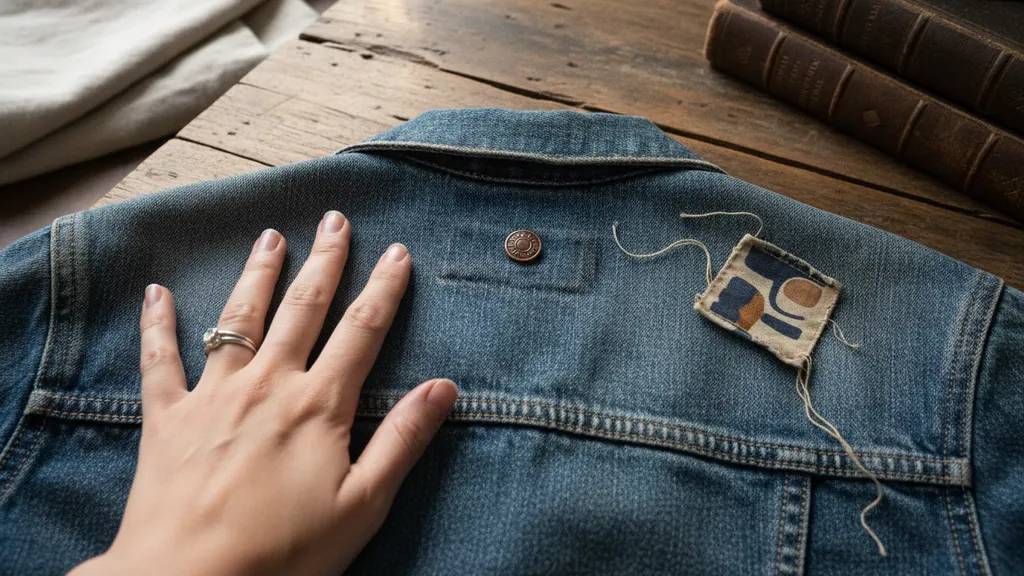
Ask for flat measurements and ignore the size on the tag. The vintage denim jacket measurements that matter are chest pit to pit, shoulder seam to shoulder seam, sleeve from shoulder to cuff, and back length from the collar seam. 4 numbers, taken on a flat surface, settle most fit questions.
Compare those numbers against a jacket you already wear, not against a modern size chart. Decades of washing shrink body length and sleeves unevenly, so a 1960s shell can measure smaller than its stamp suggests. Old sizing systems also drifted, which is why I keep a vintage clothing size conversion guide within reach. Ask for photographs of the garment flat, in daylight, with a tape laid across the chest. Sellers who measure the same way every time are the easiest to buy from at distance, and the growth of online resale, covered steadily by the New York Times, has made that discipline more common. My guide to shopping vintage fashion online covers what to request before you pay.
What condition issues affect value and wearability?
I have turned down jackets that looked flawless from across the booth table. Cotton fails in the same 4 spots on almost every pre-1980 jacket: cuffs, elbows, pocket mouths, and the back of the collar. Surface fading is character. Weak cloth, rust bleed, and shattered seams are the problems that decide whether a jacket is wearable.
Check those 4 spots first, then open the lining and look at the armhole seams. Hold the fabric up to a window. Light coming through as a haze rather than through distinct holes means the yarns are worn thin and will split at the next wash. Rust around rivets and buttons stains the cloth from the inside, and once that halo has set it does not come out. Smell matters as well, because mildew in cotton is harder to shift than smoke. A vintage denim jacket with honest repairs is often the better buy, since patched elbows and replaced buttons were part of how workwear stayed in service. Good On You's guidance on repair and clothing longevity is a sensible frame for what is worth saving. For first steps once a jacket arrives, see my notes on cleaning vintage clothing at home.
Putting a vintage denim jacket date range together
Stack the tells and accept a decade rather than a year. Construction sets the widest bracket, labels narrow it, hardware confirms or contradicts, and measurements decide whether the date matters to you at all. Run all 4 passes, in that order, in daylight.
When two tells disagree, trust the one that is hardest to change. Shells get re-tabbed, buttons get swapped, and labels get cut out, but the cut of a yoke and the stitch at a hem stay where the factory put them. Write down what you found and what you could not confirm. That written record is what makes a vintage denim jacket worth keeping, and it is the same discipline I use on field coats in dating vintage military jackets.
Frequently asked questions
How can I tell if a denim jacket is actually vintage?
Work through the garment in order: cloth, construction, labels, then hardware. A selvedge edge inside a placket, a chainstitched hem, and pleats at the chest all point older. Then read the tags, where a domestic union label or a printed cotton brand label pushes the date back further. Reproductions copy one or two of these details and almost never all of them at once, so agreement between tells matters more than any single clue when you are dating a vintage denim jacket. Business of Fashion's reporting on the resale and vintage trade is a reminder that reproduction volume has grown alongside demand.
What does the red tab on a denim jacket tell me?
The small woven tab on the right chest pocket is a brand mark collectors use as a rough date line. Levi Strauss & Co. added it in the mid-1930s, and the shift from a capital E to a lowercase e in the stitched wordmark is commonly placed around 1971. A tab alone will not date a jacket, because tabs get replaced, faked, and sewn onto later shells. Read it beside the stitching, the care label, and the pocket shape. Vogue's coverage of denim design history is a good primer on how those house marks became recognizable.
Does a sewn-in care label mean the jacket is not old?
Not on its own, but it narrows things. Printed care instructions inside the side seam became standard in the United States during the early 1970s, so a jacket carrying full washing instructions and fiber content on a sewn-in tag is usually from that decade or later. Jackets made before then often show only a brand label and a stamped size. Pair the care label with hardware and pocket shape before you settle on a decade. Vintage shopping coverage in Harper's Bazaar makes the same point: single tells mislead, and stacked tells rarely do.
How do I know what size a vintage denim jacket will fit?
Ignore the number on the tag and ask for flat measurements. Chest measured pit to pit and doubled, shoulder seam to shoulder seam, sleeve from shoulder seam to cuff, and back length from the collar seam down will tell you more than any old size label. Compare those four numbers against a jacket you already wear. Denim also shrinks unevenly across decades of washing, so sleeves and body length often come up shorter than the original pattern. Who What Wear's secondhand fit guides recommend the same measure-what-you-own habit before buying online.
Is it worth buying a denim jacket that has been repaired?
Often yes, if the repair is honest and stable. Patched elbows, darned cuffs, and replaced buttons are part of how workwear survived, and many buyers now read visible mending as part of a garment's record rather than as damage. What matters is whether the repair holds and whether the cloth around it still has strength. Thin, papery denim next to a patch will tear again. Open seams and missing rivets are straightforward fixes; shattered cloth is not. The Cut's writing on mending and wearing old clothes frames the trade-off well.
Can you date a denim jacket if the label has been cut out?
Yes, though the range will be wider. Construction survives label loss: selvedge inside the seams, stitch type at the hem, rivet placement, pleats, pocket flap shape, and the cut of the yoke all carry era information. Measure the garment, photograph the inside seams in daylight, and compare against dated examples in museum collections. Auction houses such as Christie's catalogue fashion by construction and provenance when maker marks are absent, which is the same method a careful buyer can apply. Expect a decade rather than a year, and say so when you resell.