November 2026
How to buy vintage linen: weave, weight, wrinkles, and care tips
How to buy vintage linen with confidence: identify flax fiber, read weave and weight, spot storage damage and stains, and care for vintage linen so it lasts.
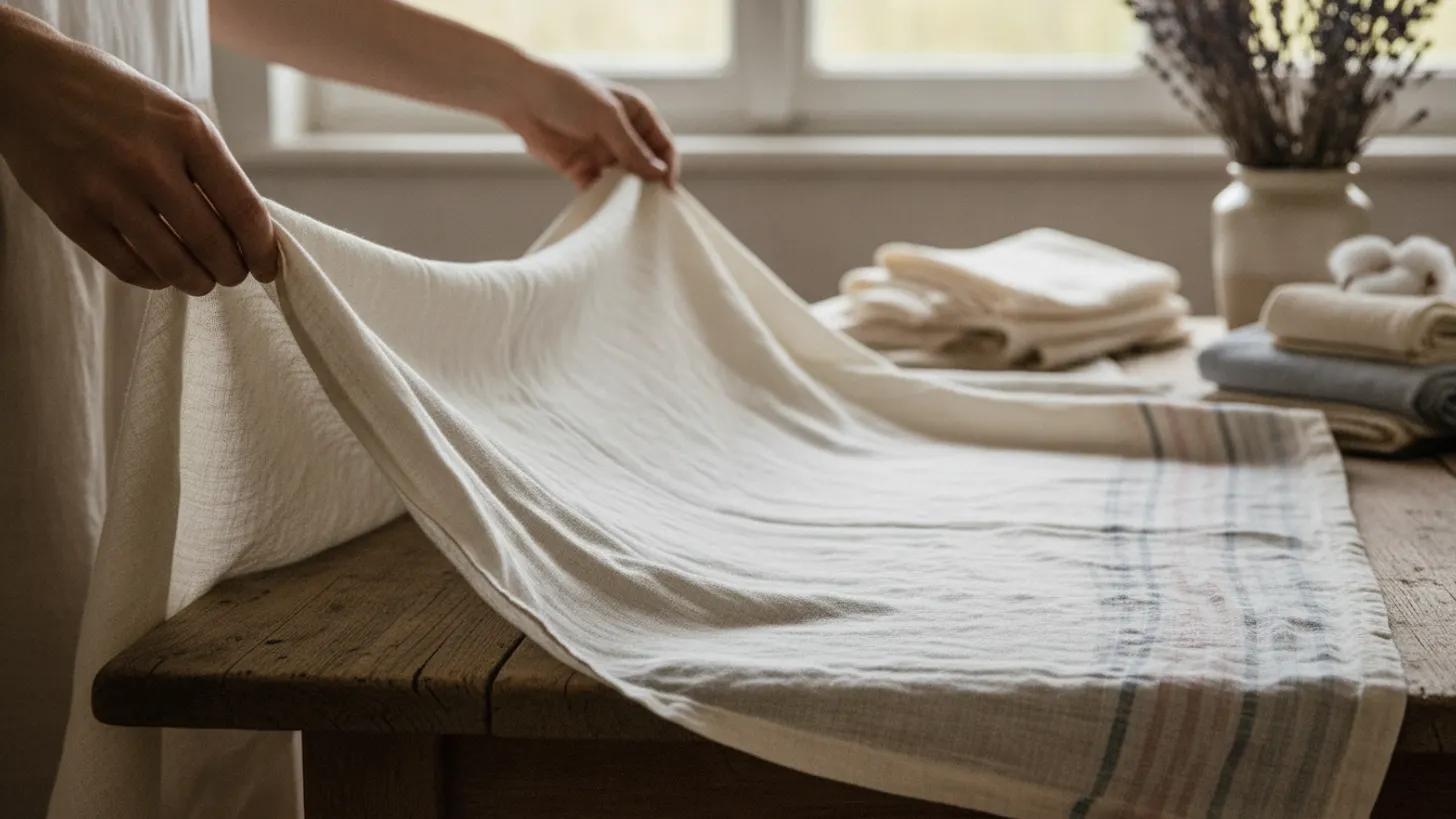
Flax outlives almost everyone who wears it. Linen shifts and sheets from the 1700s survive in museum collections while the silks beside them have split at the folds. That durability is the thing to hold onto in how to buy vintage linen: the fiber is rarely the problem. Storage, laundering, and one bad underarm repair are. Learn to read those three and a rack find outlasts anything new.
How to buy vintage linen: telling flax from cotton and blends
Start at the fiber, not the label. Linen is spun from the stem of the flax plant, while cotton comes from a seed boll, and the two behave differently in your hands. Flax yarn runs uneven, cool, and a little stiff before it softens. Cotton reads uniform and warm from the first touch.
That botanical split, laid out in Smithsonian Magazine's reporting on flax cultivation and linen, matters at a rack because every test downstream depends on it. Hold the cloth to a window. Linen shows slubs, short thick spots where the flax yarn gathered, scattered irregularly through both warp and weft. Cotton shows an even grid. Rayon, sold as a linen substitute for decades, drapes softer and goes limp when damp, and the Vintage Fashion Guild fabric resource is the reference I keep open for those side-by-side calls.
A blend complicates the read without ruining the garment. Linen-cotton and linen-rayon mixes were common from the 1950s onward, and a 55/45 cloth still breathes well in August. What changes is the crease: pure flax folds sharp and holds the fold, while a blend softens the edge within an hour of wear. I learned this the slow way on a 1970s chambray shirt I was certain was pure flax: it had the right slubs, the right cool hand, and I priced it like rare linen. Three washes in, the hem went soft and round instead of holding its crease, and a corner I had trimmed for a repair showed a sheen under raking light that flax never gets. It was a linen-rayon blend, and I had already sold two of them before I caught the tell. Checking the crease edge under strong light before pricing, not just the fiber feel, is the habit that mistake taught me, and it is the part of how to buy vintage linen that no fiber test alone replaces. If you are sorting several mystery fibers at once, our guide to how to identify vintage fabrics covers the rayon and acetate cases that trip up linen buyers most often.
The three tests worth doing in a shop
- Press the cloth to the inside of your wrist. Flax pulls heat away faster than cotton, and that cold feel is the fastest screen you have.
- Stretch a seam allowance between your thumbs. Linen gives almost nothing on the grain and a little on the bias.
- Crush a handful and release. Linen keeps the wrinkle map, polyester springs back flat, and a blend lands somewhere between.
Which weave, weight, and finish details signal quality
Weight tells you what a garment was built for. Weave tells you how it will age. Plain-weave shirting handles heat, twills and canvas weights were cut for jackets and work, and the mill finish decides whether the surface reads matte, glazed, or softly beaten.
Historic pieces in the Metropolitan Museum of Art's textile collection show how far one fiber travels across weave and finishing, from sheer handkerchief cloth to dense figured damask. Costume scholarship at the Museum at FIT makes the same point for dress: a 1930s beach shirt and a 1950s tailored jacket can share a fiber and share nothing else. I learned to read weight before I learned to read weave, taught by a Lille cloth broker named Albert Dumont who sold me my first crate of deadstock French workwear linen in 2014 and made me weigh every bolt on a postal scale before he would quote a price. His rule was blunt: if you cannot name the gsm, you cannot price the garment, and after a decade of buying I still hear it at every estate sale. Weight is where the real work of how to buy vintage linen stops being romantic and turns into arithmetic.
| Weave | Typical weight | Where you see it | How it ages |
|---|---|---|---|
| Plain, handkerchief | 100-140 gsm | Blouses, summer dresses, handkerchiefs | Thins at collar and cuff first |
| Plain, shirting | 140-180 gsm | Shirts, shirtdresses, wide trousers | Softens evenly, wears at underarms |
| Twill | 200-280 gsm | Jackets, chore coats, tailored trousers | Holds shape, abrades at pocket edges |
| Canvas, sailcloth | 280-400 gsm | Workwear, heavy coats, upholstery | Very durable, but creases set permanently |
| Damask, jacquard | Varies | Household cloth later cut into garments | Yellows along folds, pattern wears flat |
European mills still carry the same weight language, and trade reporting at Sourcing Journal on the flax and linen supply chain is a decent way to understand why Western European flax cloth has been the reference standard for so long. Heavier twills show up constantly in French and Belgian workwear, and our vintage French workwear guide is the companion piece for those labels.
How age, storage, and laundering change vintage linen
Flax does not really fail from wear. It fails from what happens between wears. Sixty years of folding, sunlight, starch, and sealed storage do more damage than six summers of use, and the hardest part of how to buy vintage linen is reading the harm a garment took while nobody had it on.
The Victoria and Albert Museum's textiles collection documents linen as one of Europe's long-running cloths for both clothing and household goods, which is also why so much surviving vintage linen started life as a sheet, a tablecloth, or a chemise rather than a garment pattern. Look for the evidence: a hem that does not match the garment's cut, a seam that crosses an old monogram, a panel with a different yellowing pattern than its neighbor. I once catalogued a 1970s wrap skirt that still carried a laundry mark in the waistband seam, a faded ink stamp from a hotel linen service, which placed its first life decades before anyone cut it into a skirt at all. That kind of history does not lower the value of a piece; it is often the quiet half of how to buy vintage linen, since it tells you the cloth survived long enough to reach a rack even where the construction around it is recent and rough.
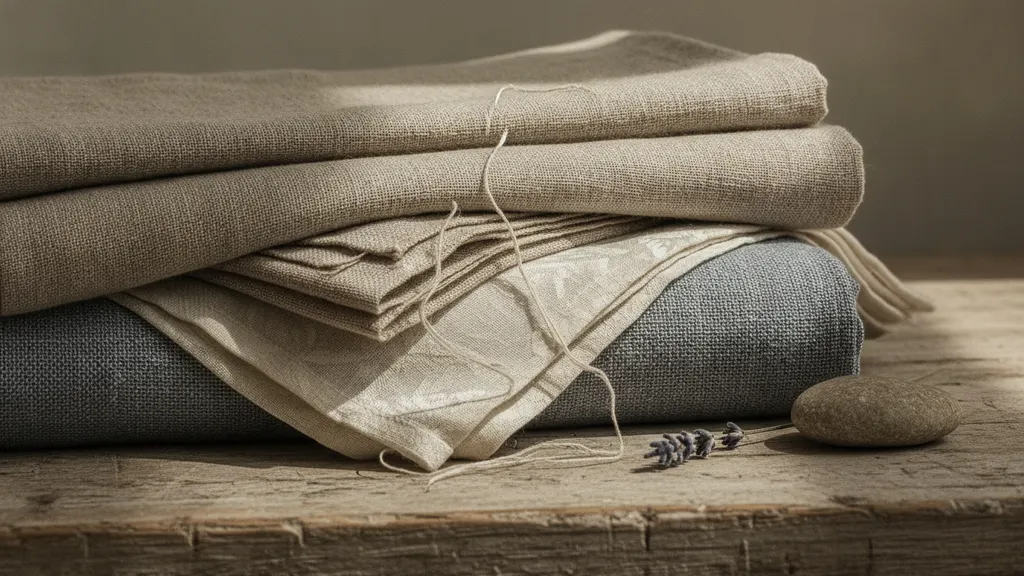
Three age signals are worth more than the rest. Fold lines that stay pale after steaming mean broken fibers. Shoulders a shade lighter than the back mean a hanger spent years facing a window. A faint rise in overall stiffness with a slightly sour smell usually means old starch, which attracts insects and encourages yellowing, and which a few cool soaks will often release.
How to buy vintage linen without inheriting stains or weak seams
Inspect in a fixed order so you never skip a zone: underarms, collar fold, center back, waist seam, hem, then fastenings. Hold each area to light. Flax goes translucent before it tears, so thinning shows as brightness long before a hole appears.
How to buy vintage linen with stains you can live with
Not every mark is a defect, and not every clean garment is sound. The distinction that matters is whether the stain sits on the fiber or has consumed it. Rust and scorch have already weakened cellulose; the hole simply has not opened yet. Foxing and starch yellowing usually sit on top. I still check this with a strong flashlight held flat against the cloth rather than overhead, since raking light shows a weak patch as a faint halo before it ever shows as a hole, a trick a conservator at a regional costume museum showed me years ago. Learning how to buy vintage linen is as much a stain-literacy exercise as a fiber one, and our notes on how to clean vintage clothing cover the soaking method I use before anything harsher.
Seams deserve the same order of attention. Vintage linen was often sewn with cotton thread that aged faster than the cloth around it, so a split side seam on a sound garment is a cheap repair rather than a reason to walk. Shattered underarm fabric is the opposite: the cloth itself is gone, and replacement panels rarely match.
How to buy vintage linen that fits, wears, and lasts
Buy to measurements, never to a printed size. Sizing standards shifted repeatedly across the decades, garments were altered by their owners, and flax has already shrunk to its final dimensions. A tape measure across a flat-laid garment is the only number that means anything.
How to buy vintage linen that will actually fit
Measure chest, waist, shoulder, and sleeve on a garment you already like, then compare flat measurements rather than guessing. Our vintage clothing size guide works through ease by era, and if you are buying from photographs, how to shop vintage fashion online covers what to ask a seller before paying. Linen is forgiving in the body and unforgiving at the shoulder, so prioritize that seam.
Care is short and strict. Wash cool, use a pH-neutral detergent, skip bleach entirely, and dry flat or on a line in shade. Press while damp with a hot iron on the reverse side, using a dry cotton press cloth if the weave is loose enough to scorch, for a crisp face. Store folded loosely or rolled, never sealed in plastic. Good On You's material guidance on linen and flax explains why the low-heat routine protects fiber strength. I treat every new piece the same way the first season: one gentle wash, a flat dry away from direct sun, and a close check afterward for any seam that pulled loose in the water, since that first wash is when a hidden weak spot usually shows itself. The final stretch of how to buy vintage linen is about the decade after the purchase, not the afternoon of it, and a piece washed gently twice a season will almost certainly outlast you too.
Frequently asked questions
How can I tell if a vintage shirt is linen or cotton without a label?
Use touch before sight. Linen feels cold against the inside of your wrist because flax moves heat away faster than cotton does. Held to a window, flax yarn shows slubs, irregular thick spots scattered through the weave, while cotton reads as an even grid. Scrunched in a fist and released, linen keeps a sharp wrinkle map and cotton relaxes. The Vintage Fashion Guild fabric reference is the standard cross-check for borderline cases, especially mid-century rayon milled to imitate flax. If two of the three tests agree, trust them over the tag.
Will vintage linen shrink if I wash it at home?
Most of it already shrank, decades ago, which is a quiet advantage of buying old flax. A garment laundered through the 1970s has done its contracting. What you risk now is agitation damage to weak areas: thinned underarms, crumbling interfacing, and old mends. Wash cool on a short gentle cycle with a pH-neutral detergent, then dry flat or on a line out of direct sun. Good On You's guidance on linen care explains why low heat matters for flax longevity. Keep vintage linen out of a hot dryer entirely.
Are wrinkles in vintage linen a defect I should negotiate on?
Ordinary wrinkles are the fiber behaving normally. Flax has very low elasticity, so it folds and holds the fold, and Harper's Bazaar coverage of warm-weather linen dressing treats that surface as the point rather than the flaw. What does justify a lower price is a set crease: a hard pale line along a fold where cloth has been stored bent for years. Run a thumbnail along it and hold it to light. If the fibers have broken and the line stays bright, that area will eventually split open.
What do yellow or brown spots on old linen actually mean?
Small rust-colored specks are usually foxing, an oxidation stain tied to cellulose, residual starch, humidity, and sometimes metal contact. Broad yellowing across a shoulder or a fold is light exposure or old starch that was never rinsed out. Sharp orange marks near fastenings are rust from a corroded snap or pin. Foxing and starch yellowing sometimes lift with repeated cool soaking; rust has usually eaten the fiber beneath it and will leave a hole. New York Times reporting on home laundering and stain chemistry is a sane starting point before anything stronger.
Is a linen-cotton blend worth buying, or should I hold out for pure flax?
Blends are worth buying with your eyes open. A linen-cotton mix wrinkles less sharply, softens faster, and costs less secondhand, which is why so much 1960s to 1980s summer clothing was milled that way. You give up some cooling behavior and some longevity, since cotton abrades faster than flax at stress points. Much of how to buy vintage linen in blended cloth comes down to reading the crease edge rather than trusting a tag. Secondhand buying coverage at The Cut is useful on how blend fabrics hold value over repeated wear.
How should I store vintage linen between seasons?
Flat, loose, and away from light. Hard folds are what kill old flax, so roll larger pieces around an acid-free tube, or interleave folds with unbuffered tissue and refold along different lines each year. Keep it out of sealed plastic bins, which trap moisture and speed yellowing, and off wire hangers, which distort shoulders. Cool, dry, and dark beats bright and climate-controlled. Conservation principles published by the Victoria and Albert Museum for historic linen and textiles scale down to a closet shelf with almost no adjustment.